
A masquerade mask is the rare Halloween accessory that works with a tuxedo as easily as a costume, and knowing the types of masquerade masks is what separates mystery and elegance from a plastic afterthought. I keep two in my closet, a black Bauta and a simple Volto; both stay comfortable past midnight at any masquerade ball. Here is the full guide: where these masks come from, the most popular classic styles worth knowing, the materials that separate good from cheap, and how to choose the design you want and wear it well.
Where Masquerade Masks Come From
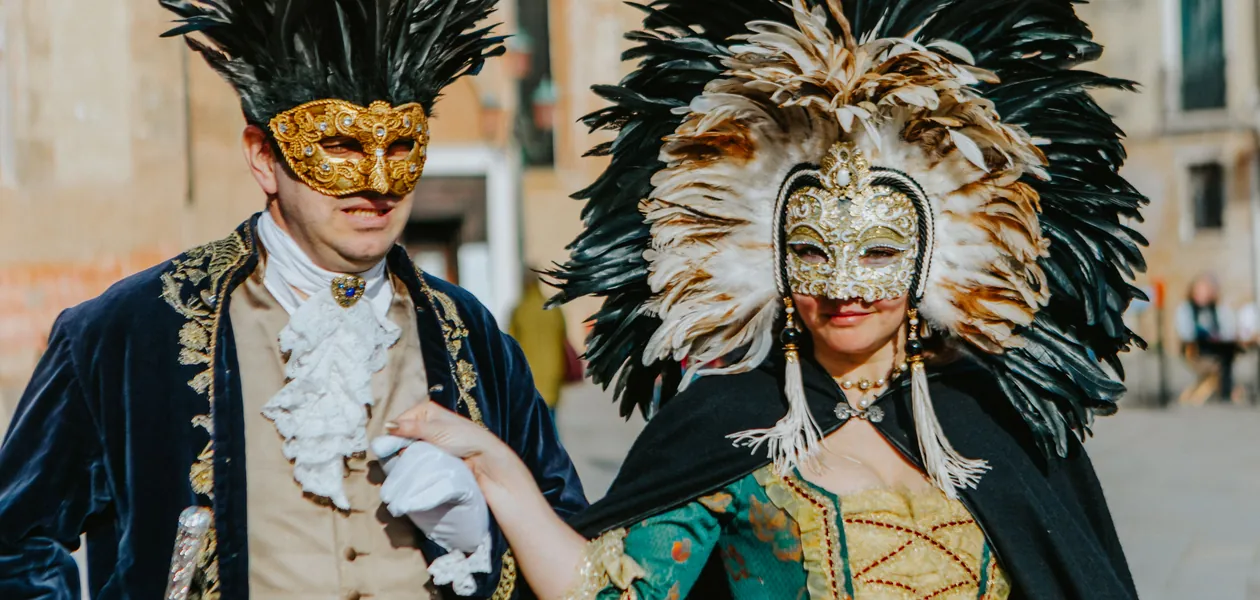
The tradition traces back to the Venetian carnival, where masks let nobles and commoners mingle as equals for a season. A masked guest had no rank and no name; that promise of hidden identity is what made the Venetian carnival irresistible, and it is still the appeal at masquerade balls today. The mask is permission to be someone else for an evening, and the mystery is the entire point.
From Venice the custom spread through European courts into theater and the commedia dell’arte, where mask shapes became shorthand for the stock characters everyone knew: comedy, tragedy, the trickster, the plague doctor. The carnival was suppressed for nearly two centuries under Austrian rule, and the masks survived in theater and opera until Venice revived the celebration in 1979. Every modern Halloween mask you will see descends from one of those traditional shapes, which is why a well-chosen mask reads as elegant rather than costume-shop cheap: the designs carry their history on their face.
The appearance of each classic shape was functional before it was fashionable. Full-face masks bought silence and anonymity; half-masks bought mobility and conversation. That trade-off has not changed in three hundred years, and it is still the first decision you will make.
The Classic Venetian Types
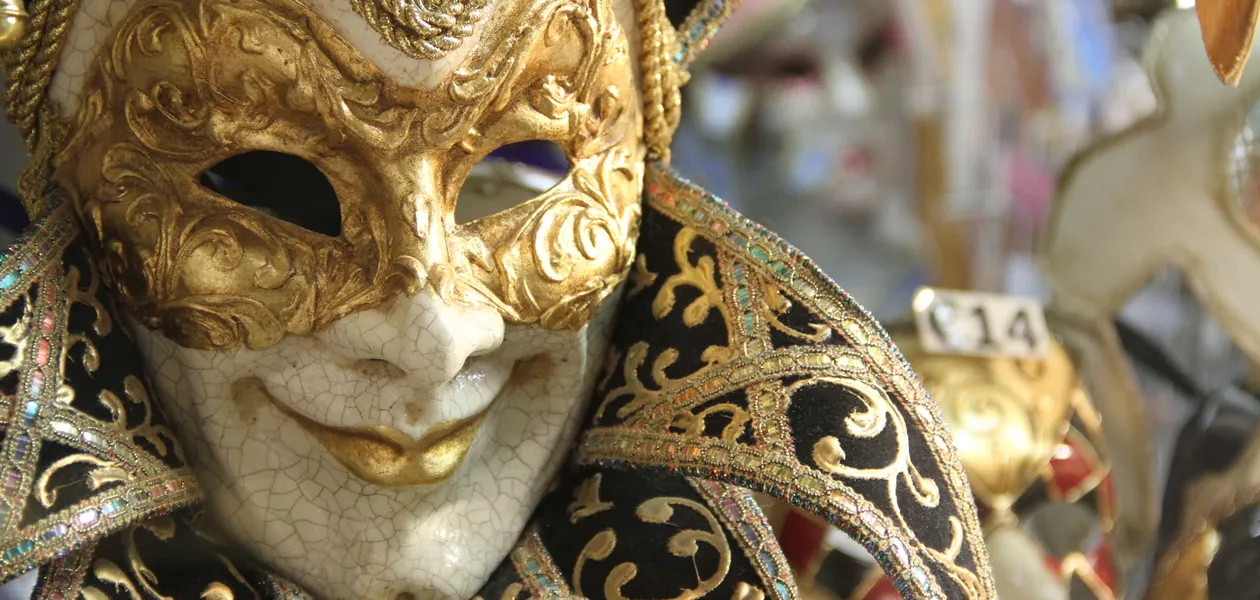
When it comes to Halloween masquerade masks, the Venetian classics are the backbone of every collection, and the most popular styles at formal masquerade balls. Learn these five and you can read any masquerade ball, whether the crowd is men in Bautas or couples in matched costumes from the commedia dell’arte playbook.
Bauta
The full-face mask with a squared jaw and no mouth opening, historically worn with a tricorn hat and cloak. The Bauta was so tied to anonymity that Venetians wore it for voting and public business, not just parties; the protruding jawline let the wearer talk, eat, and drink without ever showing a face.
- Best for: total anonymity and a formal, imposing look.
- Character: the serious one; this is the mask of secrets.
- Wear it with: dark formal dress; it overwhelms casual clothes.
Colombina
The half-mask that covers the eyes and cheekbones, often jeweled, gilded, or trimmed with feathers and filigree, held on a baton or tied with ribbon. It takes its name from Colombina, the quick-witted servant girl of the commedia, and it was supposedly created for an actress who refused to cover a beautiful face. That bit of commedia dell’arte gossip tells you everything about the mask’s energy.
- Best for: elegance that still lets you eat, drink, and be recognized at will.
- Character: flirtatious and theatrical, named for a stock character of Italian comedy.
- Wear it with: anything from a suit to a full costume; the most popular and versatile shape, for men and women alike.
Volto
The smooth, white, full-face “ghost” mask, the simplest and most modern-feeling of the classics. Venetians also called it the larva; its blankness was the entire point, erasing expression so completely that the wearer becomes a moving mystery. A Volto covers everything; a half-mask covers less and gives more back. Modern designers love the Volto because the clean shape takes paint, leaf, and colors better than any canvas, perfect for custom work.
- Best for: a clean, eerie appearance that photographs beautifully.
- Character: neutral by design; your body language does the talking.
- Wear it with: minimal black or white outfits for the full effect.
Medico della Peste
The plague doctor: long beak, round eyes, instantly recognizable and slightly unsettling. The beak is not a costume invention; seventeenth-century plague doctors packed it with herbs in the belief it would filter disease. The mask crossed from grim history into the carnival canon precisely because it is so striking.
- Best for: Halloween specifically; it is the most macabre of the classics.
- Character: history’s strangest medical uniform turned theater icon.
- Wear it with: a long dark coat; a hood ruins the silhouette.
Arlecchino
The harlequin: a half-mask with an impish expression, tied to the diamond-patterned trickster of the commedia dell’arte. Arlecchino was the acrobatic servant who outsmarted his masters, and the mask keeps that mischief in its raised brows and sly cheekbones.
- Best for: playful costumes with color and pattern.
- Character: the joker of the masked canon; nobody trusts the harlequin, correctly.
- Wear it with: bold colors; this is the one mask that loves a loud outfit.
If you want a costume that doubles as everyday style, our guide to a cowboy outfit works year round.
Halloween-Specific Styles
Animal and Fantasy Designs
Beyond the classics, Halloween opens the door to animal designs like foxes, cats, ravens, and dragons, and full fantasy shapes if you want something nobody else wears. These masks trade tradition for personality, and they work best when the rest of the costume commits to the same character. They are also the most forgiving entry point for anyone who finds the Venetian classics too formal for a casual party; nobody asks a fox mask about its provenance.
- Foxes and cats: sleek, flattering, and easy to pair with ears or simple costume pieces.
- Ravens and birds: dramatic profile, brilliant for gothic or Poe-flavored looks.
- Dragons and fantasy: statement masks that ARE the costume; keep everything else plain.
Skeleton and Sugar Skull Masks
For a more macabre look, consider a skeleton or sugar skull mask. Skeleton masks lean horror, cousins of the Medico della Peste’s energy; sugar skulls lean festive and detailed, drawing on Día de los Muertos artistry.
- Skeleton: the easy win; reads clearly across a dark party.
- Sugar skull: intricate color and craft; treat the design with respect, it has real cultural roots.
Choosing the Perfect Masquerade Mask
Use this checklist before you buy, in this order, and think about materials before price:
- Match the event: a formal masquerade ball wants a Venetian classic; a house party tolerates anything, so choosing by setting is the perfect first filter.
- Match your costume: pick the mask second, after you know what you are wearing, so the colors and style create one appearance instead of two.
- Comfort: if it pinches the nose or fogs your vision in the first minute, it will ruin hour three; comfortable wins at midnight, every time.
- Wearability: half-masks let you eat, drink, and talk; full-face masks make an entrance and then come off.
- Glasses: if you wear them, half-masks with generous eye openings are the right call. Masks also fit faces differently; wide and narrow faces want different shapes, so try before the event.
- Fastening: ribbons hold better than elastic over a long night and never snap mid-party. Avoid heavy feathers in a crowded room; they shed and they catch.
- Quality: the traditional materials, high-quality paper-mache, leather, resin, and metal filigree, take hand-painted color and hold detail; avoid glossy molded plastic, which never looks like anything else.
Where to Find a Good One
- Local costume shops: you can check the fit and the shape against your face, which matters more than any photo.
- Online specialty retailers: the widest range of traditional Venetian carnival work, modern designs, and styles for men specifically.
- DIY: a plain Volto blank, paint, and an evening of patience create a mask nobody else will be wearing, in exactly the style you want; use a high-gloss varnish to finish and it will read as professional work.
If you make your own, build it around the event’s dress code, not against it; a homemade mask at a formal masquerade ball should still carry the elegance of the room. Usually the simplest designs photograph best. Whatever the source, order or build early; the good masks disappear in the two weeks before Halloween, and a rushed replacement is how plastic ends up on your face.
Wearing It Well
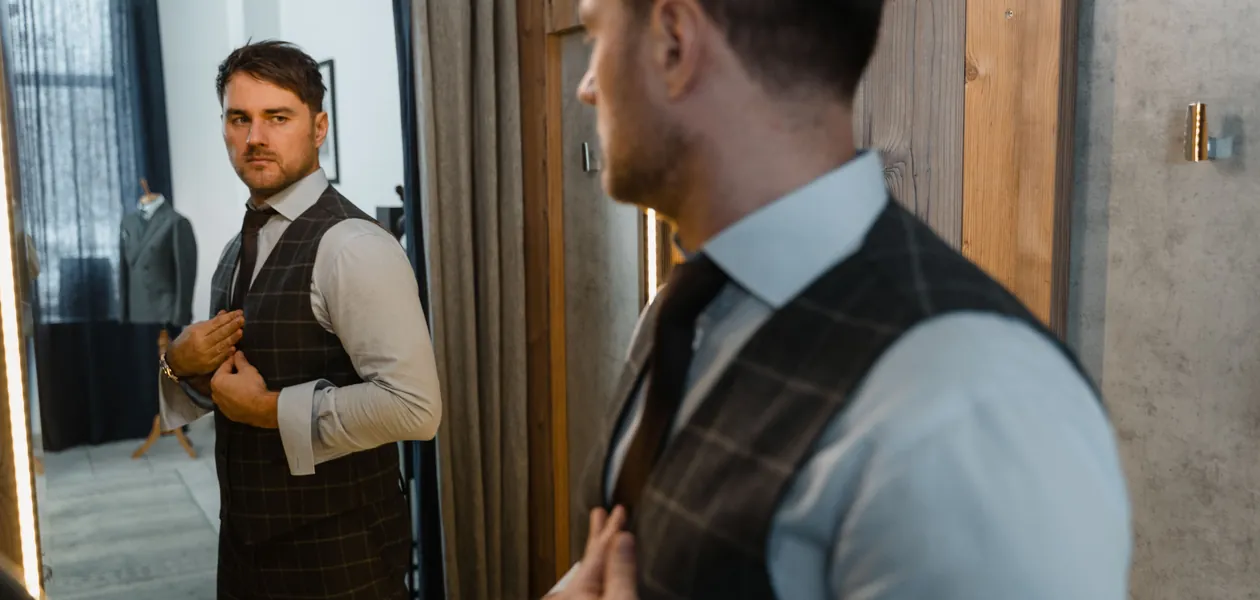
Most advice about masquerade costumes is written for women, so here is the men’s version, the key to looking right at masquerades and black tie Halloween events alike. The mask is the centerpiece, and the outfit’s job is to support the design, not compete with it. Keep the dress palette to two or three colors, let one element echo the mask, a pocket square, a lapel pin, a key chain detail, and groom like you mean it, since the lower half of your face is doing all the work. A beard works fine under a half-mask and terribly under a full-face one, so factor the shave into the choice; comfort and a high collar do more for the appearance than any accessory. And practice once at home: how it sits, how it fogs, how you drink in it. The comfortable, effortless guests at midnight are the ones who rehearsed five minutes in a mirror.
One last point of etiquette, because masked social events have their own social choreography: keep the mask on until the host signals otherwise or the unmasking moment arrives, since concealing your identity is half the fun everyone signed up for, greet people with a nod rather than a fumbled handshake if you are in a full-face piece, and take it off for dinner without being asked; masquerade balls reward guests who want the theater without forcing it. The mask is theater; knowing when the scene ends is part of wearing it well. The small, deliberate touches matter; we keep a whole guide to lowkey, underrated details in men’s fashion for exactly this kind of dressing.
A Halloween masquerade mask is much more than another accessory; you can wear it with any type of clothing if you choose the shape honestly for the event, your costume, and your face. Pick a classic like the Bauta or Colombina if in doubt; they stay popular because they work. The Venetians spent centuries perfecting these shapes, and a good Bauta usually outlives every costume in the closet: the style, the looks, and the personality were perfected long before us.


