
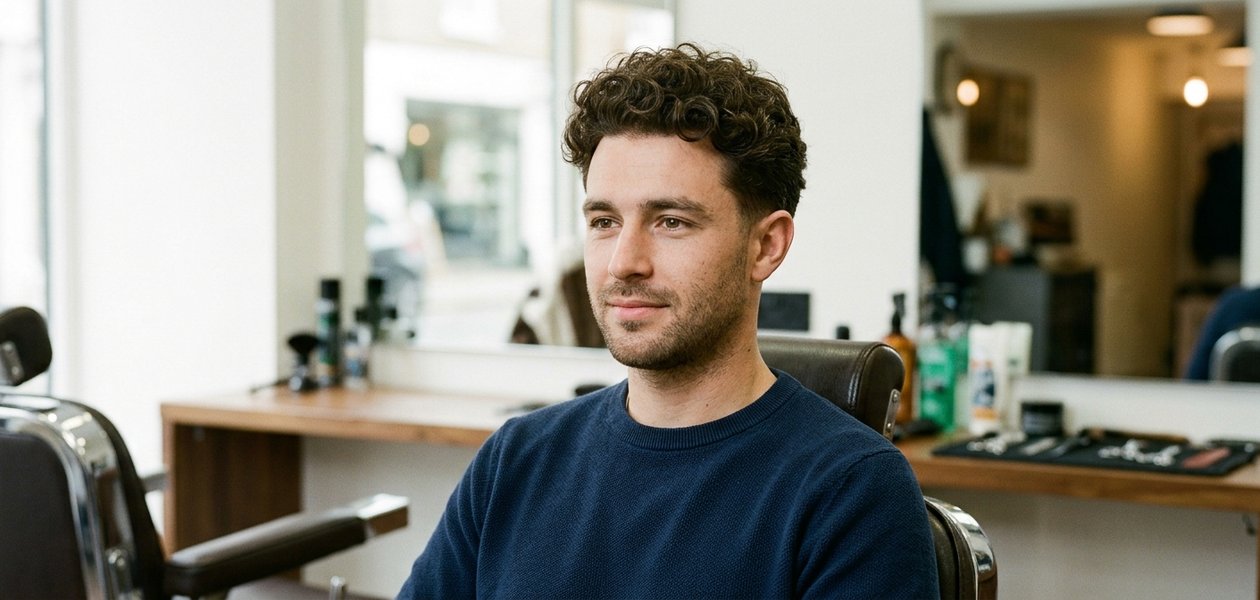
The 30 haircuts below suit men with anything from loose waves to tight coils, grouped by length, each with the words to use in the barber’s chair. After the list come the factors that decide the pick: curl tightness, density, face shape and styling time.
Why Curl Pattern Decides the Right Cut
Curls start below the skin. A 2019 review of curly hair research explains that curly strands grow from curved follicles, while straight strands grow from follicles set at roughly a right angle to the scalp. The review also describes a scale of eight curl groups, running from straight hair in group 1 to tightly curly hair in group 8.
L’Oréal researchers built on that scale in a 2016 study of 2,249 young adults from 24 ethnic groups. The range is wide, which is why one cut can look sharp on a friend and puffy on the next man.
In the chair, three things matter more than any label: curl tightness, density and how much the curls shrink once dry. Curly hair is also drier than straight hair, so frizz control with a curl cream or a leave-in matters as much as the haircut itself.
Loose waves lie flat and suit fringes and slick backs. Medium curls hold volume for tapers and shags. Tight coils stack upward, which suits fades and rounded afros.
Short Haircuts: Clean Tapered Sides, Curls Left on Top
Most short options for curly hair follow one plan: take the weight off the sides and the back, then leave enough on top for the curl to form.
1. Low Taper Fade With Curls on Top The length drops only at the temples and the neckline, so the sides keep some weight and the curls sit loose above. It is a safe first haircut that suits an office. Ask for: a low taper, 2 to 3 inches left on top.

2. High Skin Fade With a Curly Top The sides go down to the skin well above the ears, which puts all the volume on top and gives the sharpest contrast here. It flatters men with tight curls and coils most. Ask for: a high skin fade blended into a rounded top.
3. Curly Burst Fade The fade curves in a half circle around each ear and leaves length at the back of the neck, a modern nod to the mullet. Ask for: a burst fade around the ears, the nape left longer, the top shaped round.
4. Drop Fade on Curly Hair The fade line dips behind the ear and follows the curve of the skull down to the nape. On a dense head of curls it keeps the side view neat. Ask for: a mid drop fade with a soft blend into the top.
5. French Crop With Curls About 1 to 2 inches of curl stay on top and fall forward into a short, textured fringe, with a mid or high fade on the sides. It needs almost no styling. Ask for: a French crop with a slightly uneven fringe.
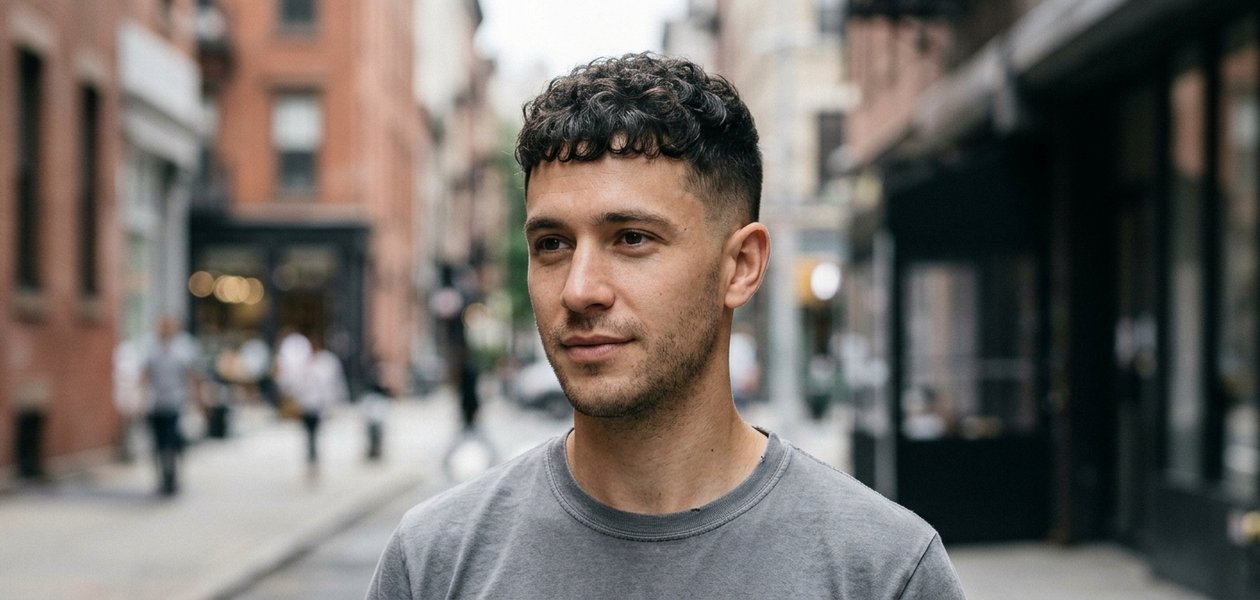
6. Disconnected Undercut The sides and back are clipped to one length with no blend, and the longer curls on top sit over the hard line. Side puff disappears. Ask for: a #2 undercut with no blend, 3 to 4 inches kept on top.
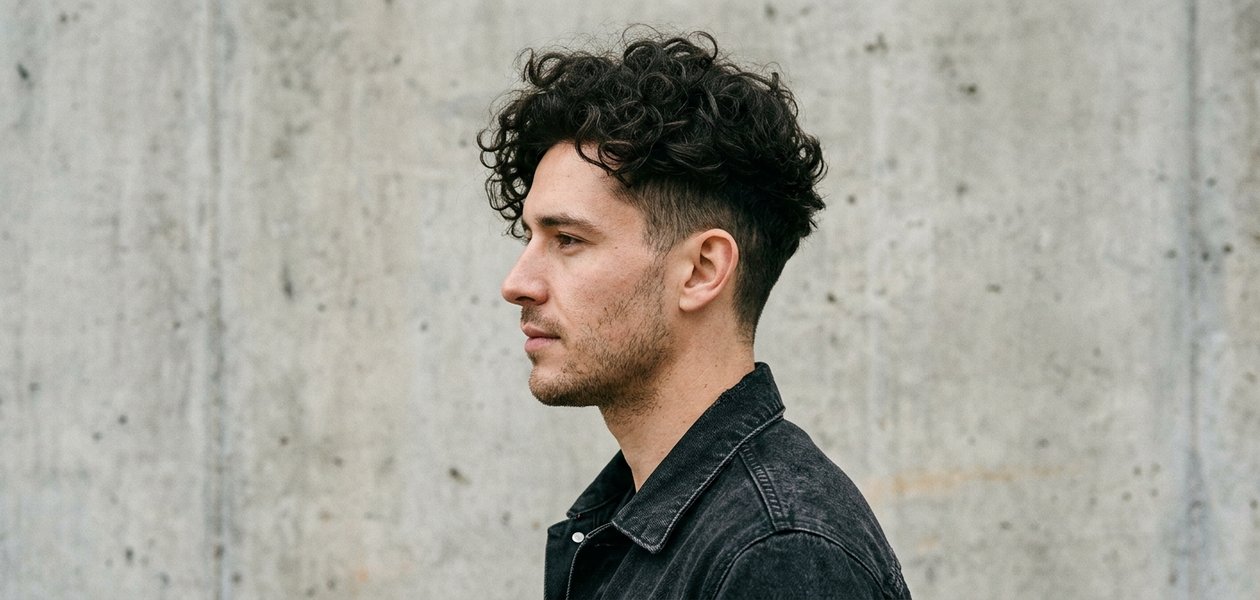
7. Curly Crew Cut The top is trimmed to about an inch and tapered toward the sides, so the curl shows only as texture. It is the easiest short curly haircut to keep tidy. Ask for: a crew cut, the top cut with scissors.
8. Buzz Cut With a Lineup One clipper length all over turns the curl into an even, dark texture, and trimmers square off the hairline and the temples. Styling takes seconds. Ask for: a #2 or #3 buzz and a lineup on the natural hairline.
9. Short Afro With a Taper Tight coils are shaped into a short, rounded top about 1 to 2 inches high, and a taper keeps the edges clean. A curl sponge keeps the top defined. Ask for: a tapered afro with a natural lineup.
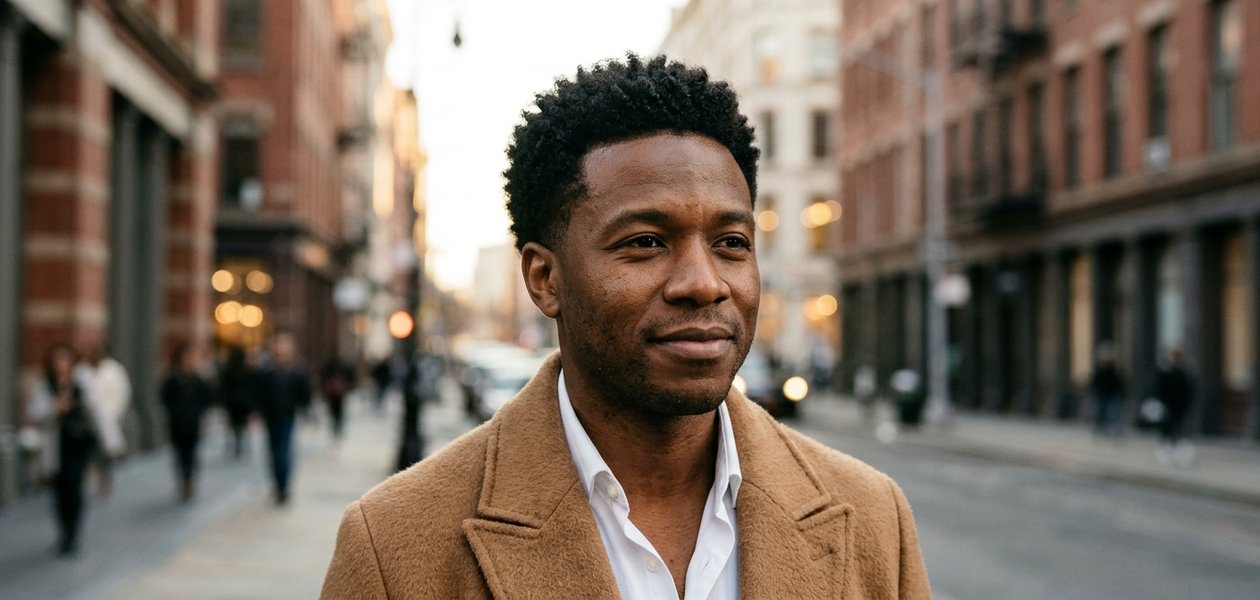
10. Curly Quiff The front is left the longest and pushed up and back, so the curls stack into height above the forehead. It takes a blow dryer and a light paste. Ask for: extra length at the front and short tapered sides.
11. Side Part With Curls A part sits along the natural crown line, the curls fall to one side and the sides are blended rather than shaved up to the part. It reads polished for work and weddings. Ask for: a part where the hair already splits.
12. Curly Faux Hawk A strip of longer curls runs from the forehead to the crown, and the sides fade shorter without being shaved off. It gives height without a full mohawk. Ask for: a mid fade and a center strip about two fingers wide.
Medium-Length Curls: Layers, Fringes and Movement
Medium haircuts of roughly 2 to 6 inches give curly hair room to form full spirals. The danger at this length is bulk: without layers, the sides puff out into a triangle.
13. Curly Fringe Curls are brought forward over the forehead, which softens a square or round face and hides a high hairline. Layers keep the fringe light on the brows. Ask for: a textured fringe, point cut ends, tapered sides.

14. Modern Curly Mullet Short or faded sides meet a curly top and a longer back that rests on the collar. The fade keeps it current rather than retro. Ask for: a taper or burst fade, the back left at collar length.
15. Curly Wolf Cut Choppy layers at the crown and a shaggy back mix a mullet with a shag, and the curl gives every layer natural lift. It takes months of growth first. Ask for: crown layers and a fringe that falls naturally.
16. Curly Shag Loose layers run through the top and the sides so the curls fall freely around the face and the neck, with a slightly imperfect edge. It looks better with less styling. Ask for: a medium shag with a soft fringe.

17. Curly Flow Medium curls are swept back from the face and left to fall behind the ears. Soft layers stop the shape from widening at the bottom. Ask for: layers through the back, the front slightly shorter.
18. Middle Part Curtains The curls split at the center and fall evenly on both sides, framing the cheekbones. It flatters an oval or long face most. Ask for: a center part, light layers, medium sides.
19. Broccoli Cut Tight sides hold up a dense, rounded crown of curls that stands up and out like a floret. It works best on thick, springy curls. Ask for: a high taper and a round top thinned by point cutting.

20. Layered Curls The whole head is cut in layers so the top and the back lose weight and the curls spring up instead of flattening. The length stays; only the bulk goes. Ask for: medium layers, weight removed from inside.
21. Textured Slick Back Wavy or loosely curled hair is combed straight back while damp and left to set, a looser cousin of the classic slick back. It needs dense hair. Ask for: 4 to 5 inches on top, scissor cut sides.
22. Twists With a Taper Coily hair is twisted into small, even sections across the top and finished with a low taper and a clean lineup. The twists keep tight coils neat between washes. Ask for: a low taper with a natural lineup.
Long Curls, Afros and Coils With Full Volume
Long curly hair shows full volume and movement, but it still needs a plan. Regular trims and a leave-in conditioner keep the length defined, and layers stop one heavy mass from forming.
23. Shoulder-Length Curls Curly hair grows to the shoulders with the ends separated, so the shape looks loose and full rather than heavy. Regular trims keep split ends away. Ask for: long layers cut dry, only the ends dusted.

24. Long Layered Curls Layers cut at several heights give long curls movement and stop the triangle that one length forms. A stylist who cuts curl by curl handles this best. Ask for: long layers and no thinning shears.
25. Curly Man Bun Long curls are gathered at the crown and tied loosely. A loose tie does not drag on the hairline. Ask for: even long layers so the ends gather cleanly.
26. Long Curls Over a Hidden Undercut The lower sides and the nape are clipped short under long curls, which removes bulk where curls pile up. It shows only when the hair is tied back. Ask for: a #2 undercut below the temples.
27. Low Curly Ponytail Long curls are pulled back and tied low at the nape, with the pattern visible through the length. It suits the gym or a job that needs tied hair. Ask for: even layers so the ends match when tied.
28. Rounded Afro Tight coils grow out into a full, round silhouette, shaped with shears so it sits even from every side. The shape needs regular trims to stay round. Ask for: a shear-shaped afro and a natural hairline.
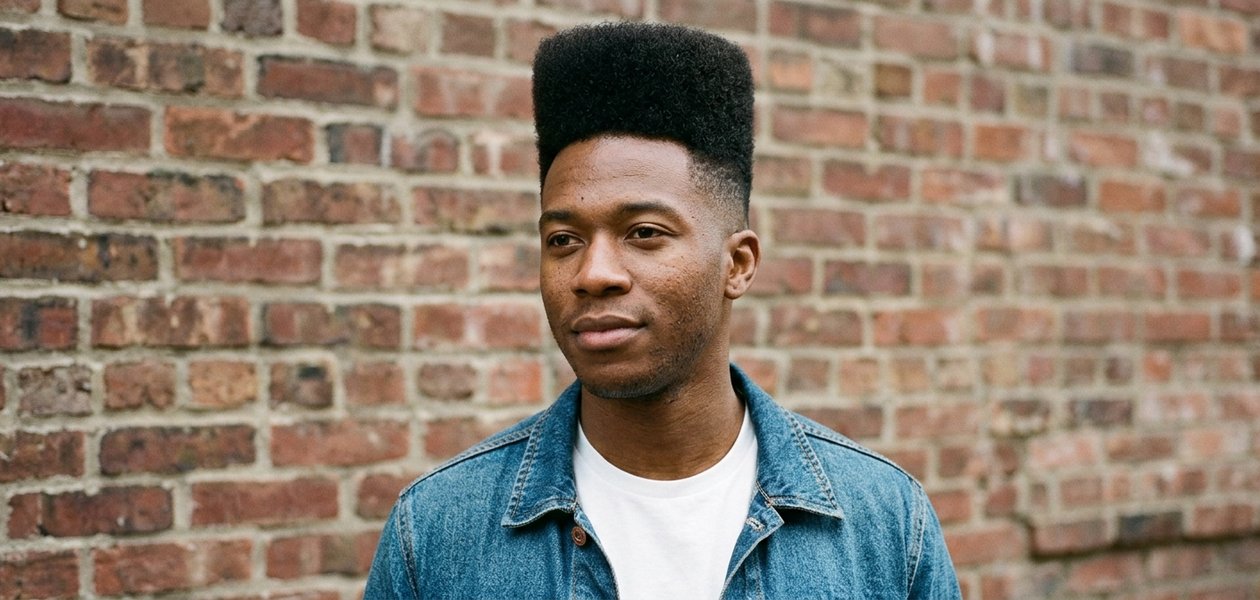
29. High-Top Fade Coils grow straight up into a tall, flat top while the sides fade down tight. The hi-top fade was a hip hop trend of the 1980s and early 1990s. Ask for: a skin fade and a squared top edge.
30. Long Surfer Curls Loose waves grow past the ears and are left tousled, as if dried by sea air. Sea salt spray adds grip. Ask for: long layers with point cut ends.
Choosing a Cut by Curl Tightness, Face Shape and Daily Effort
The tighter the curl, the shorter a haircut can be on top while still showing texture. The table groups the 30 cuts by the curl they suit.
| Curl pattern | Cuts that work | Top length | Daily styling |
|---|---|---|---|
| Loose waves | Textured slick back, side part, surfer curls, French crop | 2 to 5 inches | Sea salt spray, air dry |
| Medium curls | Low taper, curly fringe, shag, wolf cut, layered curls, flow | 2 to 6 inches | Curl cream, then diffuse or air dry |
| Tight curls | High skin fade, broccoli cut, burst fade, drop fade, quiff | 1 to 3 inches | Leave-in conditioner and a light gel |
| Coils | Tapered afro, high-top fade, twists, rounded afro | 1 inch and up | Leave-in, a pick or a curl sponge |
Face shape and hairline narrow the list further:
- Round face: height on top (quiff, faux hawk, high top) and tight sides make the face look longer.
- Square face: a curly fringe or a shag softens a strong jaw.
- Oval or long face: a middle part or a flow frames the cheekbones without adding height.
- High hairline: a fringe brought forward covers it; a hard lineup draws attention to it.
What to Ask the Barber: Guard Lengths, Fade Height and Top Length
A curly head cut like a straight one often comes out shorter and wider than planned. Clear requests prevent that:
- Bring a photo of a similar curl: a picture of the cut on straight hair will not translate.
- Ask whether the top is cut dry: curls look shorter once dry, so a top cut wet and combed straight can end up shorter than planned.
- Name the guard numbers: on Wahl’s guard scale a #1 leaves 1/8 inch (3 mm) and a #4 leaves 1/2 inch (13 mm), while the bare standard blade cuts to 0.8 mm.
- Ask for a shape, not a length: “rounded top, weight out of the sides” gives a clearer target than “an inch off.”
- Request point cutting over thinning shears: layers and point cut ends remove weight while keeping the curl clumps that give definition.
- Keep the lineup on the natural hairline: a line pushed back behind it makes the hairline look higher until it grows in.
A Moisture Routine for Washing, Drying and Styling Curls
A good haircut still frizzes without the right routine. The American Academy of Dermatology notes that curly hair is drier and more prone to breakage than other types, and its dermatologists give the core of the routine:
- Wash only when needed: thick curls do not need a daily or even weekly wash, though the academy advises washing at least every 2 to 3 weeks.
- Condition every time: conditioner goes on all of the hair, not just the ends, then a leave-in conditioner or a light oil.
- Detangle wet, never dry: fingers or a wide-tooth comb on damp, conditioned hair; brushing dry curls breaks them and adds frizz.
- Dry at a distance: in a 2011 hair dryer study, a dryer held 15 cm away and kept moving did less damage than drying naturally, while surface damage rose with the heat. A diffuser on low heat follows that rule.
- Leave the curls alone while they set: touching them as they dry breaks up the clumps; once dry, a scrunch softens any stiffness from gel.
Styling Products for Curls: Leave-In Conditioner, Curl Cream and Gel
Product choice follows the curl and the haircut. Short fades need little; medium and long curly hair needs moisture first and hold second.
- Leave-in conditioner: the base for every curl type; the academy points to argan oil, glycerin and fatty alcohols like cetyl or stearyl alcohol.
- Curl cream: softness and definition for waves and medium curls, worked in while damp.
- Gel: the strongest hold for tight curls; it dries with a cast that a scrunch breaks up.
- Clay or paste: structure for a quiff, a side part or a faux hawk, in small amounts so the curls stay soft.
- Clarifying shampoo: the academy suggests one before the moisturizing shampoo when gels, oils, creams or pomades are in use.
Fade Upkeep: Why a High Skin Fade Needs More Barber Visits
A fade on curly hair is quick to style each morning, yet it needs frequent barber visits to keep the sides looking sharp. The reason is growth rate: Cleveland Clinic puts it at about 1 centimeter a month.
At that pace, a side cut with a #1 guard at 3 mm reaches roughly 8 mm in two weeks, more than double its length, and the blend between skin and curl starts to blur. The higher and tighter the fade, the sooner it shows.
Longer curls hide the same month of growth inside the curl, so their trims are about shape and split ends rather than sharp lines. A man who wants fewer appointments does better with a low taper, a crew cut or medium layers than with a high skin fade.
