
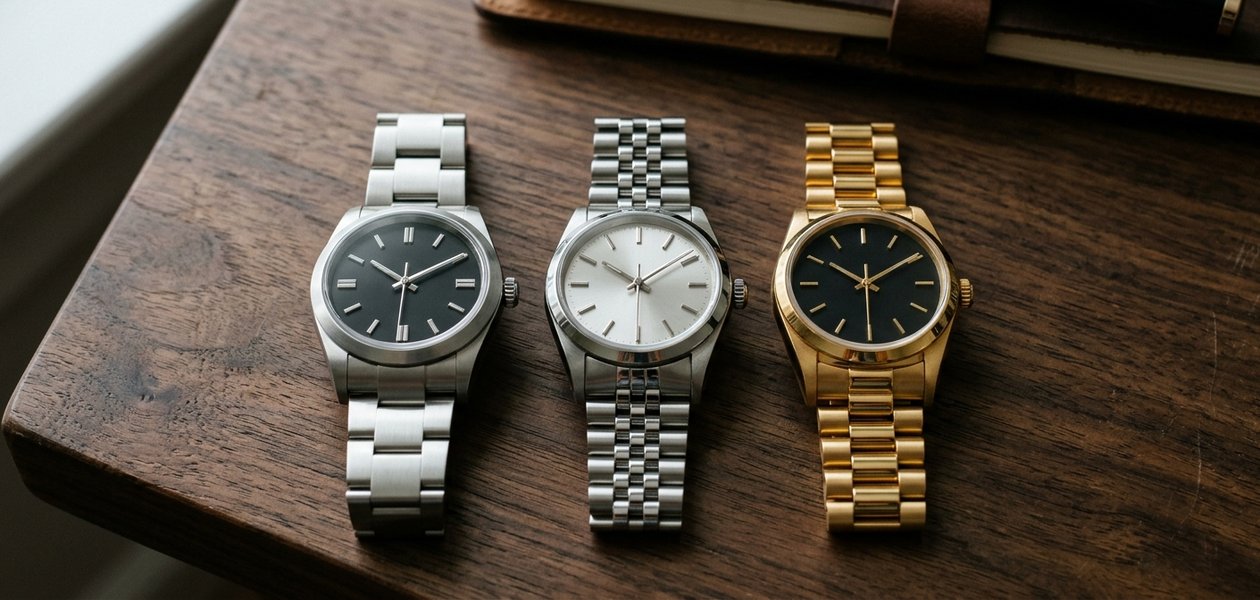
For a man choosing a Rolex, the bracelet is a decision of its own. Link count and shape set the character, from the sturdy Oyster to the jewelry-like Settimo, while the metal and the clasp decide weight, comfort and how fast the fit can change on a hot afternoon.
The Seven Rolex Bracelets Side by Side
The table lines up what separates each design: how many links run across a row, when it first appeared, the metals it comes in and the watches that wear it.
| Bracelet | Links across | First seen | Metals | Where it appears |
|---|---|---|---|---|
| Oyster | 3 broad, flat links | Patented 1947 | Oystersteel, gold, platinum, steel with gold | Submariner, Explorer, GMT-Master II, Daytona, Datejust |
| Jubilee | 5, with small center links | 1945, Datejust | Oystersteel, gold, steel with gold | Datejust, GMT-Master II |
| President | 3 rounded links | 1956, Day-Date | 18 ct gold, platinum | Day-Date, some small gold Datejust models |
| Pearlmaster | 5 rounded links | 1992, Pearlmaster | 18 ct gold, often gem-set | Pearlmaster models |
| Oysterflex | Metal inserts under elastomer | 2015, Yacht-Master | Black elastomer | Gold Yacht-Master, Daytona, Sky-Dweller |
| Flat Jubilee | 5 flat, integrated links | 2025, Land-Dweller | Oystersteel, Everose gold, platinum | Land-Dweller |
| Settimo | 7 small polished links | 2025, Perpetual 1908 | 18 ct yellow gold | Perpetual 1908 |
The Oyster Bracelet: Three Flat Links Built for Daily Wear
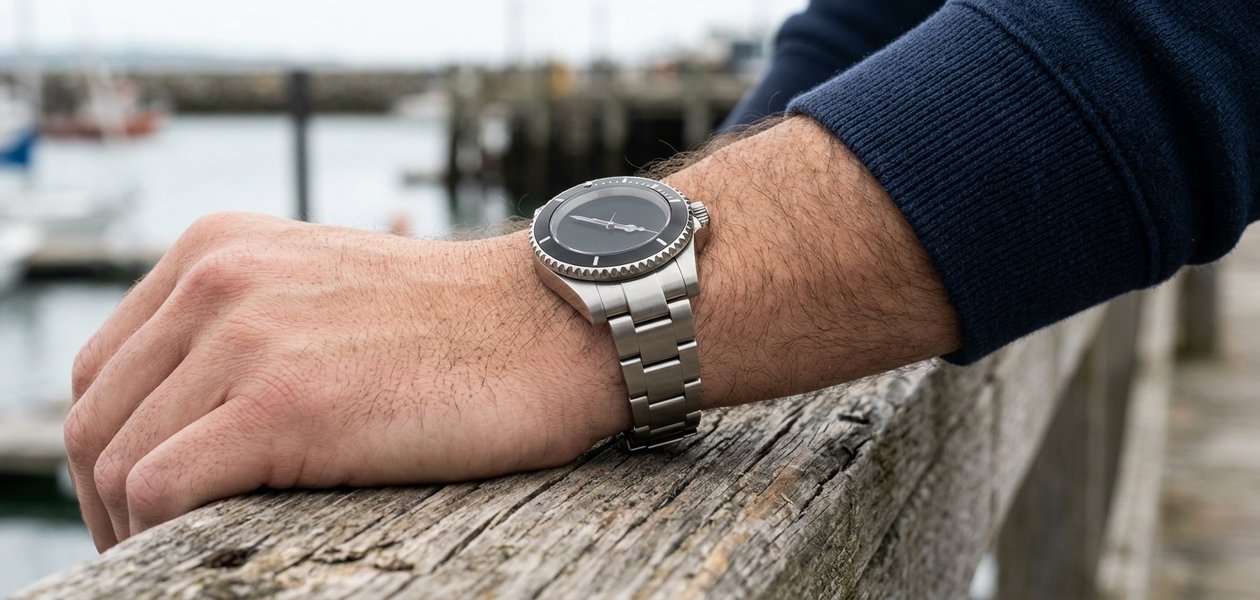
The Oyster is the bracelet most people picture on a Rolex. Each row has a broad, flat center link between two narrower outer links, and the name comes from the waterproof Oyster case, which Rolex first introduced in 1926, as the Datejust’s history notes.
Rolex patented the bracelet in 1947. Gay Frères, the specialist workshop that made it for decades, became part of Rolex in 1998.
Fewer joints across the wrist make it rigid and hard-wearing. That is why it sits on the professional models, the Submariner, Explorer, GMT-Master II and Cosmograph Daytona, as well as on many Datejust and Oyster Perpetual references. Brushed links hide scratches on a tool watch; polished center links dress it up on others.
Steel versions are cut from Oystersteel. Rolex uses 904L grade stainless steel, a more corrosion-resistant alloy than the 316L most Swiss brands use. Vintage Oysters were riveted or folded from thin sheet, while current ones are solid metal.
The Jubilee Bracelet: Five Links and a Dressier Drape
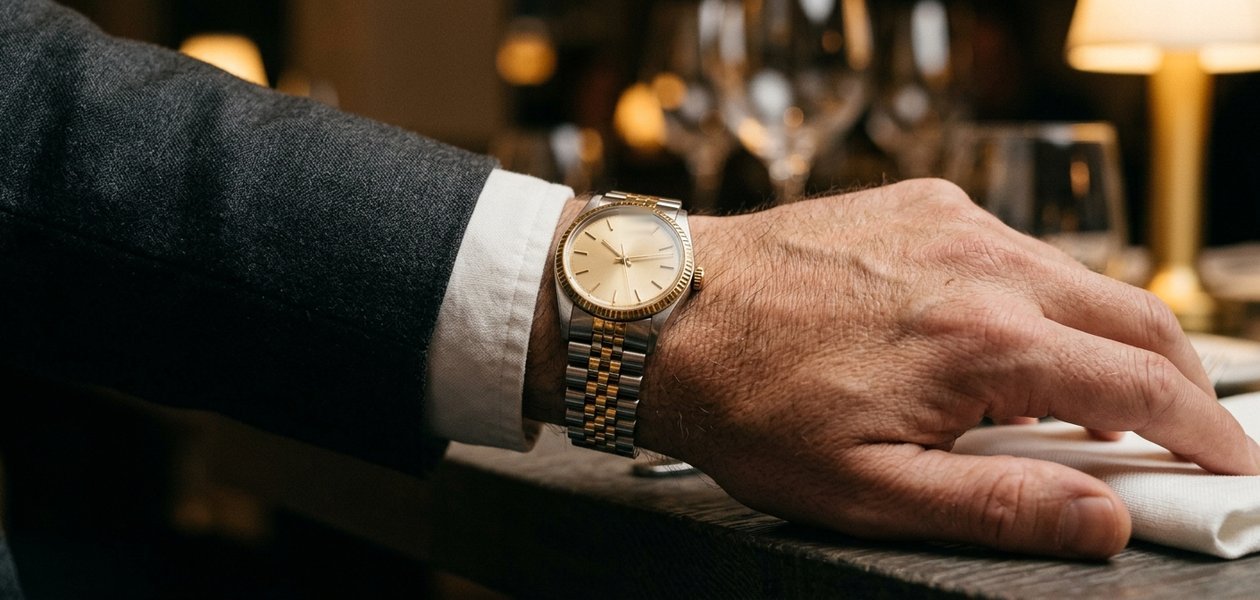
The Jubilee arrived in 1945 on the first Datejust, reference 4467, a watch launched for the company’s 40th anniversary. It came only in 18 karat yellow gold, and the bracelet was named for the occasion. Christie’s, cataloguing an early 4467, calls it the first timepiece to feature the Jubilee bracelet.
Each row has five links: three small center pieces between two wider outer ones. All those joints let it curve around the wrist bone, and the polished center links catch light, so it reads dressier than an Oyster. Steel and two-tone versions followed the gold original.
The Datejust is still offered on either bracelet, and the Jubilee crossed into sport models as well. In 2018 Rolex put the steel GMT-Master II “Pepsi” on a Jubilee, then in 2021 it brought back the Oyster as a second choice for that watch and the black and blue “Batman”, according to the GMT-Master II record.
Oyster or Jubilee: How Each One Wears
On a model sold with both, the choice comes down to look and feel rather than strength, since modern versions of each use solid links.
- Oyster: flatter, firmer and sportier, with broad links that give the watch a bolder outline and sit well with denim, chinos and a casual jacket.
- Jubilee: more flexible and more polished, hugging the wrist closely and slipping under a shirt cuff with a suit or a blazer.
Stretch is the old complaint about Jubilees. What loosens over years is wear at the pins and link holes, not the metal itself, and five links per row give it more wear points. On the Submariner, Rolex answered with solid links whose pins turn in ceramic sleeves that prevent premature wear and stretch.
The President Bracelet: Rounded Links in Gold or Platinum
Rolex built the President for the Day-Date, shown at the Basel fair in 1956. Reference 6511 came only in 18 ct gold or platinum, on a new bracelet with three rounded links across the band that was exclusive to the model.
Rolex was already calling it the President bracelet in 1957, eight years before Lyndon B. Johnson became the first US president to wear a gold Day-Date, as the Day-Date’s history records.
It is still made only in precious metal. A concealed Crownclasp hides under the links, so the rounded rows run unbroken around the wrist. Rolex also fits it to small gold Datejust models such as the Lady-Datejust 28, but on a man’s watch the name points straight to the Day-Date.
The Pearlmaster Bracelet: Gem-Set Gold for a Jewelry Line
The Pearlmaster bracelet appeared in 1992 with the Pearlmaster, a jeweled, precious-metal version of the Datejust aimed mostly at women. Its five rounded links come only in gold, and the small links could carry diamonds. Christie’s has sold a circa 1994 Datejust Pearlmaster on an 18k gold, diamond and ruby-set Pearlmaster bracelet.
It is the rarest of the four classics and the one a man is least likely to wear. For a man shopping pre-owned, the name signals a jewelry watch rather than a sports or dress piece.
The Oysterflex Bracelet: Metal Blades Under Black Elastomer
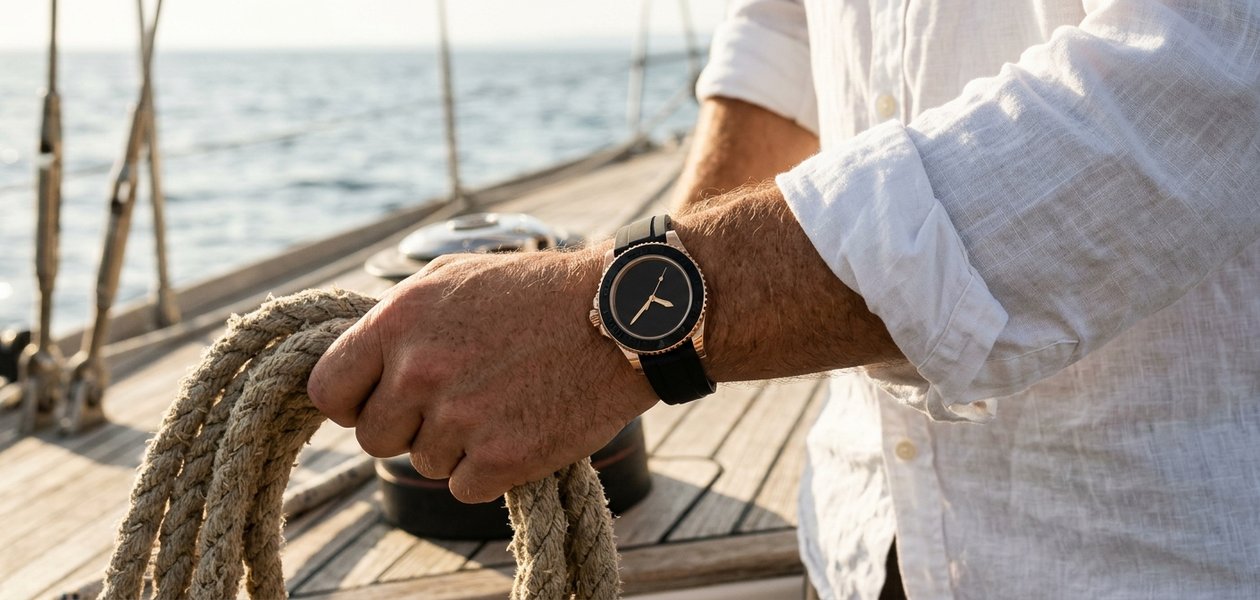
The Oysterflex launched in 2015 on the Everose gold Yacht-Master, the first Rolex sold on a rubberized bracelet, according to the Yacht-Master entry. It looks like a rubber strap, but it is built differently.
Inside, titanium and nickel inserts fix it to the case and clasp, and a sheath of high-performance black elastomer covers them, with ridges molded into the underside so it follows the curve of the wrist, as Hodinkee’s 2015 review explains.
Because of that metal core, Rolex calls it a bracelet. It is fitted to gold versions of the Yacht-Master, Cosmograph Daytona and Sky-Dweller. Rolex S.A. also holds a US patent for an elastomer bracelet strand with a comfort pad on its inner side, designed to keep the watch steady as the wrist changes size, for example when diving.
Leather and Rubber Straps on a Steel Rolex
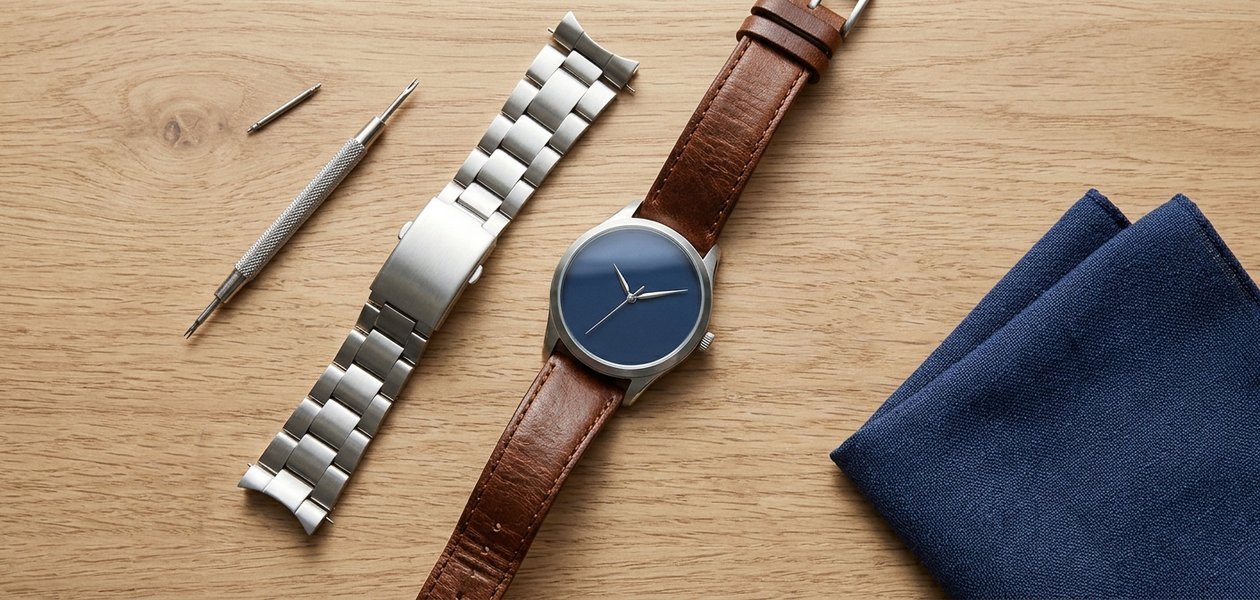
Rolex sends its steel models out on metal bracelets, so a man who wants rubber for summer or leather for an evening has to look past the catalog. The simplest route is to upgrade your Rolex with premium straps cut for its lug width, keeping the factory bracelet and end links stored safely.
Fit is the one firm rule. Widths differ even between near twins: the 36 mm Datejust takes a 20 mm bracelet while the 34 mm Date takes a 19 mm one, so a strap has to match the exact reference. Unless a strap is made to take the original clasp, it also gives up the quick adjusters covered below.
Flat Jubilee and Settimo: Two New Bracelets From 2025
Rolex added two bracelets at Watches and Wonders 2025. The Land-Dweller, in 36 mm or 40 mm, wears a five-row Flat Jubilee that flows straight out of the case as an integrated design, updated from the flat-link bracelets of the 1970s ref. 1530 and Oysterquartz watches.
It closes with a Crownclasp, which Hodinkee describes as a hidden clasp with a crown-shaped pull. The Datejust 36 and 41 have not offered that clasp on their Jubilee since 2018.
The Settimo was made for the Perpetual 1908 in 18 ct yellow gold. Its rows hold seven small links, every one polished to a mirror finish, and a patent has been filed for the way it attaches to the case. It is reserved for the 1908 and also uses a concealed Crownclasp.
Rolex Clasps and Fit Adjusters
The clasp matters as much as the links, because it decides how quickly the fit can change on a hot day or over a wetsuit sleeve.
- Oysterclasp: a folding clasp found on dressier and everyday models, including the Jubilee on the 2018 GMT-Master II.
- Oysterlock: a folding clasp with a hinged safety cover that stops it springing open by accident, common on the professional models.
- Crownclasp: the concealed clasp of the President, Flat Jubilee and Settimo; it has no comfort extension, so fit is set with links alone.
- Easylink: a hinged link folded inside the clasp that adds 5 mm of length without tools when the wrist swells.
- Glidelock: a notched track inside the clasp that slides through up to 20 mm of adjustment in 2 mm steps; on the Sea-Dweller a Fliplock link adds another 27 mm for a thick diving suit.
Oyster, Jubilee or Oysterflex for Work, Sport and Heat
Most men can settle the choice by where the watch spends its days.
- Office and formal wear: a Jubilee on a Datejust, or the President on a Day-Date, reads dressier under a shirt cuff.
- Hard use and swimming: an Oyster with Glidelock or Easylink stays rigid, takes knocks and loosens in seconds.
- Heat and travel: the Oysterflex, built to feel like rubber while holding its shape like metal, on the gold models that offer it.
Questions Owners Ask About Rolex Bracelets
Is the Oysterflex a rubber strap?
Not quite. Its outer layer is black elastomer, a rubber-type material, but titanium and nickel inserts run inside it and attach it to the case and clasp, which is why Rolex classes it as a bracelet.
Which Rolex bracelet is the most comfortable?
Among the metal bracelets, the Jubilee usually wins, because five small links per row follow the wrist closely. The Oysterflex feels softer again, and the seven-link Settimo brings the same supple build to solid gold.
Do Rolex bracelets stretch over time?
Older bracelets loosen as their pins and link holes wear, which collectors call stretch. Solid links and, on the Submariner, ceramic pin sleeves were added to resist it, and a watchmaker can replace worn pins during a service.
Can you swap an Oyster bracelet for a Jubilee on the same Rolex?
Only on a reference Rolex offers with both, such as the Datejust or the GMT-Master II. End links are shaped for each case and lug width, so a Jubilee made for one model will not sit correctly on a watch that was never offered with one.
