

For a man covering gray or darkening light eyebrows, the choice comes down to how long the color should hold and how much risk sits next to the eye. Shade, safety and method follow below, in the order a first-timer needs them.
Eyebrow Color Options for Men, Compared
Each option differs in staying power and in how close strong dye chemistry gets to the eye. The table sets them side by side.
| Option | How long the color holds | What to know |
|---|---|---|
| Wash-out brow and beard color | Until washed off with soap | Just For Men describes its 1-Day Beard & Brow Color as dye-free and free of PPD |
| Home eyebrow tint kit | About 3 to 6 weeks | Sold for brows; the kit’s timing has to be followed to the minute |
| Salon or barber tint | About 3 to 6 weeks | A short appointment; state rules on tinting differ |
| Beard or scalp hair dye | Until the dyed hairs shed | The U.S. label must warn against use on eyebrows |
| Microblading | Years | Pigment is tattooed into the skin and costs several hundred dollars |
The American Academy of Ophthalmology describes a professional eyebrow tint as a 15-minute procedure whose color lasts about three to six weeks, while microblading deposits permanent pigment with a needle and lasts for years.
Picking an Eyebrow Shade That Matches Hair and Beard
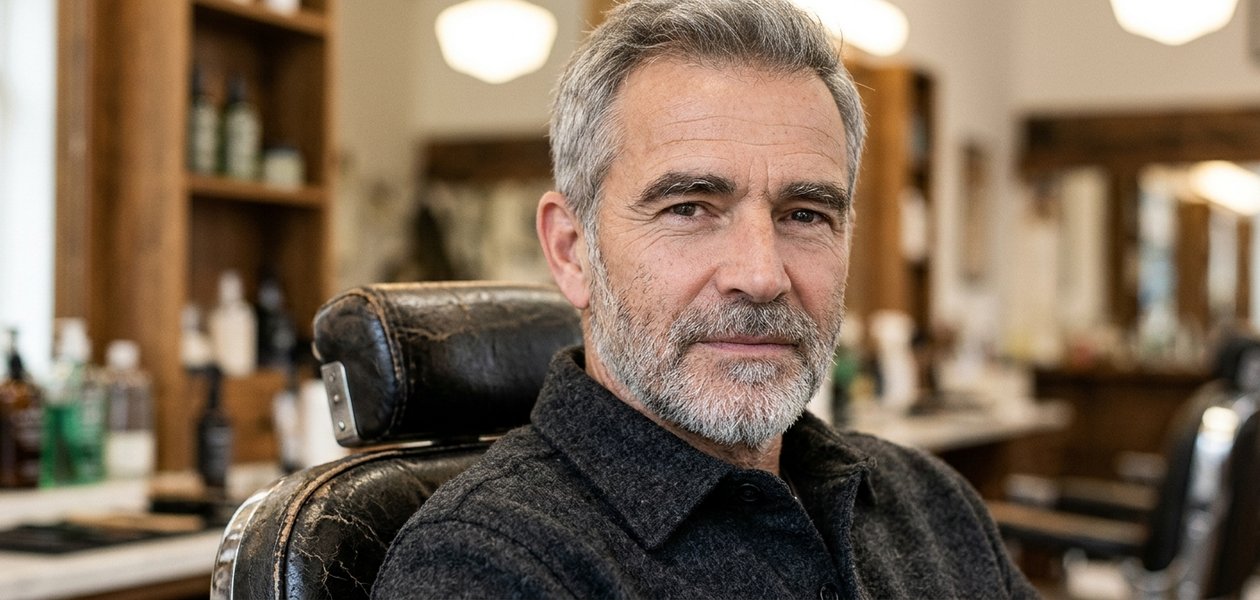
A believable result starts from the hair that still holds its pigment. Dermatologists at the American Academy of Dermatology advise staying within three shades of the natural color when dyeing hair, and eyebrows are less forgiving than a full head of hair.
Starting one shade lighter is the safer bet. A second pass can add depth, while dye that went too far is slow to lift from skin next to the eye.
- Black or dark brown hair: a dark brown shade keeps the eyebrows from reading as one solid block.
- Medium or light brown hair: match the color at the roots, not sun-lightened ends.
- Salt and pepper: match the darker hairs that remain, so the gray softens instead of vanishing.
- Fully gray or white: a light or medium brown looks more natural than a near-black shade.
Why Hair Dye Labels Warn Against Eyebrow Use
Eye doctors do not rule out brow tinting. An ophthalmologist answering for the AAO called it fine, provided no dye drips into the eye. The real caution concerns which product goes on the brow.
Most hair and beard dyes in the United States are coal-tar dyes. Federal law spares them FDA approval only when the label states that the product must not be used on eyebrows or eyelashes, because doing so may cause blindness.
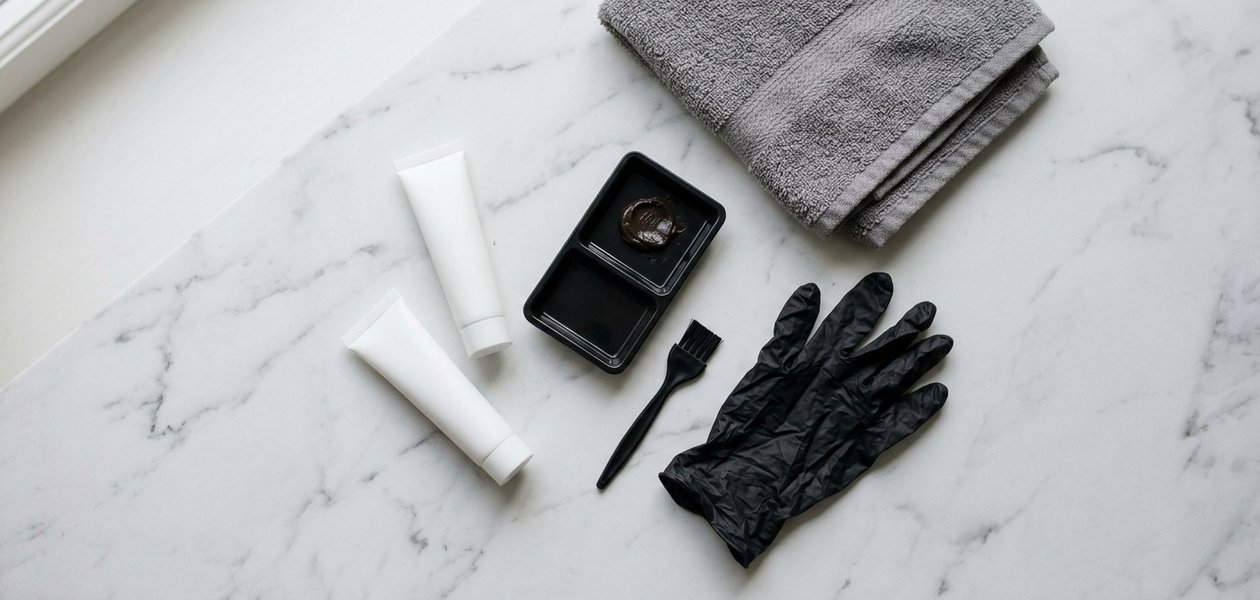
The FDA reports that permanent eyebrow and lash dyes have caused serious eye injuries. Its one allowance is a silver nitrate gel of up to 4 percent, and the federal rule limits it to professionals, clients aged 16 or older and contact of no more than 1 minute.
No approval covers eyebrow tint sold to consumers, so careful use carries the weight.
- Scalp hair dye: never near the eyes; the label warning was written for exactly this.
- Beard dye: made for the jaw and lip, so check the box for the eyebrow warning before buying.
- Products labeled for brows: built for the eye area; their directions are the rule.
Patch Test Before Every Eyebrow Tint
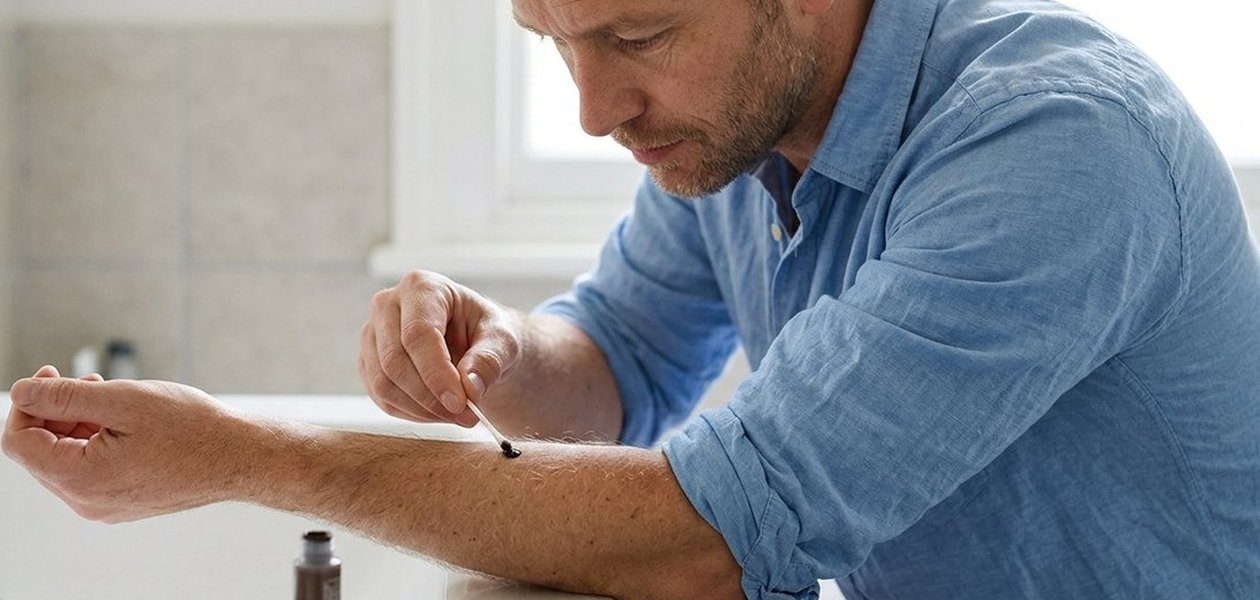
A dye allergy can appear after years of trouble-free use. The FDA explains that sensitivity builds with repeated exposure and formulas change, so the skin test belongs before every application, not only the first.
The NHS advises testing at least 48 hours ahead and notes that symptoms can take up to 72 hours to show. A past black henna tattoo raises the risk, because that paste carries high levels of PPD, a common allergen in hair dyes. Any of these signs means no tint:
- Stinging or burning where the dye touched the skin.
- An itchy rash around the test spot.
- Dryness, tightness or soreness of the tested skin.
- Blisters, the clearest stop sign of all.
Near the eye, reactions run harder. A review of published case reports on lash dyeing found contact dermatitis, swollen lids and, in the worst cases, erosions and ulcers of the cornea.
How to Tint Eyebrows at Home, Step by Step
The same review lists the professional order for lash tinting: clean, protect the skin with petroleum jelly, mix, apply, then remove the excess. A home eyebrow kit follows that order, and its printed timing always wins.
- A tint kit labeled for eyebrows in the chosen shade.
- Petroleum jelly to keep color off the skin.
- Gloves, which the FDA lists for any hair dye job.
- Cotton swabs or a small angled brush for clean edges.
- A timer, since the FDA warns against leaving dye on longer than directed.
- Test first. Run the patch test 48 hours before and skip the tint if any reaction shows.
- Prep the brows. Wash them with mild soap, dry them fully, and have them trimmed and shaped beforehand.
- Protect the skin. Trace a thin line of petroleum jelly around each brow, keeping it off the hairs.
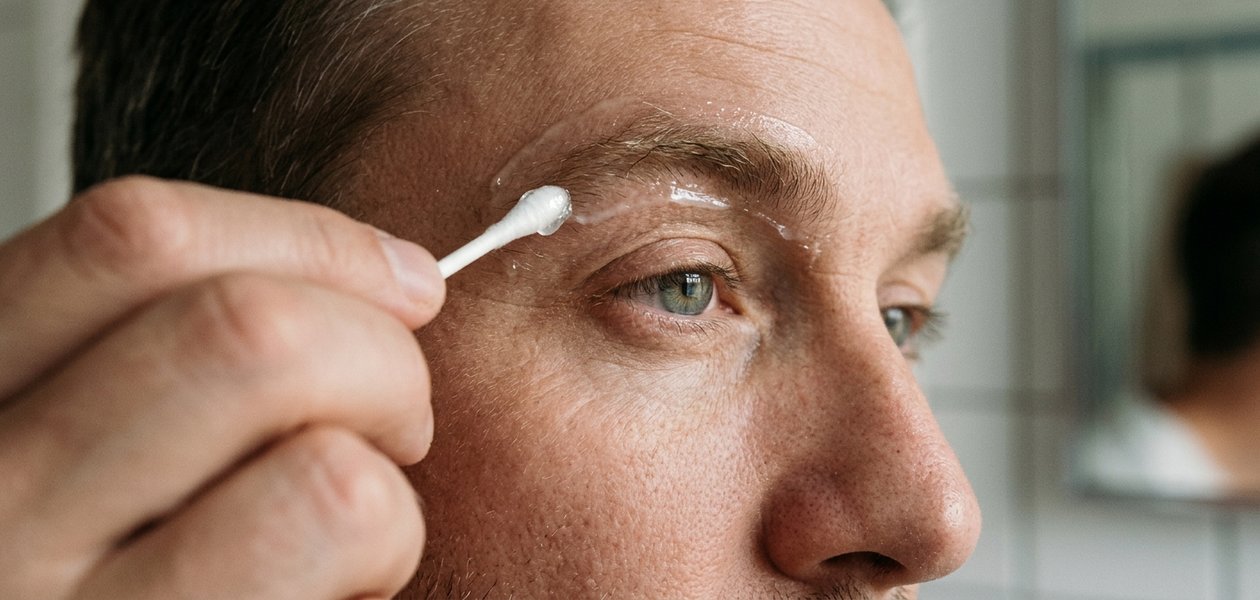
- Apply from the tail. Mix as the kit directs, then brush the tint along the hairs from the outer end toward the nose.
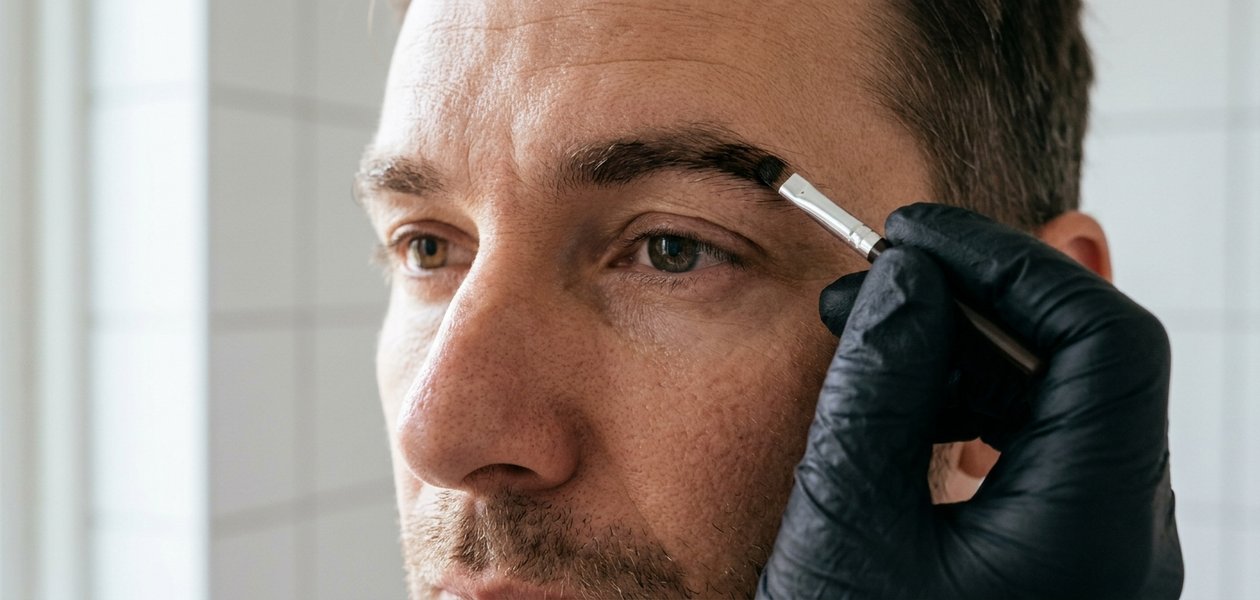
- Time it. Start the timer and wipe the inner ends a little early, so each brow fades softly toward the nose.
- Remove and check. Wipe the tint off with a damp cotton pad, then judge the color in daylight. Dye in the eye means rinsing with water at once and seeing a doctor if irritation stays.

How Long Eyebrow Tint Lasts on Men
Eyebrow hairs shed and regrow, so the color fades with them. The AAO ophthalmologist points out that a tint therefore has to be repeated, and the three to six weeks the academy gives for semi-permanent color is the usual gap.
- Daylight check: look by a window the next morning, since bathroom bulbs hide harsh color.
- Space out touch-ups: the review cites a case report of silver deposits on the lid margins and the eye’s surface after long-term self-application of a silver-based tint.
- Bridge the gap: a wash-out brow color can hide early gray until the next tint.
When a Salon or Barber Tint Makes More Sense
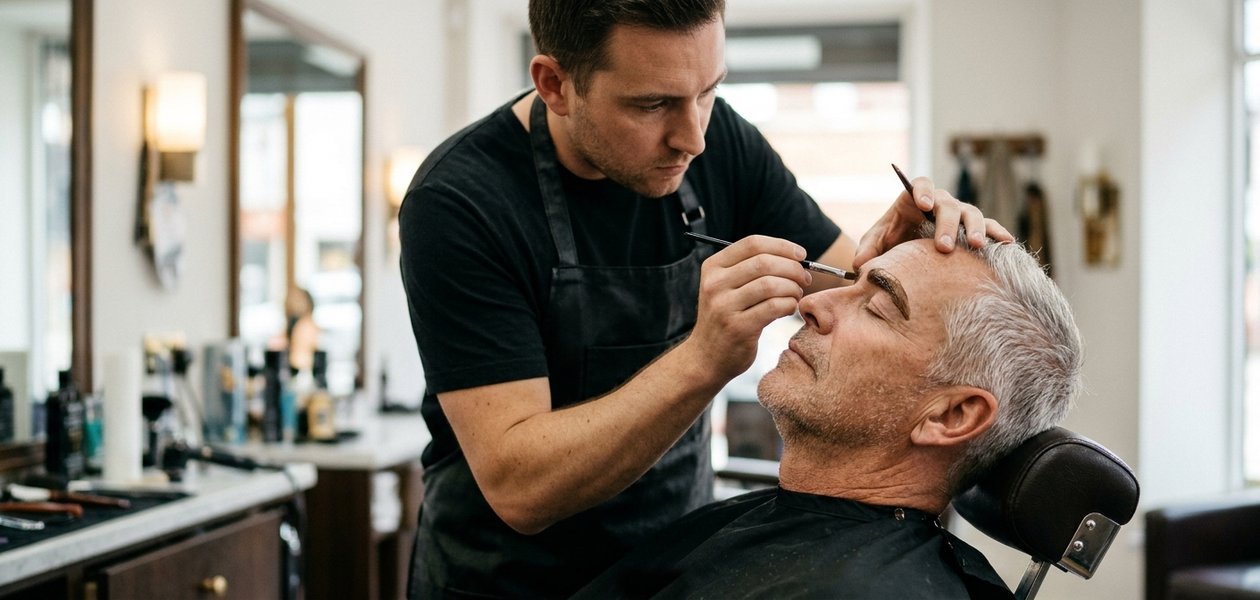
Professionals mix the shade and control the edges, which is why a first eyebrow tint often goes better in a chair than at a mirror. The PMC review adds that home kits put eye-area dye in untrained hands and raise the risk of misuse.
- First tint: seeing a pro’s shade choice makes the right home kit easier to buy later.
- Sparse patches: tint only darkens hair that exists, so bare gaps need a brow pencil or microblading.
- A past dye reaction: the AAD recommends a dermatologist’s allergy testing before any further dye.
- State rules: the AAO reports that California’s cosmetology board warned salons about fines for tinting, while New York allows non-permanent eyebrow dyes.
Swelling, itching or pain near the eye after a tint calls for washing it off and contacting a doctor. The FDA also asks for reactions to be reported, since it tracks cosmetic safety problems through those reports.
