The first time I moved out of state, I underestimated almost everything: the cost, the paperwork, and how strange it feels to wake up somewhere you don’t yet know which grocery store is the good one. According to the U.S. Census Bureau, a person in the United States can expect to move about 11.7 times over a lifetime, so the odds are good you’ll do this at least once.
Whether it’s for a new job, a home upgrade, or a fresh start, a cross-country move is a different animal from moving across town. If you’re standing in your kitchen with bubble wrap on one side and an empty box on the other, wondering where to begin, I’ve been there.
The good news: moving out of state for the first time is mostly a logistics problem, and logistics problems are solvable. Here is the playbook I wish I’d had. (If stress is the part getting to you, I go deeper on it in our guide to making moving less stressful.)
Start Planning Early and Build a Timeline
The single biggest favor you can do yourself is to start early. I give every long-distance move a runway of at least 8 to 12 weeks, because an interstate move has more moving parts than a local one, and each takes longer than you expect.
The week-by-week schedule I use
Build a moving timeline and break it down with one clear goal per week:
- 8 weeks out: Declutter ruthlessly. Long-distance movers price by weight, so every box you don’t bring is money saved.
- 6 weeks out: Get quotes from moving companies or price out a rental truck, and lock in your date.
- 4 weeks out: Pack non-essentials. Books, seasonal clothes, decor, anything you won’t touch before the move.
- 2 weeks out: Reconfirm your movers, schedule utility shut-offs, and pack the essentials last.
- Moving week: Stage your boxes, and keep an “open first” box and your documents with you, not on the truck.
Declutter before you pay to haul it
That first step is not filler. A first move out of state is the perfect excuse to get honest about your belongings. For each item I ask one question: is this worth paying to haul across the country? If not, I sell, donate, or toss it. I’ve made real gas money selling furniture and electronics on Facebook Marketplace, eBay, and a local Craigslist listing before a move, which trims both the load and the expenses.
Draft a Realistic Moving Budget
Unless money is no object, you need a moving budget, and you need it before you book anything. My first time, I lowballed mine and it bit me.
Costs vary by distance and how much you’re hauling, but to set expectations: industry estimates put the average interstate move around $3,500, with a typical range from roughly $2,200 to over $10,000 for larger homes and longer distances. A cross-country move of a two- or three-bedroom home routinely lands in the $4,000 to $8,000 zone once you add everything up.
The expenses people forget
The word “everything” is doing a lot of work there. Build a list and price each line so nothing ambushes you:
- Movers or a rental truck, plus fuel if you drive it yourself.
- Travel: gas, tolls, a hotel night or two, or airfare if you fly ahead.
- Temporary housing or storage if there’s a gap between move-out and move-in dates.
- New utility deposits, plus first-and-last-month rent or a security deposit.
- A 10 to 15 percent buffer for the surprises, because there are always surprises.
Where you land changes your real cost
Your destination changes your cost of living, not just the move. Some states have no income tax at all, which quietly raises your take-home pay for years. As of 2025, the eight states with no individual income tax are Alaska, Florida, Nevada, New Hampshire, South Dakota, Tennessee, Texas, and Wyoming (Washington taxes only capital gains). They aren’t automatically cheaper, since they tend to make it up in sales or property tax, but it’s worth factoring in.
Find the Right Long-Distance Moving Company
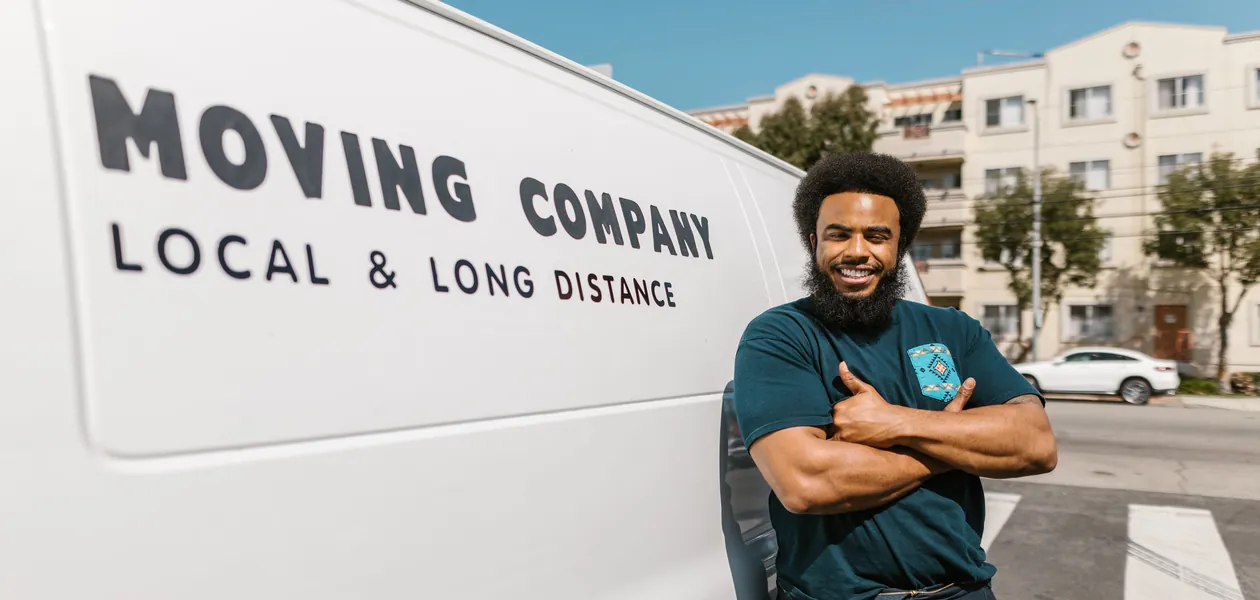
Not every mover is built for interstate work, and this is where first-timer mistakes get expensive. Local movers and long-distance haulers are different operations with different licensing rules.
Vet your mover before you pay a deposit
If you’re relocating from California, for example, it’s best to look for a moving company in California experienced with long-distance moves that knows the rules for crossing state lines. Wherever you start, run the same checks first:
- Verify licensing and insurance. For interstate moves, ask for the company’s USDOT number and confirm it on the FMCSA’s Protect Your Move tool, the federal registry for household-goods movers.
- Choose your liability coverage on purpose. Basic coverage pays out by the pound and is almost nothing; for anything valuable, opt for full-value protection.
- Read reviews across platforms, not just the testimonials on the mover’s own site, and ask people you trust who they’ve used.
- Compare at least three written quotes, and ask about long-distance discounts. Be wary of any quote far below the rest; it usually means a surprise later.
If you’d rather skip a full-service mover, you have cheaper options for a long distance move. A rental truck you drive yourself is cheapest; a portable moving container splits the difference, since you load it and they handle the haul; and a trailer towed behind your own vehicle works for a smaller place. Each trades money for effort, so pick what fits your budget and your tolerance for the drive.
Pack Methodically So Unpacking Doesn’t Break You

Packing well is the difference between a smooth first week in your new state and living out of mystery boxes for a month. My most useful habit: label everything, on more than one side of the box.
Don’t just write “Kitchen.” Write “Kitchen, cutlery and everyday plates.” Future-you, surrounded by cardboard, will be grateful. Here’s the rest of the system:
- Pack by room so unpacking has a logical order instead of being a scavenger hunt.
- Build an essentials bag. Toiletries, a few days of clothes, chargers, medications, and documents travel with you, never on the truck.
- Use what you already own. Wrap fragile items in towels and linens, and pack clothes in suitcases. It saves money and fills space you’d otherwise ship empty.
- Stage weather gear up front if you’re moving to a different climate, so it’s easy to reach the first few days.
- Cap each box near 50 pounds so it stays liftable and the bottom doesn’t blow out mid-move.
Gather a few more boxes than you think you’ll need, and grab free ones from local stores or a buy-nothing group. The fewer half-empty boxes you load, the less space you pay to ship.
Handle Housing, Utilities, and the Admin
The logistics first-timers blow past are the ones with deadlines. Set up your new home and re-establish your paperwork on a schedule, not in a panic when you arrive.
Set up housing and utilities before you arrive
Few things deflate a new place faster than arriving to a dark apartment with no water and no internet. Handle it while you’re still in the old one:
- Lock in housing first, with the lease signed or closing scheduled before the truck rolls.
- Schedule utilities to overlap, booking a disconnection date at the old place and a connection date at the new one with a day or two of overlap.
- Forward your mail with a USPS change-of-address, and update banks, your employer, and subscriptions.
- Scout the basics ahead of time: the nearest grocery store, pharmacy, and urgent care.
Update your license and vehicle registration
Most states require a new driver’s license and vehicle registration within a set window after you move, and the clock starts the day you become a resident. That deadline varies: New York gives you 30 days, Texas gives you 90, and some are shorter, so check your DMV. Don’t let it slide, since driving on a lapsed out-of-state license can void parts of your auto insurance.
Notify your bank, insurer, and credit cards
Tell your bank, credit card companies, and insurers your new address. Auto and renters or homeowners insurance is priced by location, so your premium may change, and your coverage needs your current address to stay valid.
Line up healthcare and re-register to vote
Research a doctor, dentist, and pharmacy in your new area, and ask your current providers to transfer your medical records before you actually need care. While you’re at it, update your voter registration once you’ve established residency; it’s a five-minute task that’s easy to forget for a year.
Learn Your New State Before You Live There
A new state is more than a new address. Every state has its own rhythm, costs, and quirks, and the faster you learn them, the faster it feels like home.
Before you go, research what quietly shapes daily life in your destination:
- Cost of living: rent, groceries, and the tax picture all shift across state lines.
- Climate: a swap from a mild coast to an arid or snowy state changes your whole wardrobe.
- Time zone: moving east means calls home with family take a little extra planning.
- Local culture: the pace, the rules of the road, and even the slang take a beat to learn.
For example, a move from California to Nevada generally means lower housing costs and no state income tax, while a move to Oregon trades sales tax for higher property taxes and steeper rents in areas like Portland.
Once you land, the fastest way to settle in is to treat the place like something to explore rather than just survive. Find the good coffee shop, the trail, the neighborhood spot. A move is a genuine chance to reset your routine into the start of a more adventurous chapter.
What Do You Need to Do Before Moving Out of State?
If you remember only one checklist, make it this one. Before you leave, work through these specific tasks:
- Confirm housing and your move date on both ends.
- Get quotes and book your movers, truck, or container, then pay any required deposit.
- Schedule utilities to disconnect at the old place and connect at the new one.
- File a change of address and update banks, insurers, and your employer.
- Pack and label your belongings, and keep an essentials box with you, not on the truck.
- Know your new state’s deadlines for your license, vehicle registration, and voter registration.
Logistics aside, leaving your home state for the first time is an emotional rollercoaster. Host a casual farewell, take photos, and walk your old neighborhood one more time. The to-do list feels endless, but the goodbye is the part you’ll remember.
Moving out of state for the first time is a big step, and it’s normal for it to take a few weeks before your new place feels like yours. But with a real plan and a clear head, it’s a problem you can manage.
Plan early, move light, budget honestly, and hire a mover you’ve actually vetted. Handle the admin before its deadlines, learn your new state, and give yourself grace for the adjustment. Do that, and your first interstate move becomes less a thing you survive and more the start of something you chose. (And if you want to understand why the process feels so heavy, here’s why moving house feels so stressful, and how to make it easier.)
Good luck. You’ve got this.