
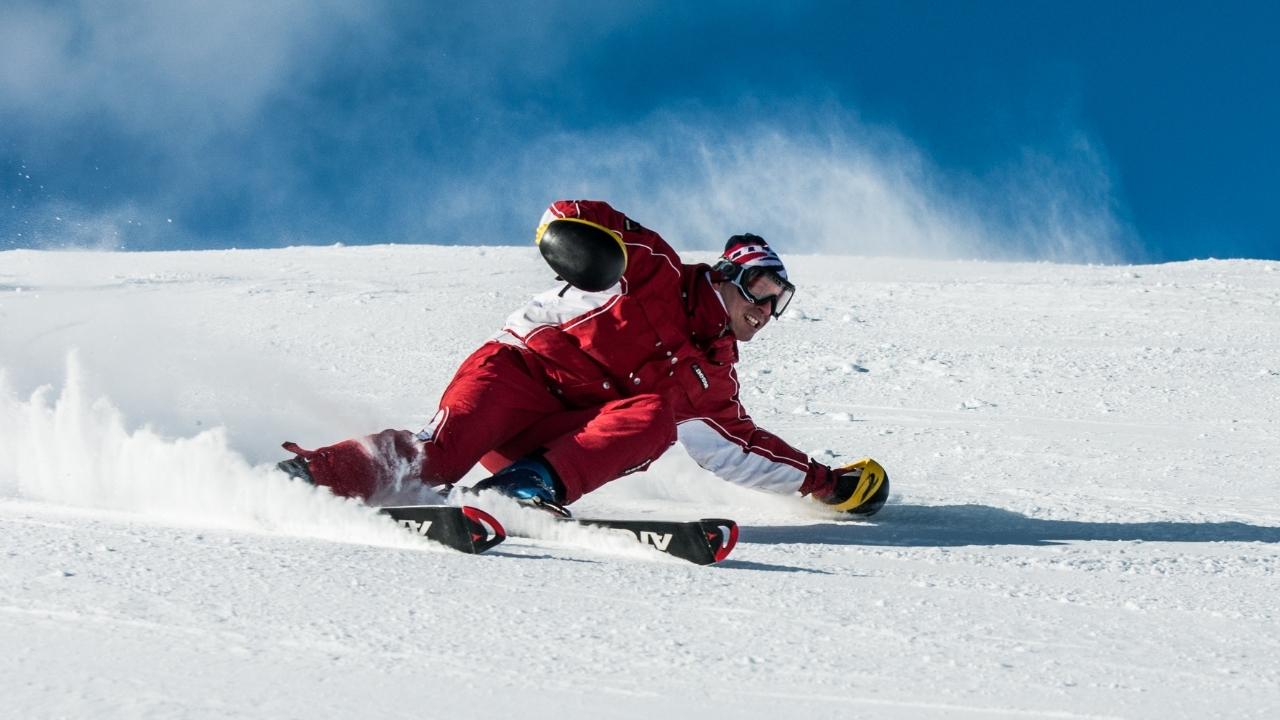
Skiing is not just a winter sport, it is a full-body workout that demands cardio endurance, strength, and dynamic balance all at once. You engage your core, legs, and stabilizing muscles at the same time, for hours, in ways your legs are not used to. A good ski workout builds functional strength that mirrors what skiing demands. These are the muscle groups it has to hit:
- Quads and glutes, for holding the ski position and powering through turns.
- Hamstrings and calves, to stabilize your knees and support quick movements.
- Core muscles, for balance and posture on uneven terrain.
- Lower back and shoulders, especially when poling or carrying gear.
- Grip and forearms, for icy lifts and holding your poles all day.
TL;DR
- A great ski trip is built in the gym weeks before, because skiing is a full-body workout that demands cardio endurance, strength and dynamic balance all at once.
- A ski workout has to hit the quads and glutes, hamstrings and calves, core, lower back and shoulders, and grip and forearms.
- Squats are old faithful, since the quads are the most-used muscles in downhill skiing, with lunges, glute bridges, wall sits and step-ups plus upper-body and core work alongside them.
- Cardio delays fatigue so your legs still answer on the last run: mix 30 to 45 minutes of steady cardio 2 to 3 times a week with short, hard intervals, and add balance drills twice a week.
- Protect the work with stretching, 7 to 9 hours of sleep and a full rest day, and starting 6 weeks out run two lower-body sessions, one upper-body and core session and two cardio sessions every week.
Table of Contents
- Build Lower Body Strength
- Boost Endurance and Stamina
- Recover, Stretch, and Stay Injury-Free
- Your Weekly Ski Workout Plan
- FAQ
- Sources
Build Lower Body Strength
Your legs are the engine, so this is where most of my off-season work goes. Squats are old faithful: the quads are the most-used muscles in downhill skiing, and there is no better exercise for building leg strength. Focus on slow, controlled reps to build both strength and joint stability.
- Bodyweight squats: 3 sets of 15, knees tracking over your feet.
- Walking lunges: 2 sets of 20 steps to mimic single-leg loading.
- Glute bridges: 3 sets of 10, squeezing hard at the top.
- Wall sits: hold 45 to 60 seconds to train the static ski position directly.
- Step-ups: 3 sets of 10 per leg to build climbing and turning power.
Add dumbbells or bands as you get stronger. And do not stop at the legs: most skiers forget everything above the waist, but your upper body controls your poles and your core connects everything when you twist, turn, and hold steady on a moving surface.
- Push-ups: build the chest, arms, and shoulder stability you need for poling and getting up after a fall.
- Overhead press: develops the shoulders and upper back that absorb impact and carry gear.
- Planks, front and side: hold 30 to 60 seconds for deep core and oblique strength.
- Russian twists: train the rotation you use on every carved turn.
- Bird-dogs and mountain climbers: for dynamic, ski-specific core control.
Boost Endurance and Stamina
Skiing is a long day’s work, especially at altitude where your body uses oxygen less efficiently. Cardio training delays fatigue so your legs still answer on the last run. I mix steady efforts with short, hard intervals.
- Steady-state cardio: cycling, swimming, or jogging, 30 to 45 minutes, 2 to 3 times a week.
- High-intensity intervals: hill sprints or rowing for short, powerful bursts.
- Incline work: treadmill inclines or stair climbs to simulate the mountain.
Balance keeps skiing fluid instead of frantic: it helps you shift weight, react to terrain, and avoid injury. Work these into two of the five weekly sessions in the plan below, starting at least 6 weeks before your trip:
- Single-leg stands: progress to eyes closed to challenge your stabilizers.
- Balance board or Bosu squats: to train control on an unstable surface.
- Lateral hops: to mimic the side-to-side movement of carving turns.
Recover, Stretch, and Stay Injury-Free
Recovery is when your body adapts and gets stronger, and many ski injuries happen when muscles are tight. Use dynamic stretches before training and static stretches after, focusing on these areas:
- Hamstrings
- Quads
- Hip flexors
- Calves
- Lower back
- Shoulders
Then protect the work you put in, on and off the mountain:
- Get 7 to 9 hours of sleep.
- Take one full rest day per week.
- Use a foam roller on tight muscles.
- Hydrate well before and after each session.
- Make sure boots fit and bindings are set to the correct tension.
- Wear layers that let you move, plus socks and gloves that do not cut off circulation.
- On the slopes, take breaks, hydrate, and do not push through pain.
Looking after your body outside of workouts matters as much as the training itself. From nutrition and hydration to injury prevention, small daily habits keep you strong on day five.
Your Weekly Ski Workout Plan
Tie it together into a simple weekly routine, starting 6 weeks out:
- Two lower-body strength sessions (squats, lunges, wall sits).
- One upper-body and core session (push-ups, press, planks).
- Two cardio sessions, one steady and one intervals.
- Balance drills woven into two of those days.
- One full rest day, with stretching every day.
Plan your ski holidays around your fitness level, start your ski workout now, and get ready to carve into a trip you will never forget.
FAQ
What is a ski workout?
A training plan that builds the functional strength skiing demands. It targets the quads and glutes for holding the ski position, the hamstrings and calves for knee stability, the core for balance on uneven terrain, the lower back and shoulders for poling, and grip strength for holding your poles all day.
What is the best workout for skiing?
Squats, backed by cardio and balance work. The quads are the most-used muscles in downhill skiing, so bodyweight squats, walking lunges, wall sits and step-ups do most of the job. Add steady cardio and intervals to delay fatigue, plus single-leg stands and lateral hops to train the side-to-side control of carving turns.
What does a ski workout plan look like?
Start 6 weeks out with two lower-body strength sessions, one upper-body and core session and two cardio sessions a week, one steady and one intervals, weaving balance drills into two of those days. Take one full rest day, stretch daily and sleep 7 to 9 hours, the range the National Heart, Lung, and Blood Institute recommends for adults.
Can you do a ski workout at home?
Yes, most of it. The strength work is bodyweight: squats, walking lunges, glute bridges, wall sits, step-ups, push-ups and planks need no gym, and you can add dumbbells or bands as you get stronger. Stair climbs, jogging and balance drills like single-leg stands and lateral hops cover the cardio and balance side.
How do you prevent ski injuries?
Stretch, rest and check your gear. Use dynamic stretches before training and static ones after, make sure your boots fit and your bindings are set correctly, and take breaks on the slopes. The American Academy of Orthopaedic Surgeons says most end-of-day ski injuries can be prevented by staying in good condition and stopping when you are tired or in pain.
