A hammer curl is a bicep curl done with a neutral grip: palms facing each other and thumbs pointing up, the way you hold a hammer. It trains the biceps brachii, the brachialis underneath it and the brachioradialis along your forearm, and the neutral grip is where your elbow flexors produce the most strength.
That makes hammer curls one of the most useful moves for bigger, thicker arms and a stronger grip. You can usually handle a slightly heavier dumbbell than on a palms-up curl, and the form is simple, which is why it gets sloppy fast.
Below: the form step by step, the muscles worked, hammer curls vs standard curls, the best variations and the sets and reps that fit your training on arm or pull day.
TL;DR
- A hammer curl is a bicep curl done with a neutral grip, palms facing each other and thumbs up, and it trains the biceps brachii, the brachialis and the brachioradialis.
- Stand tall, brace, keep your upper arms pinned to your sides and your wrists straight, curl toward your shoulders, then take two to three seconds to lower the dumbbells until your arms are fully straight.
- Biceps activity stays about the same whichever way your palms face and the brachioradialis works hardest with palms down, but your elbow flexors are strongest in the neutral hammer position.
- Hammer curls are optional rather than better or worse than palms-up curls: they earn their spot when you want heavier curls, thicker-looking arms and more grip work.
- Cross-body, incline, preacher, cable rope and band hammer curls change the angle and tension, and 3 sets of 8 to 12 reps near the end of a pull or arm day suit most lifters.
How to Do Hammer Curls With Good Form
Grab a pair of dumbbells you can curl for about 10 clean reps. Cables and resistance bands work too, but learn the move with dumbbells, which show you right away when one arm cheats.
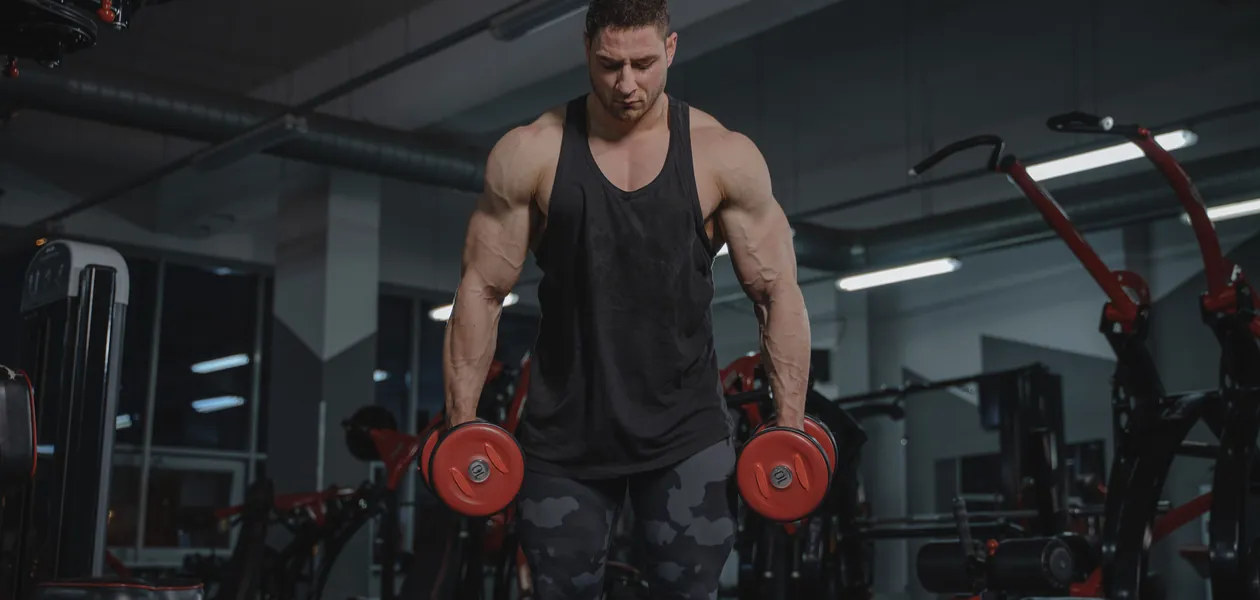
These steps follow the American Council on Exercise’s hammer curl guide, plus the cues that keep the work in your arms:
- Set up. Stand tall with a dumbbell in each hand at your sides, palms facing your thighs and thumbs wrapped around the handles. A split stance, one foot slightly ahead of the other, will help you stay steady.
- Brace. Tighten your abs and glutes and pull your shoulders down and back. Keep your head in line with your spine.
- Curl. Breathe out and bend your elbows to bring the dumbbells up toward the front of your shoulders. Your upper arms stay pinned to your sides, and your thumbs point up the whole way.
- Squeeze. Stop just before your elbows want to drift forward and hold the top for a beat.
- Lower. Breathe in and take two to three seconds to lower the weights until your arms are fully straight in the starting position.
You can perform the reps with both arms together or alternate them. ACE also notes that some people’s elbow structure forces a bent wrist when the dumbbells rest against the thighs. If that’s you, let them hang slightly away so your wrists stay straight.
Hammer Curl Mistakes to Avoid
Most bad hammer curls come down to four habits:
- Swinging the weight. Rocking your hips or leaning back to start the rep moves the load off your arms. If you can’t curl it without a swing, drop to a lighter pair.
- Letting the elbows drift. When your elbows travel forward at the top, your front shoulders take over. Keep them by your ribs.
- Bending or turning the wrists. The thumbs stay up and the wrists stay straight. Rotating toward palms up turns it into a different curl.
- Cutting the range short. Half reps shrink the range your muscles work through. Straighten fully at the bottom and curl all the way up.
Hammer Curl Muscles Worked: Biceps, Brachialis and Forearms
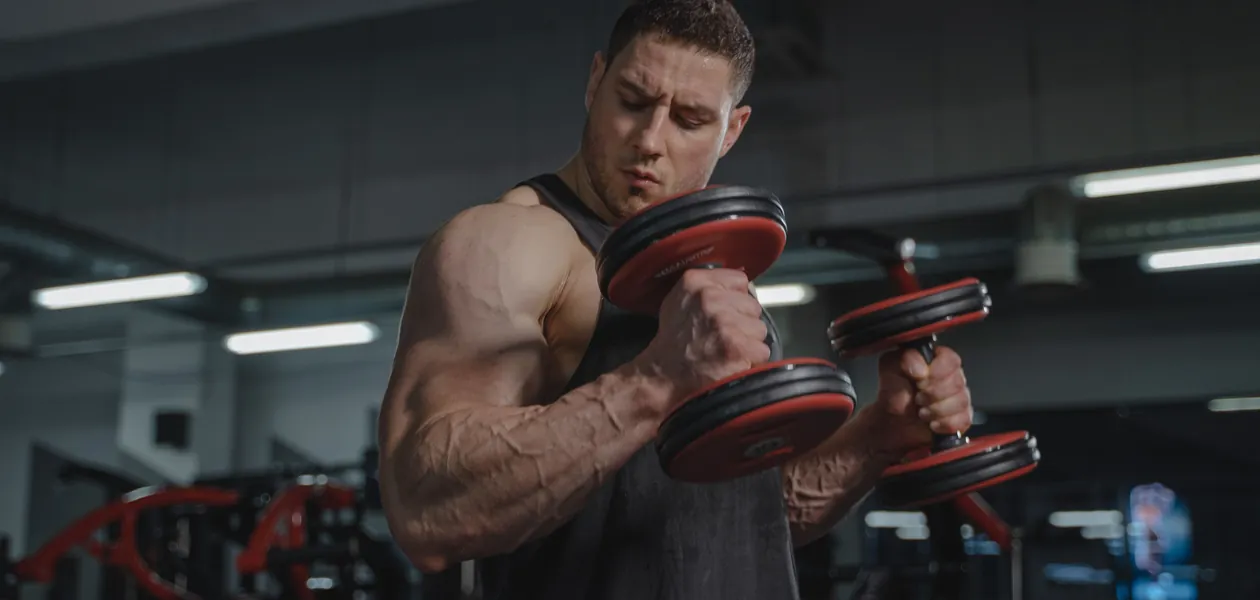
Three muscles bend your elbow, and the hammer curl trains all three:
- Biceps brachii. The two-headed muscle on the front of your upper arm. It bends the elbow, helps raise the arm forward at the shoulder and turns your palm up.
- Brachialis. It sits underneath the biceps and attaches to the ulna, so it bends the elbow whichever way your palm faces. A bigger brachialis pushes the biceps outward and makes the arm look thicker from the side.
- Brachioradialis. The long muscle on the thumb side of your forearm, running from just above the elbow to the wrist. It helps bend the elbow and shapes the upper forearm.
Your grip works the whole set too, since you squeeze the handles from first rep to last.
The research adds a twist. In a 2015 study from RWTH Aachen University, 16 healthy adults curled with palms up, palms facing in and palms down while sensors tracked their muscle activity. Biceps activity stayed about the same in all three grips.
The brachioradialis worked significantly harder only with the palms down, and the neutral and palms-up grips showed no meaningful difference. So if your forearms are the priority, the reverse curl, palms down with a bar or dumbbells, does more for them than the hammer curl.
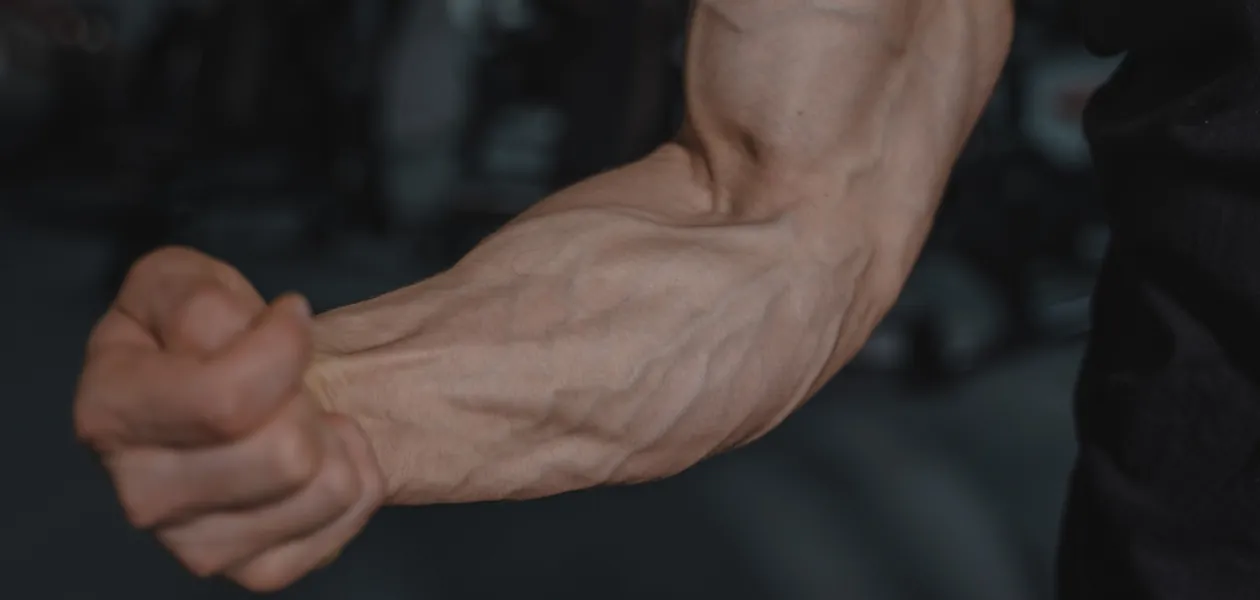
Where the neutral grip wins is strength. A 2026 study of 40 healthy young adults found that elbow flexion strength was highest with the forearm in neutral, lower with the palm up and lowest with the palm down, at every elbow angle tested.
Hammer Curls vs Bicep Curls: Size, Strength and Grip
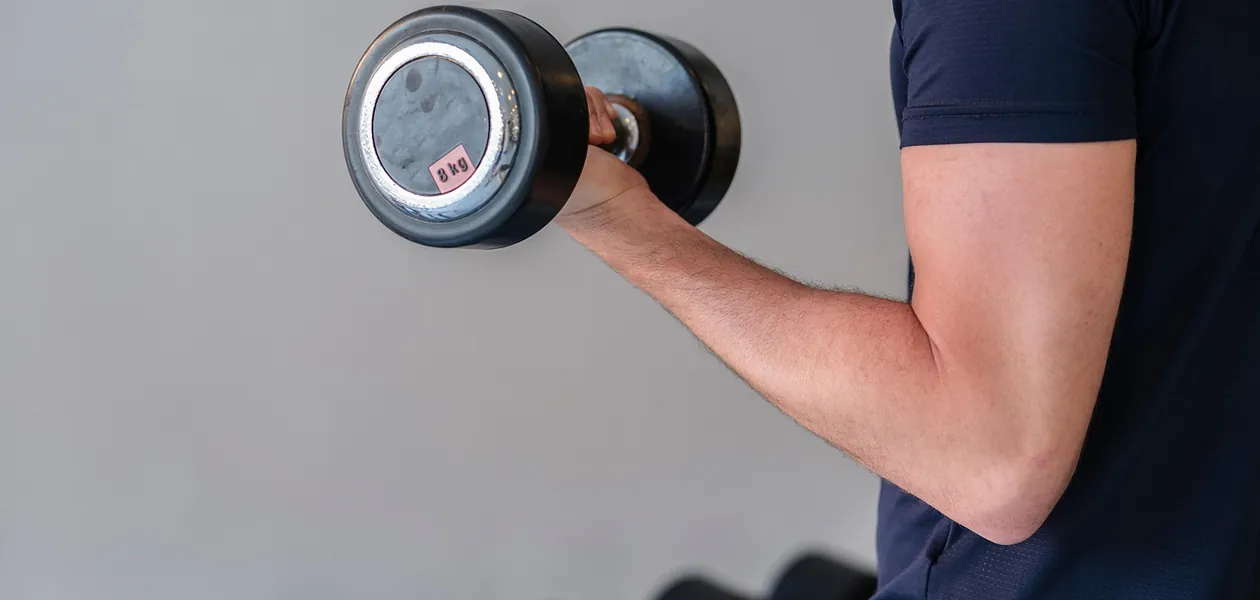
The only real difference is the grip, but it changes what each curl does best. A standard supinated curl, palms up, lets the biceps do its full job: bend the elbow and turn the palm up. That’s why the palms-up biceps curl is the default move for the front of the arm.
The hammer curl takes the palm turn out of the movement. In return, you’re in your strongest curling position, so you can load heavier and give the brachialis, the brachioradialis and your grip more total work per set.
So which is better? Neither on its own. Short on time, pick the palms-up curl. My own rule is to curl palms up first while I’m fresh, then switch to hammer curls with the heavier dumbbells.
That also settles whether hammer curls are a waste: they aren’t, but they are optional. Rows, chin-ups and regular curls already train the same elbow flexors. Hammer curls earn their spot when you want heavier curls, thicker-looking arms, more grip work or a curl that sits better with your wrists and elbows.
Hammer Curl Variations: Cable, Preacher and Cross-Body
Once the dumbbell version is solid, these variations change the angle, the tension or how much you can cheat.
Cross-Body Hammer Curl
Curl one dumbbell up and across your body toward the opposite side of your chest. The thumb stays up, but the new path changes the angle on the arm and makes swinging harder.
Seated or Incline Hammer Curl
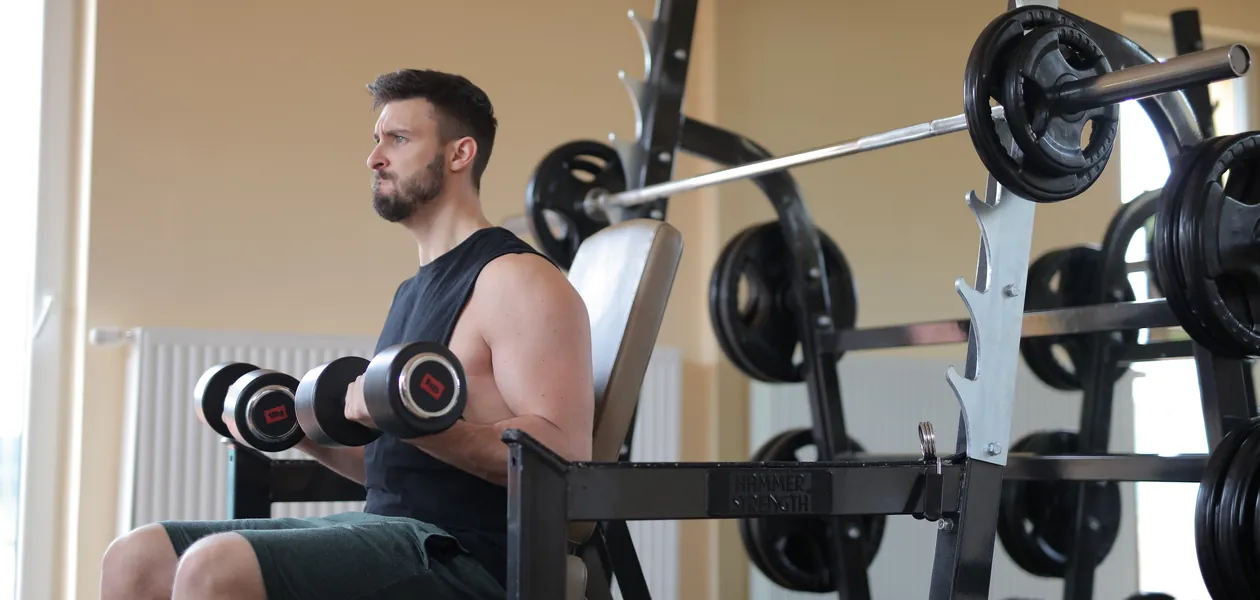
Sitting on a bench takes your legs and hips out of the lift. Set the bench to an incline and your arms hang slightly behind your body, which stretches the biceps more at the bottom of each rep.
Preacher Hammer Curl
Rest the back of your upper arm on the pad of a preacher bench and curl a dumbbell with your thumb up. The pad locks your elbow in place, so you can’t drift or swing. Go lighter than usual and control the bottom of every rep.
Cable Rope Hammer Curl
Clip a rope to the low pulley of a cable machine, hold one end in each hand with your thumbs up and curl. The cable keeps resistance on your arms near the bottom of the rep, where a hanging dumbbell feels light.
Resistance Band and Machine Hammer Curls
No dumbbells? Stand on a resistance band and hold the ends with your thumbs up; the band gets harder the higher you curl. At the gym, a curl machine with neutral handles gives you the same motion on a fixed path.
Sets, Reps and Where Hammer Curls Fit in a Pull Day
For most lifters, 3 sets of 8 to 12 reps is the sweet spot. Pick a weight that leaves only one or two good reps in the tank at the end of each set.
That range isn’t magic, though. A review of the loading research in the journal Sports concluded that muscles grow about equally across a wide spectrum of loads, down to roughly 30% of your one-rep max, as long as the sets are hard.
Heavy loads still win for maximal strength gains, so sets of 6 to 8 and sets of 15 to 20 both have a place.
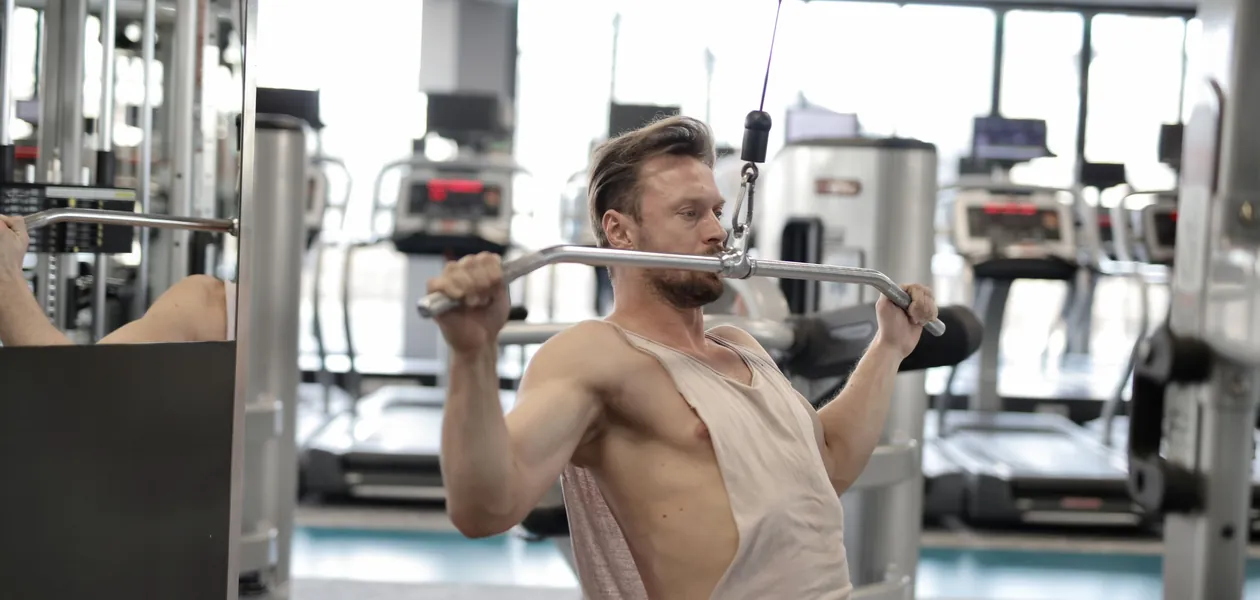
Place hammer curls near the end of the workout, after the big lifts. On a pull day, do them after rows and lat pulldowns, which already work your biceps and forearms. On an arm day, pair them with palms-up curls and a triceps move.
Progress by adding reps before weight: when you hit the top of your rep range on every set with clean form, move up a dumbbell. Curls build arms only on top of the basics, so back them with the workout and nutrition habits that put on muscle and real recovery between sessions.
FAQ
What does a hammer curl work?
Hammer curls work all three elbow flexors: the biceps brachii, the brachialis underneath it and the brachioradialis along the thumb side of your forearm. Your grip works too, because you squeeze the handles for the whole set, which is why the move builds thicker-looking arms and forearms.
Is hammer curl better than bicep curl?
No, they do different jobs. A palms-up bicep curl lets the biceps bend the elbow and turn the palm up, its full function. A hammer curl puts you in your strongest curling position, so you can lift heavier and give the brachialis, forearms and grip more work. Doing both covers everything.
Are hammer curls a waste?
No, but they are optional. Rows, chin-ups and palms-up curls already train the same elbow flexors, so a program can work without them. Hammer curls earn their place when you want heavier curls, thicker-looking arms, extra grip work or a curl that sits better with your wrists and elbows.
How do you actually do hammer curls?
Hold a dumbbell in each hand with your palms facing your thighs. Brace your core, keep your upper arms pinned to your sides and curl the weights toward your shoulders with your thumbs pointing up. Pause at the top, then lower them over two to three seconds until your arms are fully straight.
What are the benefits of hammer curls?
Hammer curls train the biceps, brachialis and forearms together, build grip, and let you curl in your strongest position. A 2026 study found elbow flexion strength was highest with the forearm in neutral, so most lifters can handle a slightly heavier dumbbell than on a palms-up curl.
Sources
- Hammer Curl, Exercise Library, American Council on Exercise
- Muscular coordination of biceps brachii and brachioradialis in elbow flexion with respect to hand position, Frontiers in Physiology
- Effects of elbow angle and forearm rotation on elbow flexion torque and elbow-flexor surface electromyographic amplitudes, Frontiers in Physiology
- Loading Recommendations for Muscle Strength, Hypertrophy, and Local Endurance: A Re-Examination of the Repetition Continuum, Sports (PubMed Central)