

The forty tattoo ideas below are grouped by theme, with what each symbol traditionally signals and where on the body it sits best. Placement, aging and booking advice follow the list.
Animal Tattoos: Lions, Wolves, Eagles and What They Mean
An animal delivers its message at a glance, which is why creatures turn up on so many flash sheets.
1. Lion tattoo. The lion signals courage, leadership and protection of a family or pride. A black and grey lion head needs the width of an outer forearm, shoulder or chest; squeezed smaller, the mane collapses into a dark smear.
2. Wolf tattoo. A lone wolf points to independence, while a pack speaks of loyalty and kin. Both read well in heavy blackwork on the upper arm or calf.
3. Eagle tattoo. Spread wings stand for freedom and, for many Americans, patriotism. An American traditional eagle across the chest is a mainstay of old-school flash.
4. Bear tattoo. A bear suggests raw strength and fierce protectiveness. Its blocky silhouette survives as a simple outline as well as a fully shaded portrait.
5. Tiger tattoo. In East Asian art the tiger embodies courage and the power to ward off evil, and Japanese sleeves often set it opposite a dragon. Its stripes give the shoulder or thigh plenty of movement.

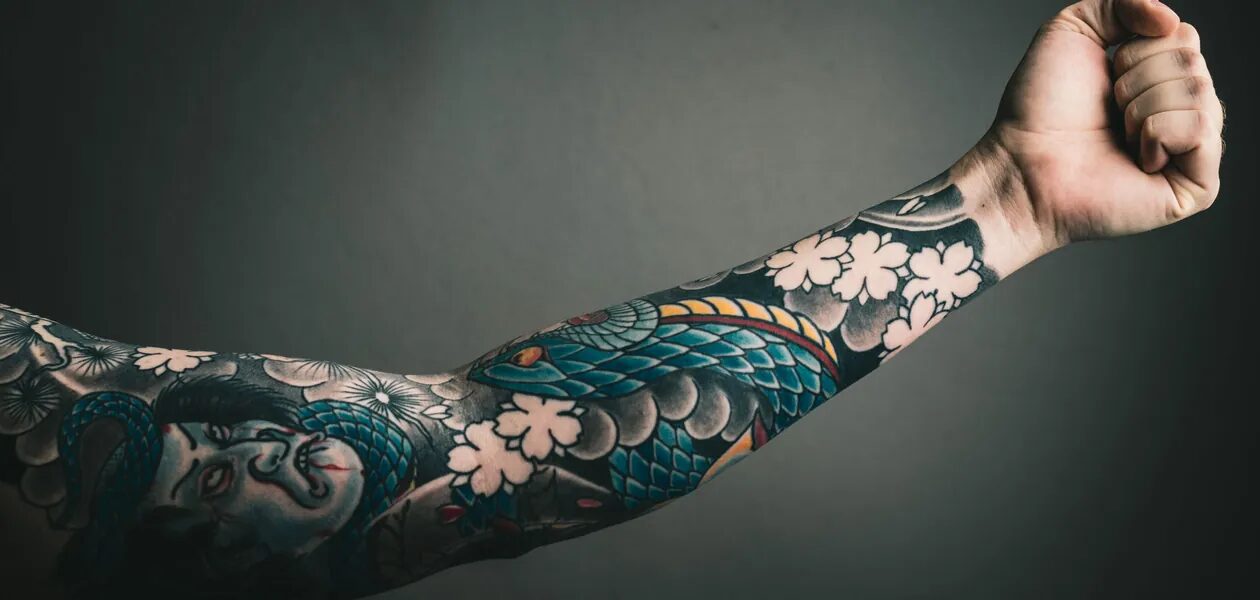
6. Snake tattoo. Because snakes shed their skin, they often mean renewal, along with danger and temptation. A long body can coil around a forearm or calf and follow the muscle.
7. Owl tattoo. The owl is shorthand for wisdom and night vigilance. Its forward-facing eyes give the piece a strong focal point, so even a palm-sized owl stays legible.
Sailor Tattoos for Distance, Direction and Home

Western tattooing owes a debt to the sea. The earliest known Western use of the word comes from Captain James Cook’s 1769 notes on Tahiti, and many of his crew are said to have sailed home inked, according to a National Park Service history of maritime tattoos.
8. Swallow tattoo. By maritime custom, a swallow on the chest marked 5,000 nautical miles at sea, and a second bird marked twice that distance. A pair of swallows still says the wearer has covered real ground.
9. Anchor tattoo. An anchor stands for stability and staying grounded through rough water. Popeye made the forearm anchor famous, and that spot still suits it.
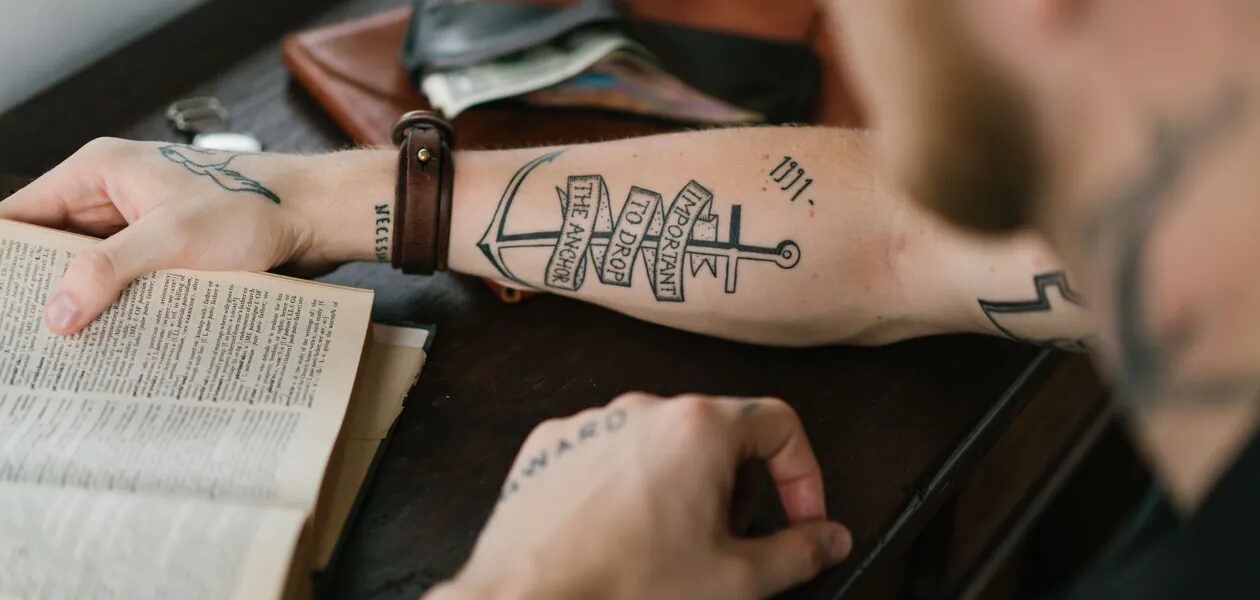
10. Compass tattoo. A compass rose or nautical star means direction and a safe return. Small versions fit the wrist; larger ones can hold a map inside the dial.
11. Ship tattoo. A full-rigged ship was once proof of a brutal passage: crews who rounded Cape Horn often inked their vessel across the chest. Today it can honor a family’s Navy or fishing history.
12. Hold Fast lettering. Navy sailors inked HOLD FAST on their hands, hoping those hands would grip the rigging and never let go. Spread across the knuckles, the two words still urge perseverance, though fingers are the most visible commitment on this list.
Faith, Mortality and Classic Flash Tattoos
13. Cross tattoo. A cross is the plainest statement of Christian faith. It works as a slim outline on the inner forearm or grows into a shaded piece with light rays across the back.
14. Praying hands tattoo. Folded hands, often wrapped in rosary beads, express devotion or remember a believer who has died. Soft shading carries the design, so it needs at least a forearm’s width.
15. Angel wings tattoo. A pair of wings spanning the shoulder blades often memorializes someone lost; a single wing on the chest says the same thing more quietly.
16. Skull tattoo. Skulls carry the old memento mori warning: life is short, so spend it well. Paired with roses or a dagger, the skull is a pillar of American traditional work.
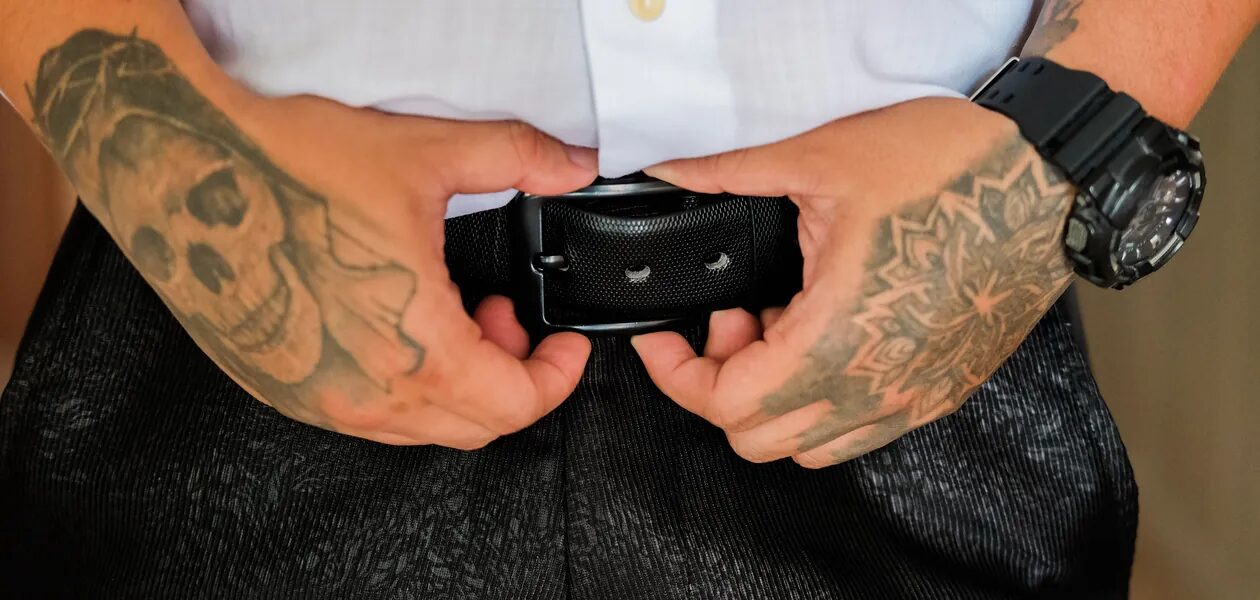
17. Hourglass tattoo. Falling sand makes the same point about time with less menace than a skull. A tall, narrow glass suits the inner forearm or the back of the calf.
18. Dagger tattoo. A blade means courage, sacrifice or betrayal survived, depending on what it pierces. Drawn with heavy outlines and limited color, it ages better than most.
19. Rose tattoo. The rose holds love, loss and beauty with thorns attached. It pairs with almost any other symbol and adapts to fine line, realism or bold traditional color.
Name, Date and Portrait Tattoos That Honor Someone
Remembrance drives more ink than any other motive. Among tattooed men, 63% say honoring or remembering someone or something was a reason for at least one of their designs, according to Pew Research Center’s 2023 survey.
20. Portrait tattoo. A face of a parent, child or late friend is the most personal option and the least forgiving. Only an artist with a strong realism portfolio should attempt it, and the outer arm or calf gives the face enough room.
21. Roman numeral date. A birth, wedding or memorial date in Roman numerals looks clean and keeps its meaning private. A vertical strip fits the inner forearm or the side of the ribs.
22. Coordinates tattoo. The latitude and longitude of a hometown, a first house or a child’s birthplace turn a location into a code few strangers will crack.
23. Handwriting tattoo. A word or signature copied from a loved one’s letter keeps their actual hand on the skin. Artists can trace it from a clear photo of the original card.
24. Family crest tattoo. A coat of arms or clan badge ties the wearer to a surname and its history. Heraldic detail needs room, so the upper arm or chest works better than the wrist.
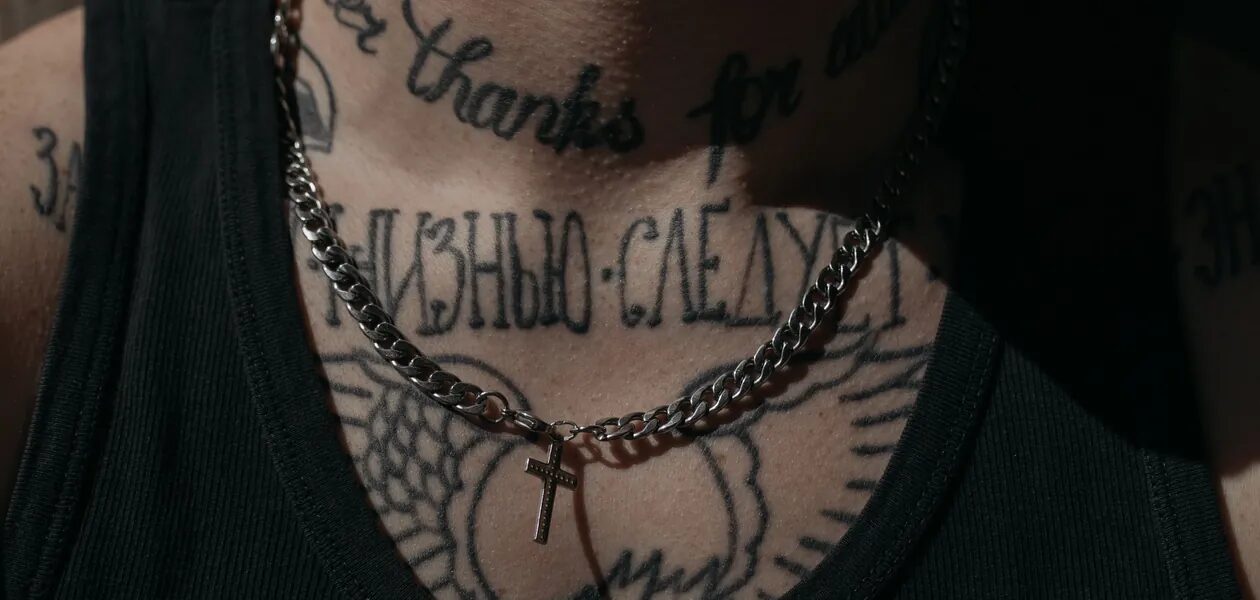
25. Name or single word. A child’s name or a family motto works anywhere from the collarbone to the wrist. A partner’s name remains the textbook regret, so children, parents and mottos are the safer bets.
Nature and Mythology Tattoos for Larger Pieces
26. Tree tattoo. A tree with visible roots speaks of growth and lineage. Its branches can spread over a shoulder blade or climb an entire sleeve.
27. Mountain range tattoo. A ridgeline can mark a peak climbed, a home state or a hard road conquered. Simple peaks sit neatly on the forearm without crowding.
28. Sun and moon tattoo. Paired together, they stand for balance between opposites: day and night, work and rest. The two discs suit matching spots, such as both forearms or both sides of the chest.
29. Phoenix tattoo. The bird that rises from its own ashes stands for rebirth after a hard chapter. Sweeping wings and tail feathers need space, so the back or chest suits it best.
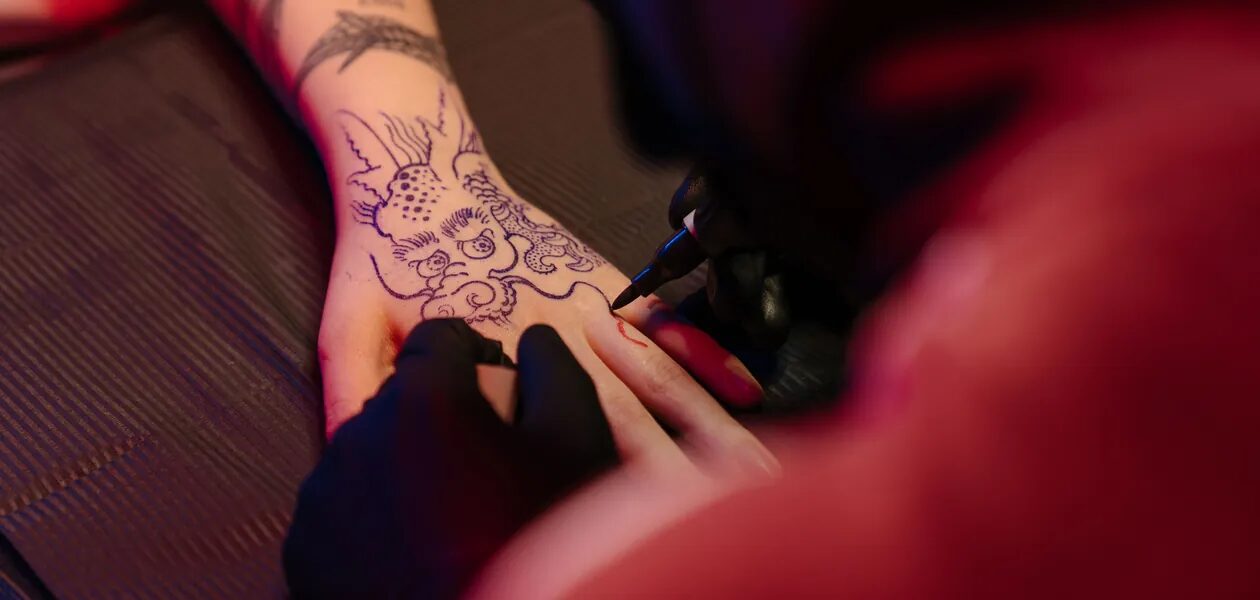
30. Dragon tattoo. In Chinese and Japanese art the dragon is a powerful, often protective force rather than a villain. Its serpentine body is built for a sleeve or a full back piece.
Minimal Linework and Small Symbols for a First Tattoo
A first design rarely needs to be big. Compact symbols take less time in the chair, cost less and leave room for a larger plan later; this gallery of small designs suited to a first appointment shows dozens more.
31. Single-line drawing. A profile, animal or landscape drawn in one unbroken stroke looks modern and spends little time under the needle.
32. Geometric shapes. Triangles, circles and sacred geometry appeal to men who prefer structure over imagery. Every line must be precise, so judge the artist by healed geometric work.
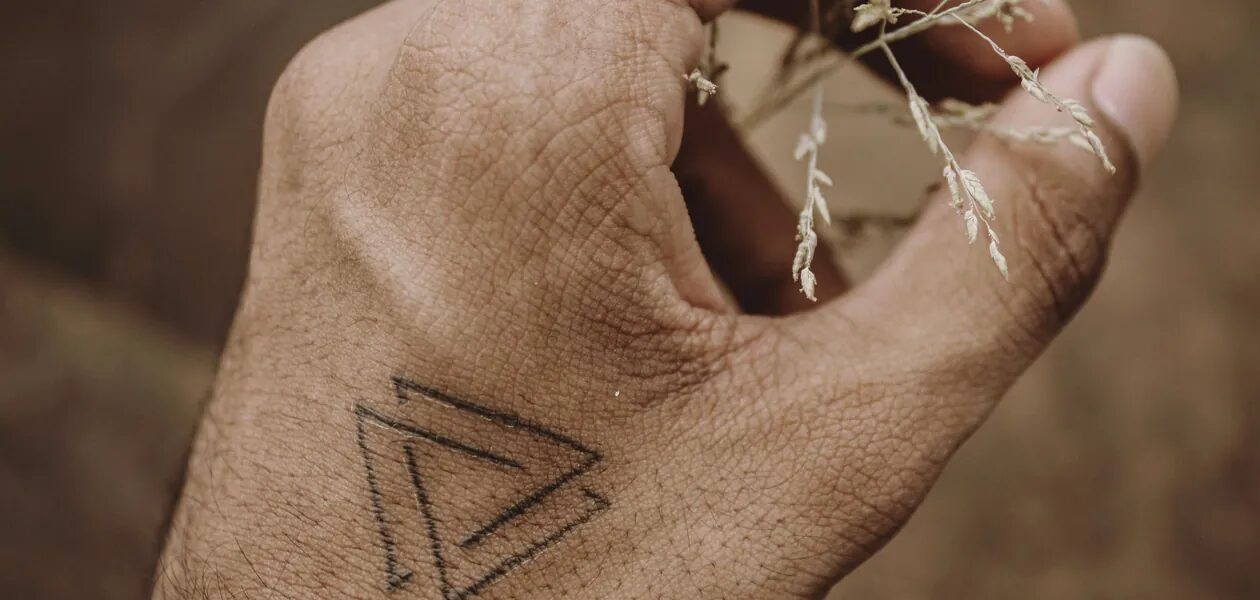
33. Arrow tattoo. An arrow means forward motion; one drawn back on a bow suggests a setback that builds momentum. It is short, simple and suits the wrist or forearm.
34. Feather tattoo. A single feather hints at freedom and lightness, and its long shape follows the forearm or the side of the ribs.
35. Crown tattoo. A small crown signals self-respect or loyalty to a family name. Kept to a few bold strokes, it fits behind the ear or on the side of a finger.
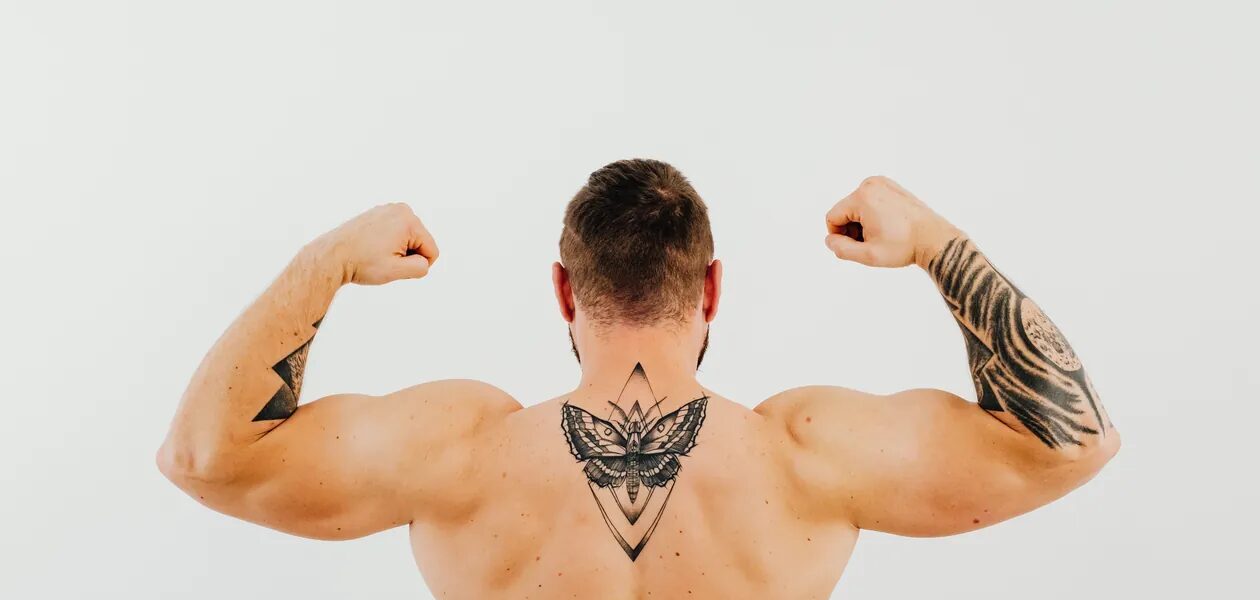
36. Armband tattoo. A band of geometric or blackwork pattern circling the bicep frames the muscle and can later anchor a half sleeve.
Polynesian and Japanese Tattoo Traditions to Approach With Care
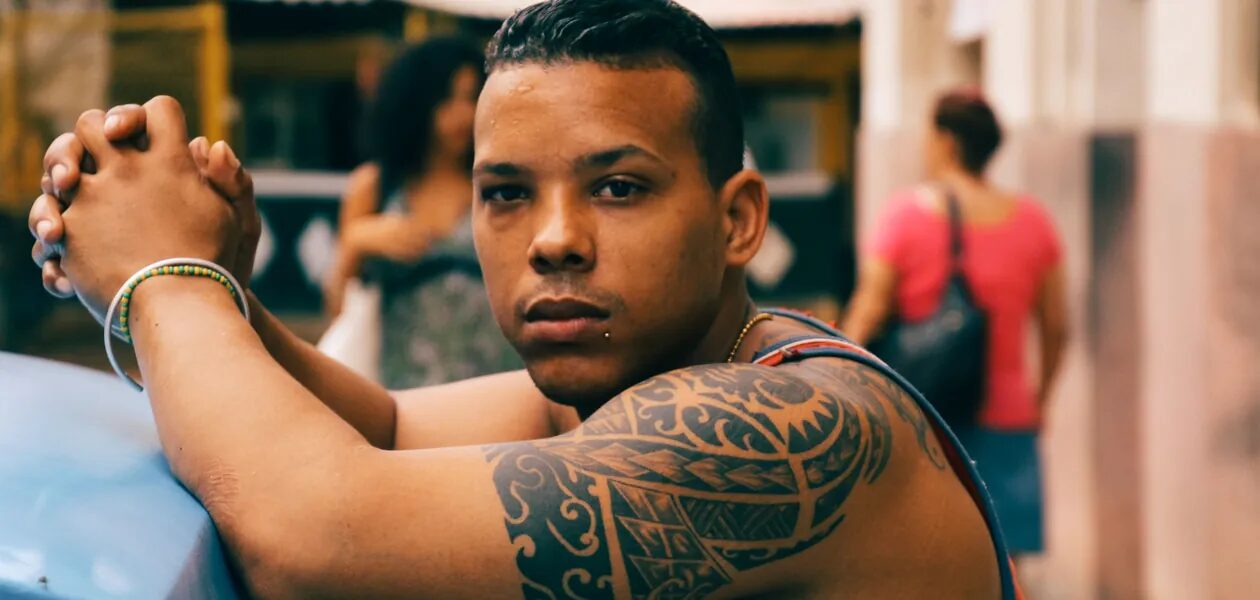
37. Polynesian patterns. Bold black bands, spirals and shark teeth come from Pacific traditions tied to identity and family lines. Te Papa, New Zealand’s national museum, explains that the lines of a Māori moko represent much more than skin art. The respectful route is an artist trained in the tradition, working from the wearer’s own story, not borrowed genealogy.
38. Koi fish tattoo. In Japanese work, a koi swimming upstream stands for perseverance; legend says the koi that climbs the waterfall becomes a dragon. Koi suit half sleeves and full sleeves, framed by waves or cherry blossoms.
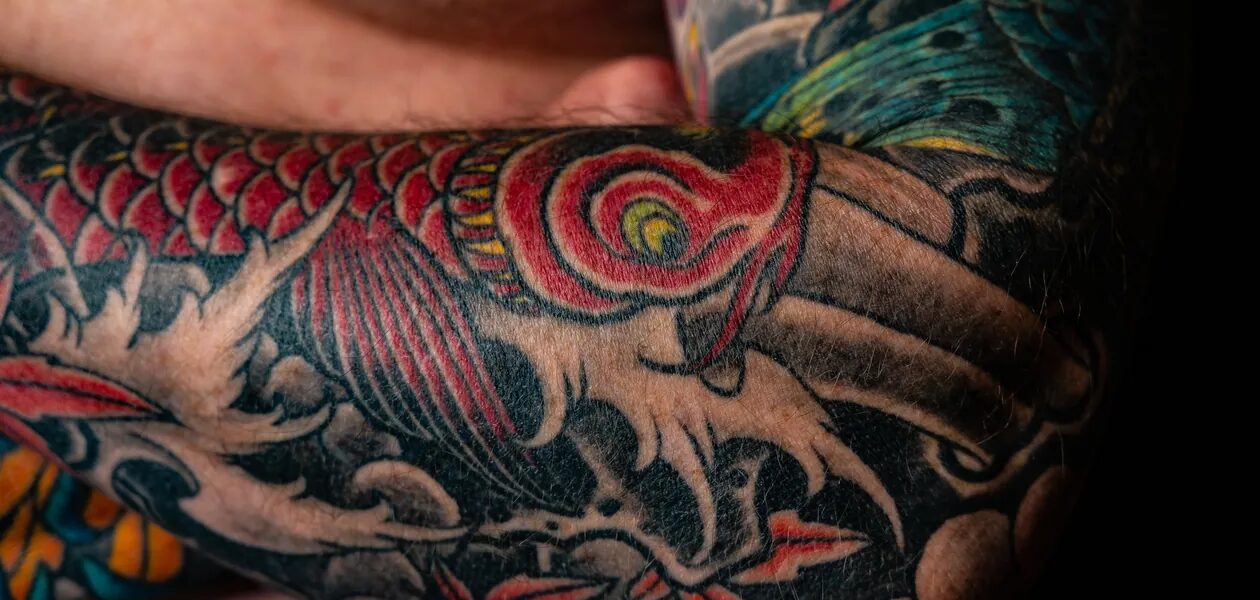
39. Great wave tattoo. Curling foam drawn after Hokusai’s famous woodblock print stands for the force of nature and the resolve to ride it out. It often fills the gaps around koi and dragons.
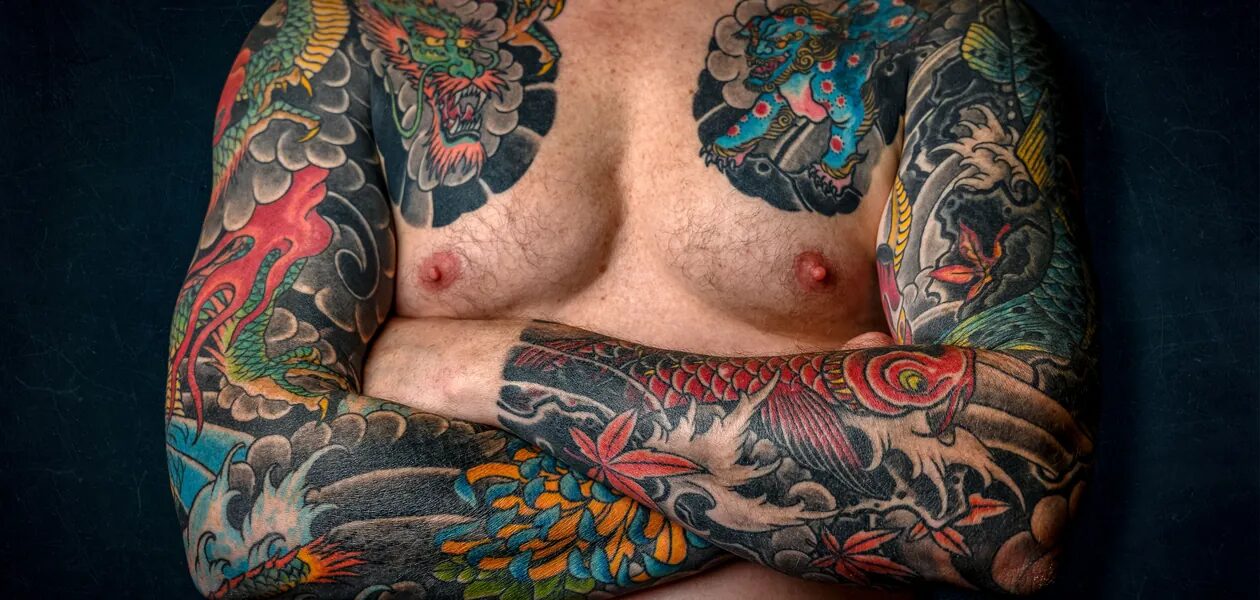
40. Cherry blossom tattoo. In Japan the short-lived blossom is a reminder that life is brief and beautiful. Scattered petals soften heavier imagery across a sleeve or chest panel.
How Placement Changes a Tattoo’s Look, Pain and Visibility
Placement decides how a design looks, how much it hurts and whether a dress shirt can hide it. Fleshy, muscular areas are the least sensitive, while bony spots with little fat and many nerve endings hurt most, according to Healthline’s medically reviewed pain guide.
| Placement | Pain | Visibility | Designs that fit |
|---|---|---|---|
| Outer forearm | Lower | Shows with short sleeves | Anchors, compasses, arrows, lettering |
| Upper arm and shoulder | Lower | Covered by a T-shirt | Animals, crosses, armbands |
| Upper chest | Lower | Covered by a shirt | Eagles, swallows, ships |
| Upper back | Lower | Covered by a shirt | Phoenixes, wings, dragons |
| Calf | Lower | Shows in shorts | Snakes, wolves, portraits |
| Ribs | Higher | Covered by a shirt | Dates, quotes, feathers |
| Hands and fingers | Higher | Always on show | Hold Fast lettering, crowns |
Sleeves and back pieces are rarely finished in one sitting. Large work is usually split into sessions of two or three hours, Healthline notes, so a full sleeve becomes a series of appointments rather than a single visit.
How Tattoos Age: Bold Shapes, Fine Lines and Sun Fading
Skin changes with age, and ink softens slowly inside it. Bold outlines, open space between elements and solid black shading keep their shape longest, while tiny text and tightly packed fine lines tend to merge into a blur.
Sunlight is the other enemy. The American Academy of Dermatology warns that ultraviolet light can fade some inks and recommends a broad-spectrum sunscreen of SPF 30 or higher on tattooed skin. The academy also suggests choosing skin free of moles, since ink can hide early signs of skin cancer.
- Size detail generously: a portrait or lion head needs at least a palm’s width.
- Keep letters large: script should read from arm’s length, not only up close.
- Favor contrast: black and grey or bold traditional color outlast pale washes.
- Leave breathing room: gaps between elements stop them fusing as lines soften.
Picking the Artist: Healed Work, Hygiene and Regret
About 27% of American men have at least one tattoo, and roughly a quarter of all tattooed adults regret at least one, Pew found. A few checks before booking are cheap insurance, and this guide on what to know before a first session covers the day itself.
- Study healed work: ask for photos of fully healed pieces, not fresh ones, in the exact style wanted.
- Inspect the studio: needles should come from sealed packs, and the station should be wiped down between clients.
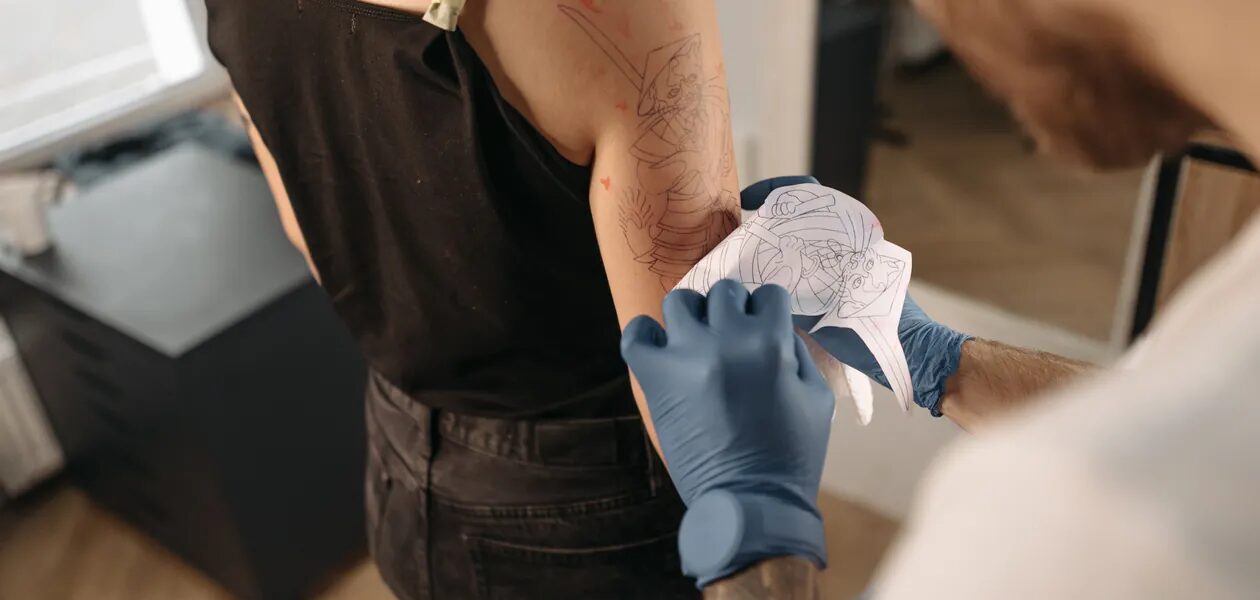
- Test the stencil: a paper transfer on the skin shows true size and position before any ink goes in.
- Skip the drinks: alcohol in the 24 hours before a session thins the blood, according to Healthline.
- Let big ideas rest: a design that still feels right after weeks of living with the sketch is the one worth booking.
Ink itself deserves a thought. The U.S. Food and Drug Administration has not approved any pigment for cosmetic injection into the skin, and it warns that ink contaminated with bacteria or mold can cause infections. A rash or swelling that appears after healing, even years later, belongs with a board-certified dermatologist, the American Academy of Dermatology (AAD) advises.
Mistakes are fixable, at a price. Lasers have largely replaced other removal methods, the AAD says, yet removal still takes several treatments with healing time between them, and the FDA cautions that some procedures scar or fail to clear the ink completely. The academy points patients to a board-certified dermatologist and away from do-it-yourself removal creams and kits.
Questions Men Ask Before the First Session
What is a good first tattoo for a man?
A small, simple symbol with personal meaning, placed on the outer forearm or upper arm. An anchor, compass, date or short word sits on a less sensitive spot, can be covered when needed and leaves room to plan a larger piece once it has healed.
Which tattoo designs still look good years later?
Bold designs with clear outlines, solid black shading and open space between the elements. Tiny script and tightly packed fine lines tend to blur together as ink settles, and sun exposure fades pigment, so traditional work, blackwork and generously sized realism hold up best.
Which body areas hurt most to tattoo?
Bony areas with thin skin and many nerve endings: the ribs, spine, lower chest, hands, fingers, ankles, knees and elbows. Fleshy spots such as the outer upper arm, forearm, shoulder, calf and upper back are the least sensitive, according to Healthline.
Can a tattoo be covered up or removed later?
Yes, though neither route is simple. A cover-up needs a larger, darker design laid over the old one, and open, lightly shaded pieces are the easiest to hide. Laser removal takes several treatments with healing time between them, according to the American Academy of Dermatology.
How should tattooed skin be cared for?
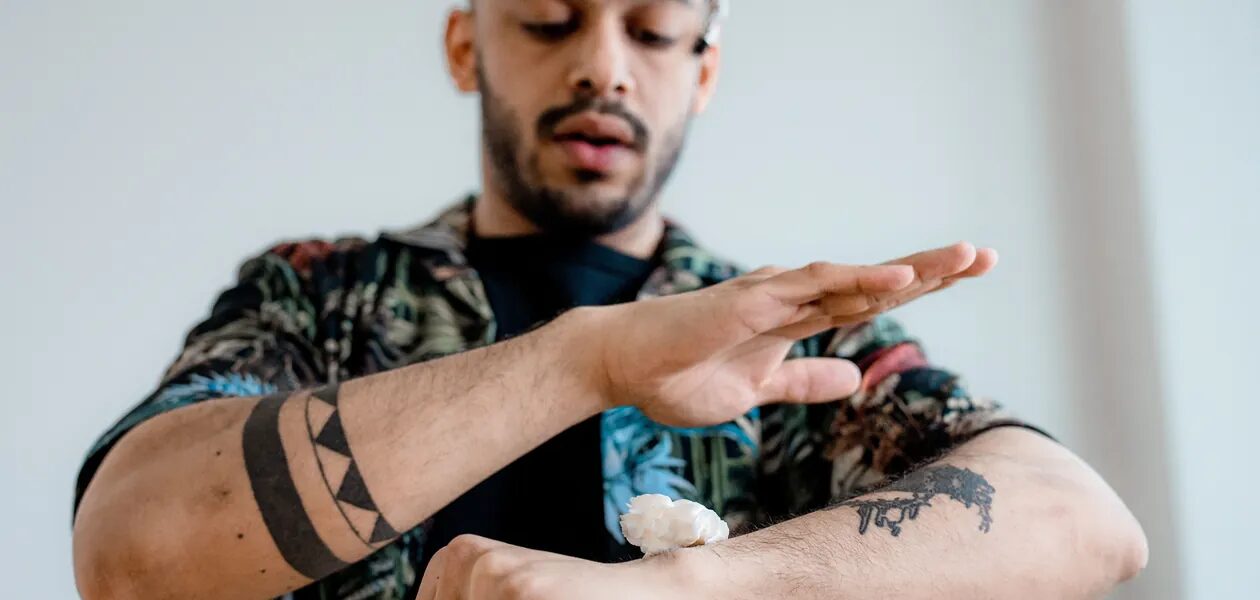
Keep it moisturized with a water-based lotion and shielded from the sun. The American Academy of Dermatology advises against petroleum-based products, which can fade ink, and recommends a broad-spectrum, water-resistant sunscreen of SPF 30 or higher, reapplied at least every two hours outdoors.
