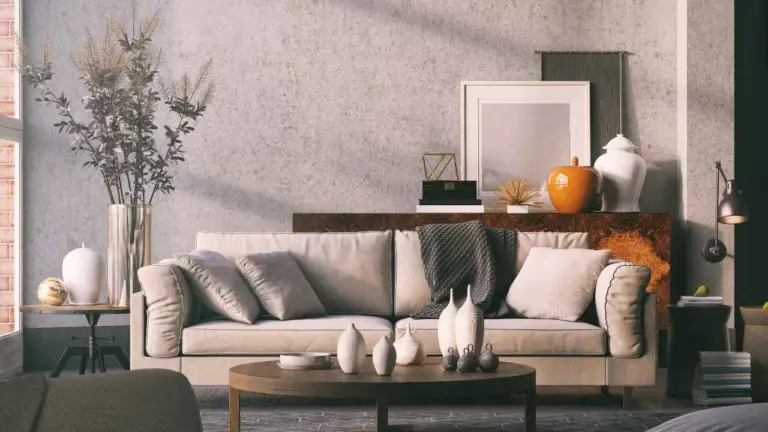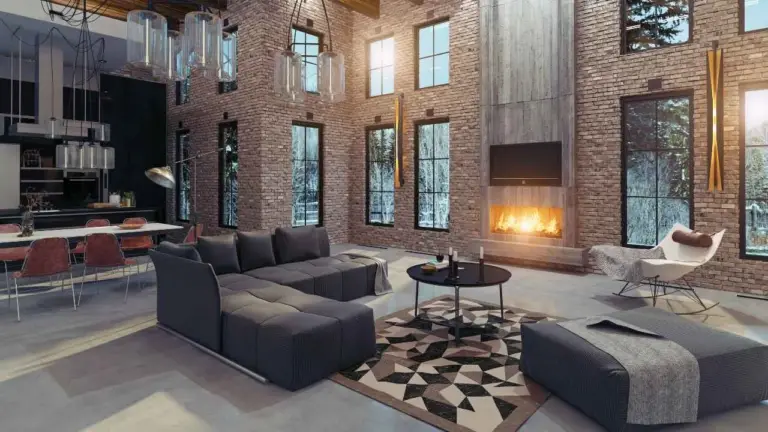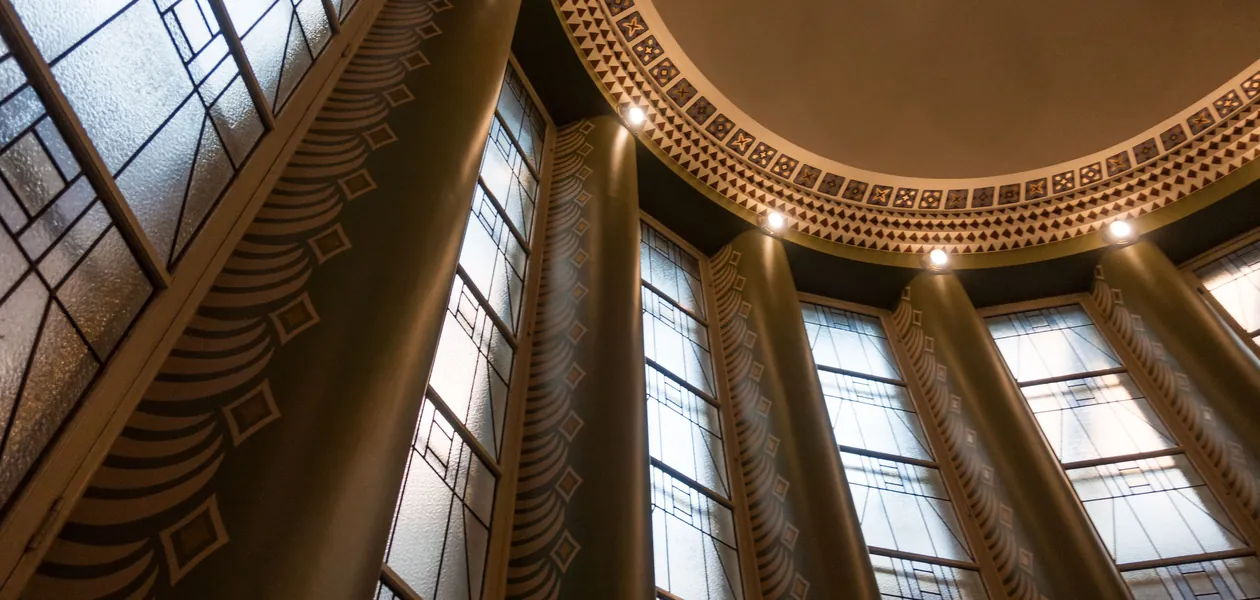
Art deco interior design is the glamorous style of the 1920s and 1930s, built on bold geometric patterns, strict symmetry, luxurious materials and polished metal. Picture sunburst mirrors, zigzag tiles, black lacquer, brass, velvet and deep jewel colors, arranged so every room feels balanced, sleek and a little theatrical.
It began as Parisian luxury and ended up everywhere, from New York skyscraper lobbies to radios. That range is why the deco style still works at home: commit a whole room to it, or add a few deco pieces to a modern space for the same sense of occasion.
TL;DR
- Art deco interior design is the 1920s and 1930s style of bold geometric patterns, strict symmetry, rich materials and polished metal.
- The style is named after the 1925 Paris Exposition des Arts Décoratifs, although the term art deco itself was only coined in the 1960s.
- Where Art Nouveau is organic and curving, art deco favors straight lines, repeating geometric shapes and streamlined, machine age forms.
- Its core features are geometric ornament, symmetry, luxurious materials like lacquer, marble, glass and velvet, and a high contrast palette of black, jewel tones and gold.
- To bring it into a modern home, pick one room, one dark color, one metal finish and one sculptural piece, then arrange the furniture symmetrically.
What Is Art Deco Interior Design?
Art deco takes its name from the Exposition Internationale des Arts Décoratifs et Industriels Modernes, the 1925 Paris fair that put furniture, glass, jewelry and interiors at center stage. At the time, people called the look “Style Moderne.” As the V&A museum’s introduction to art deco notes, the name art deco itself was only coined in the 1960s.
The style was a blend of sources rather than one rulebook. Designers borrowed from Cubism and other avant garde art, from African and East Asian art, and from the machine age. The excavation of Tutankhamun’s tomb in 1922 set off a wave of Egyptian motifs such as lotus flowers, scarabs and pyramids.
In France, Emile Jacques Ruhlmann was known for refined furniture and René Lalique for jewelry and decorative glass, and both showed their work at the 1925 fair.
Art Deco vs Art Nouveau
Art Nouveau came first. It took shape in the 1880s, faded before the First World War, and leaned organic: vines, flower stems and fluid curves. Art deco flattened and stylized those plant forms, then added straight lines, repeating geometric shapes and a celebration of industry instead of nature.
The American Version: Streamlined and Modern
The United States did not exhibit at the 1925 fair, but American designers brought the ideas home and made them their own. The National Building Museum traces how the style moved from heavy ornament in the 1920s to smoother, streamlined forms in the 1930s, while new materials like aluminum, chrome plated steel and Bakelite carried it into everyday products.
That is the deco of Radio City Music Hall’s fan patterned carpet, of horizontal “speed lines” that wrap around corners, and of the Chrysler Building, finished in 1930. Hollywood spread it further. MGM art director Cedric Gibbons visited the Paris fair, and his film sets fixed the link between art deco architecture, interiors and glamour.
Key Characteristics of Art Deco Interiors
Four features define nearly every art deco room: geometric ornament, symmetry, luxurious materials and a bold, high contrast palette. Get those right and the furniture and lighting fall into place.
Geometric Patterns and Symmetry
Zigzags, chevrons, sunbursts, fans, stepped shapes and repeating arches show up on floors, wallpaper, rugs, mirrors and cabinet doors. The room itself is arranged in balance: a pair of chairs flanking a fireplace, matching lamps on either side of a sofa, a mirror centered on the wall above a sideboard. That symmetry makes even a curvy chair feel formal.
Rich Colors and Contrast
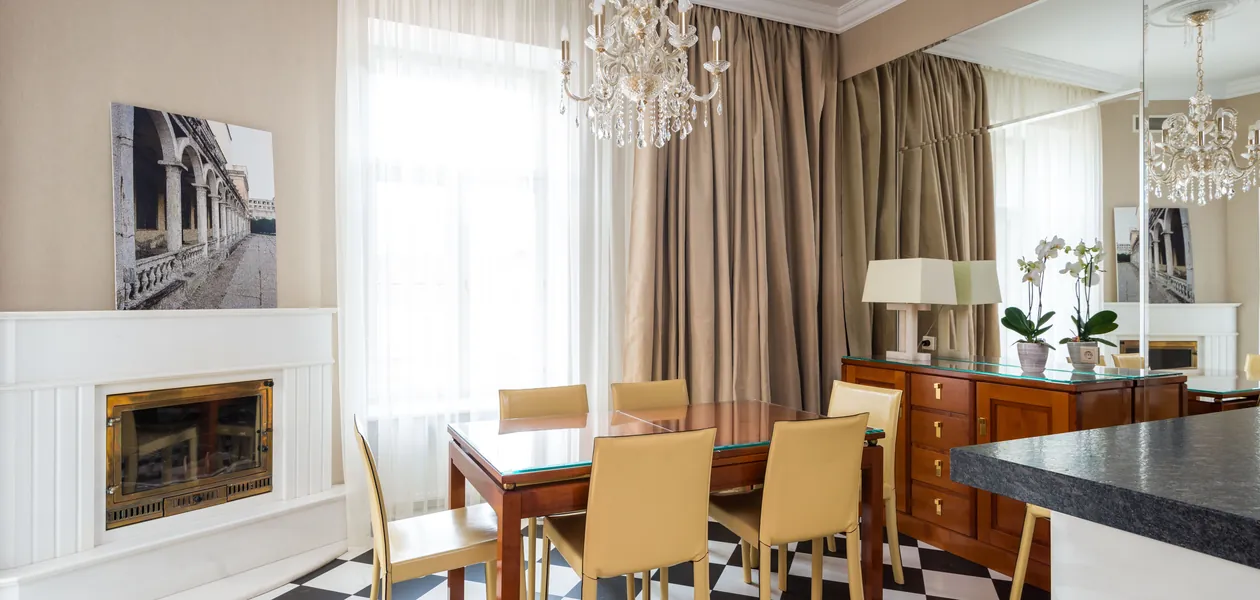
The classic palette pairs black with deep jewel tones such as emerald green, sapphire blue and burgundy, then lifts them with cream, ivory or beige. Gold, brass and silver supply the shine. High contrast is the point, so a black and white checkerboard floor or a dark wall behind brass fixtures reads as deco instantly.
Luxurious Materials and Finishes
Original deco interiors leaned on exotic wood veneers, lacquer, marble, mirror and glass, often inlaid with metal or mother of pearl. Upholstery is plush: velvet, silk and leather. Every surface should either gleam or feel rich to the touch.
Sculptural Furniture
Deco furniture is solid and shapely, with rounded fronts, curved arms, tapered legs and stepped profiles. A barrel back club chair, a lacquered sideboard or a cocktail cabinet can carry a room on its own. Built in shelving and cabinetry suit the style too, because they keep the lines clean and symmetrical.
Statement Lighting
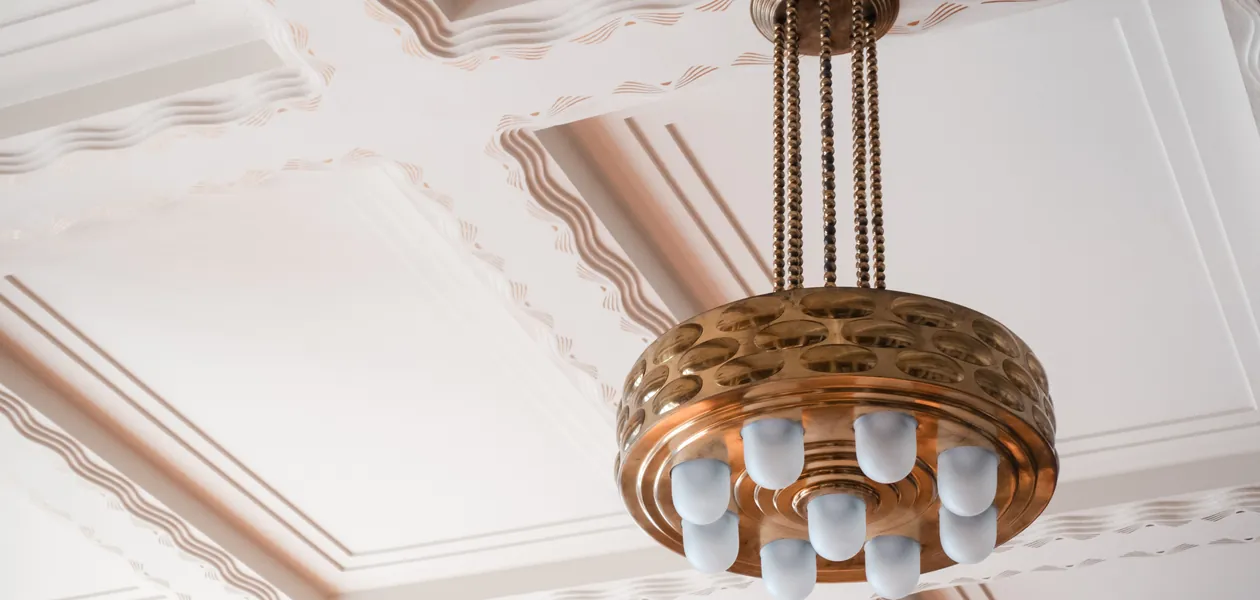
Lighting is decoration in its own right here. Look for tiered or fan shaped glass shades, frosted glass globes, wall sconces that throw light up the wall, and lamps with chrome or brass bases. Warm light on brass and glass is what gives a deco room its evening glow.
How to Bring Art Deco Into a Modern Home
You don’t need a 1920s apartment. The easier way to live with this style is to mix a few strong deco pieces into a contemporary space, in this order:
- Pick a focal point. Choose one room, or one wall, and center it on a fireplace, a bar or the bed.
- Choose a dark anchor color. Emerald, navy or black works best; keep the rest of the palette neutral.
- Add one geometric surface. A patterned rug, a tiled floor or fan print wallpaper does the job.
- Repeat one metal. Use brass or chrome across lamps, hardware and frames so it looks planned.
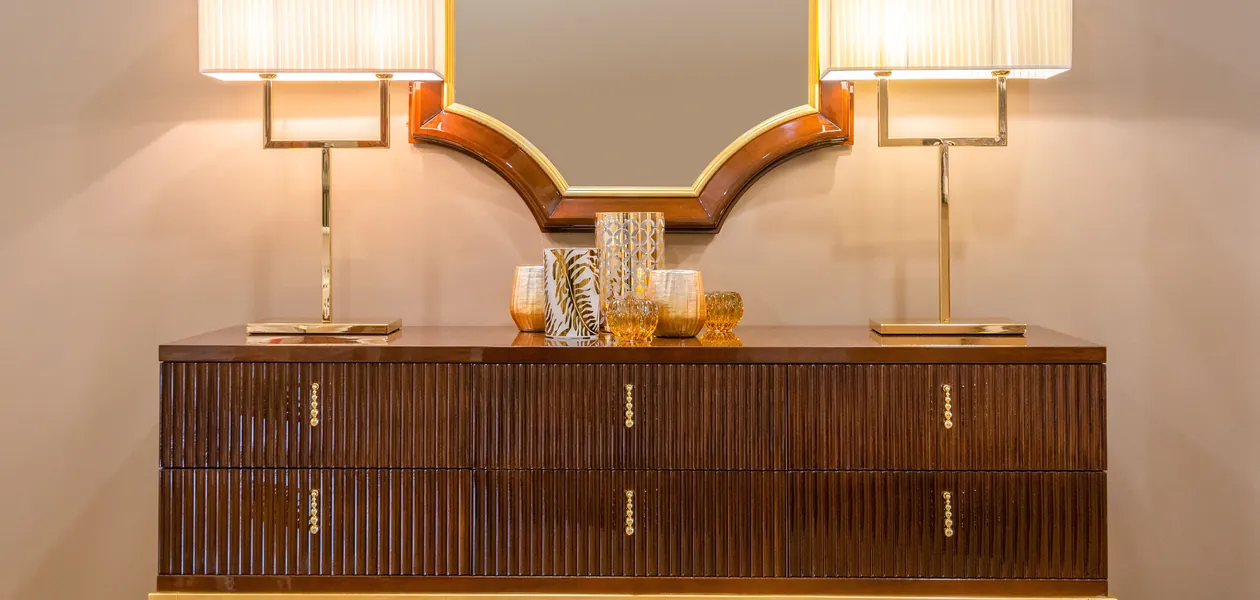
- Hang a statement mirror. A sunburst or beveled mirror bounces light around the room.
- Invest in one sculptural piece. A curved velvet sofa or a lacquered cabinet beats a matching set.
- Arrange it symmetrically. Balance the furniture on both sides of your focal point.
Then stop and live with it. Too many patterns and metals turn glamour into a theme party, so build on a calm, timeless home interior and let the deco accents do the talking.
Art Deco Ideas Room by Room
Each room takes the style a little differently:
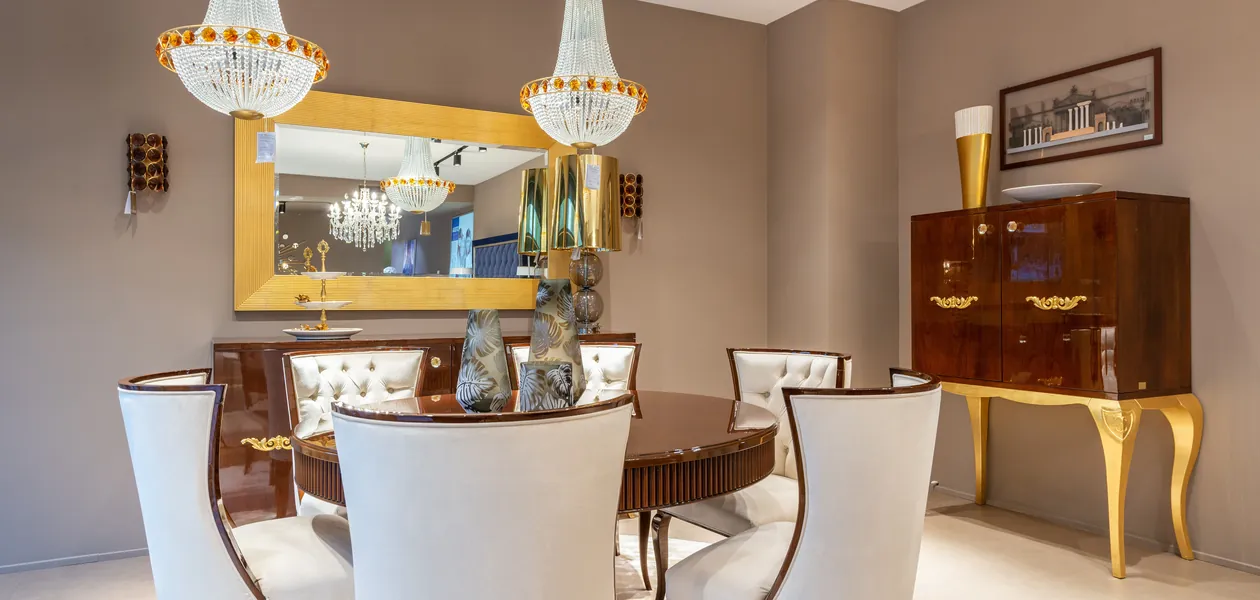
- Dining room. A round pedestal table in glossy wood, a gold framed mirror over the sideboard and a pair of matching pendant lights.
- Living room. A curved velvet sofa, a pair of matching armchairs, a geometric rug and a mirrored or lacquered coffee table.
- Bedroom. A tall upholstered headboard, matching nightstands and lamps, and a fan or sunburst motif on the wall above the bed.
- Bathroom. Black and white hexagon or checkerboard tile, chrome fixtures, a round mirror and frosted glass sconces.
- Kitchen. Glossy dark cabinets, brass pulls, marble counters and a geometric pendant light over the island or table.
- Home bar or study. Dark wood paneling, a cocktail cabinet, leather club chairs and glass shelves lit from behind.
- Entryway. A patterned floor, a slim console table and a big round mirror make the style the first thing guests see.
Whichever room you start with, the rules stay the same: one bold color, one metal, strong geometry and a symmetrical layout. Those four moves are what make a space read as art deco rather than simply expensive.
FAQ
What is Art Deco interior design?
A glamorous 1920s and 1930s style built on geometry and luxury. Art deco rooms use zigzags, sunbursts and other geometric patterns, symmetrical layouts, rich materials like lacquer, marble, glass and velvet, and polished brass or chrome. The name comes from the 1925 Paris Exposition des Arts Décoratifs.
What are the four key features of Art Deco?
Geometric ornament, symmetry, luxurious materials and bold contrast. Expect zigzags, chevrons, fans and sunbursts, furniture arranged in matching pairs around a focal point, surfaces in lacquer, marble, mirror and velvet, and a palette that sets black and jewel tones against gold, brass or chrome.
Is Art Deco still in style?
Yes, mostly in pieces rather than full period rooms. A sunburst mirror, a curved velvet sofa, geometric tile or a lacquered cabinet mixed into a contemporary space gives a modern home the same sense of occasion, as long as you keep to one bold color and one metal finish.
What is the difference between Art Deco and Art Nouveau?
Art Nouveau is organic, art deco is geometric. Art Nouveau took shape in the 1880s and uses vines, flower stems and fluid curves. Art deco followed it, flattened and stylized those plant forms, and favored straight lines, repeating geometric shapes and a celebration of industry and the machine age.
What colors are used in Art Deco interiors?
Black, jewel tones and metallics. The classic palette pairs black with emerald green, sapphire blue or burgundy, balances them with cream, ivory or beige, and adds shine with gold, brass and silver. High contrast, like a black and white checkerboard floor, reads as deco instantly.