
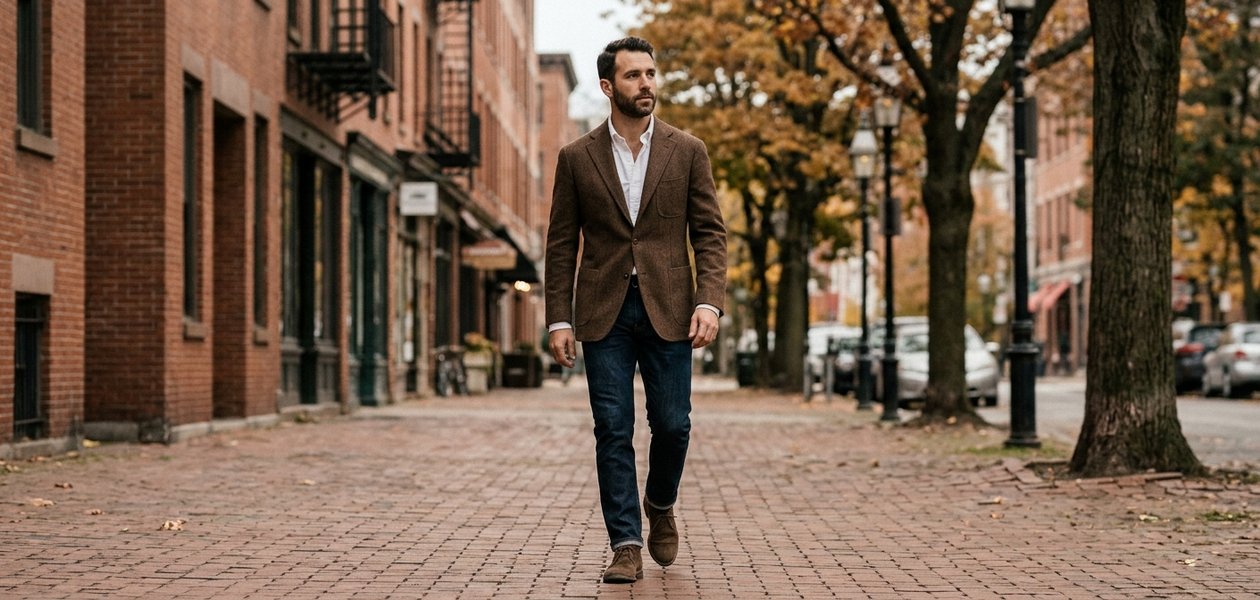
Three choices decide whether a man’s blazer and jeans look deliberate rather than accidental: a blazer built to be worn as a separate instead of a suit jacket, jeans kept dark and plain, and a shirt and shoes that set the level of polish. The sections below start with where the outfit fits, then take those choices in turn.
Where a Blazer and Jeans Fit on the Dress Code Scale
Dress codes for men treat this pairing as a hybrid. The Emily Post Institute’s guide to dress codes from casual to white tie lists good jeans, clean and without holes, under casual, and a seasonal sport coat or blazer with slacks under dressy casual. A blazer over jeans sits between those two levels.
That middle position makes a blazer and jeans a dependable choice for dinner at a good restaurant, a first date, a gallery opening, drinks after work or an office that allows jeans. Workplaces differ, so the same guide tells readers to check and follow their own company’s dress code.
For the office, what a typical business casual office expects is a sensible baseline before wearing jeans to work. Dark jeans, a pressed shirt and leather shoes keep the blazer on the right side of that line.
A blazer and jeans stop working where an invitation asks for more. Emily Post calls for a dark business suit at semi-formal events and a tuxedo at black tie, and advises leaning formal for anything starting after 6 in the evening. A wedding with either code on the card calls for a suit, not jeans under a blazer.
Pick a Blazer or Sport Coat for Jeans, Never a Suit Jacket
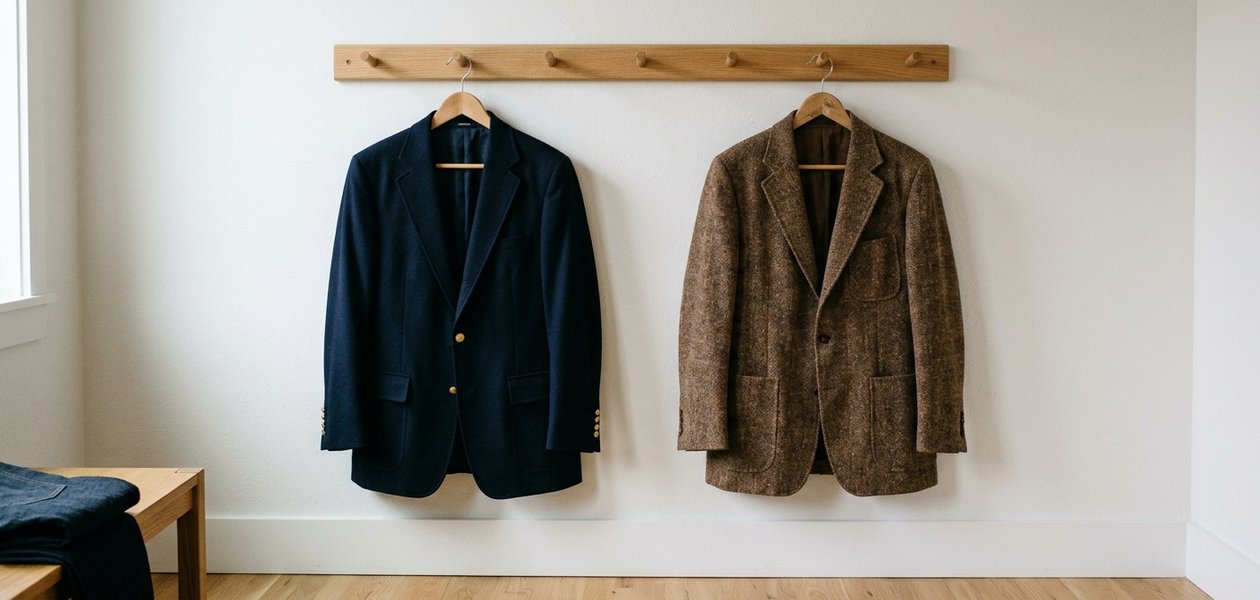
The most repeated rule for men pairing a blazer with jeans concerns the jacket itself: it has to be made to stand alone. A blazer or sport coat is cut as a separate garment, while a suit jacket is one half of a matched pair, and the difference shows the moment it meets jeans.
Why a Suit Jacket Looks Wrong With Jeans
A suit jacket is usually cut from worsted wool. The Woolmark Company explains that worsted yarn makes flatter, lighter and smoother fabrics of the kind used in traditional tailoring. Beside the rough twill of jeans, that smooth face looks like a suit jacket separated from its trousers rather than a blazer chosen for jeans.
Matching suit buttons, flap pockets and a sharp, padded shoulder add to the effect. A few confident men wear a suit jacket with jeans on purpose, yet it remains the hardest version to carry off and the easiest to get wrong.
Blazer Versus Sport Coat
The blazer began on the river. The Lady Margaret Boat Club of St John’s College, Cambridge, founded in 1825, says the term came from its bright red rowing jackets, and it traces the first printed use of the word to the London Daily News of 22 August 1889.
Today a blazer usually means a solid jacket, classically navy, often with metal buttons. A sport coat descends from country and hunting clothes, so it tends to come in patterned or textured cloth such as tweed, herringbone or check, often with patch pockets.
Both work with jeans. The sport coat is the easier place to start, because its rougher cloth and relaxed details already lean casual, while a navy blazer over dark jeans is the sharper of the two looks.
Textured Blazers With Soft Shoulders Suit Jeans Best
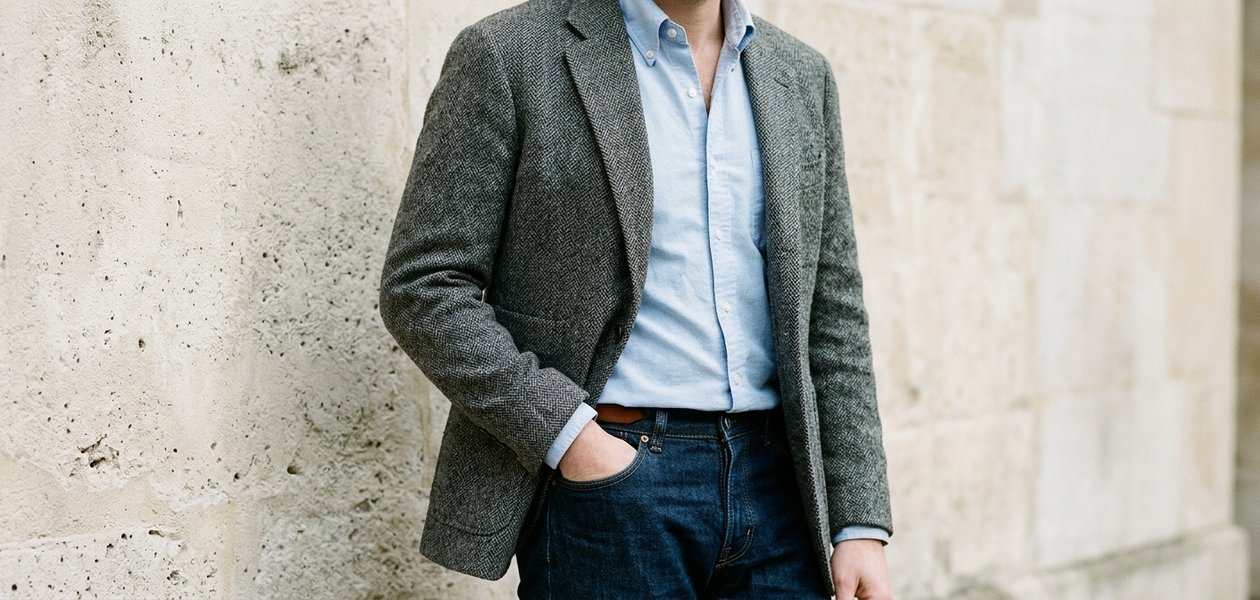
Jeans carry a visible diagonal twill weave, so a blazer with some surface interest looks as if it belongs beside them. Tweed, herringbone, flannel, corduroy, hopsack and linen all qualify. A sleek, shiny blazer does the opposite and makes the jeans look rougher than they are.
Tweed is the textbook example. Under the Harris Tweed Act 1993, cloth sold as Harris Tweed must be handwoven by islanders at their homes in the Outer Hebrides, finished there, and made from pure virgin wool dyed and spun on the islands. A tweed blazer brings that handmade surface to a pair of jeans.
Construction matters as much as cloth. An unstructured or lightly structured blazer, with little padding and shoulders that follow the wearer’s own, reads relaxed and moves easily. Patch pockets, a soft lapel roll and horn or matte buttons push it further toward the casual side, where jeans live.
Blazer Cloth for Warm and Cold Months
Season settles most of the fabric question. From late spring to early autumn, linen, cotton and lightweight wool blazers keep the outfit cool, and they pair naturally with lighter washes or white jeans.
When the weather turns, woollen cloth takes over. Woolmark notes that woollen yarn, spun from shorter fibres, makes thick, heavyweight fabrics suited to warm winter jackets. Tweed, flannel and corduroy blazers belong here, worn over dark indigo or black jeans.
Dark, Clean, Slim Jeans to Wear Under a Blazer
Jeans started as work pants for men. Patent No. 139,121, granted on May 20, 1873 to Jacob W. Davis of Reno, Nevada, and assigned to himself and Levi Strauss & Company, carries the title Improvement in Fastening Pocket-Openings.
It describes a metal rivet at each edge of the pocket opening to stop the seams of pants from ripping. A blazer worn over that workwear heritage calls for the cleanest, darkest version of it.
Dark indigo is the dressiest wash for jeans under a blazer. Cotton Incorporated’s technical bulletin on denim fabric manufacturing explains that most denim pairs an indigo-dyed warp with undyed filling yarns, and that the dye concentrates in the outer layers of each yarn around a white core.
A dark, rinsed pair of jeans still shows nearly all of that color. Heavy fading, whiskers and rips expose the paler core and pull a blazer outfit toward weekend wear, so they suit days without one. Black jeans are the second safe option, especially under a grey or charcoal blazer.
Weight is worth a look on the label of jeans meant for a blazer. The same bulletin puts fabric for jeans at 8.0 to 16.5 ounces per square yard and describes a classic bottom weight denim at 14.5 ounces, while denim woven for shirts runs lighter, at 3.5 to 8.0 ounces.
The cut should be slim or straight: skinny jeans make a blazer look top heavy, and wide, baggy legs let it swim. The hem should meet the shoe with little or no stacking.
How the Blazer and the Jeans Should Fit
Fit carries a blazer and jeans outfit more than price does. The shoulder seam of the blazer should end where the wearer’s shoulder ends, with no divot or overhang. With arms relaxed, a sliver of shirt cuff should show past the sleeve, and the hem should cover the seat of the jeans.
Proportion is the second test. A trim blazer goes with slim or straight jeans, and a fuller, relaxed jacket goes with a relaxed straight leg. A snug blazer over loose jeans, or the reverse, splits the figure in two. A tailor can shorten sleeves and take in a waist, but shoulders need to be right in the fitting room.
Color Pairings for the Blazer and the Jeans
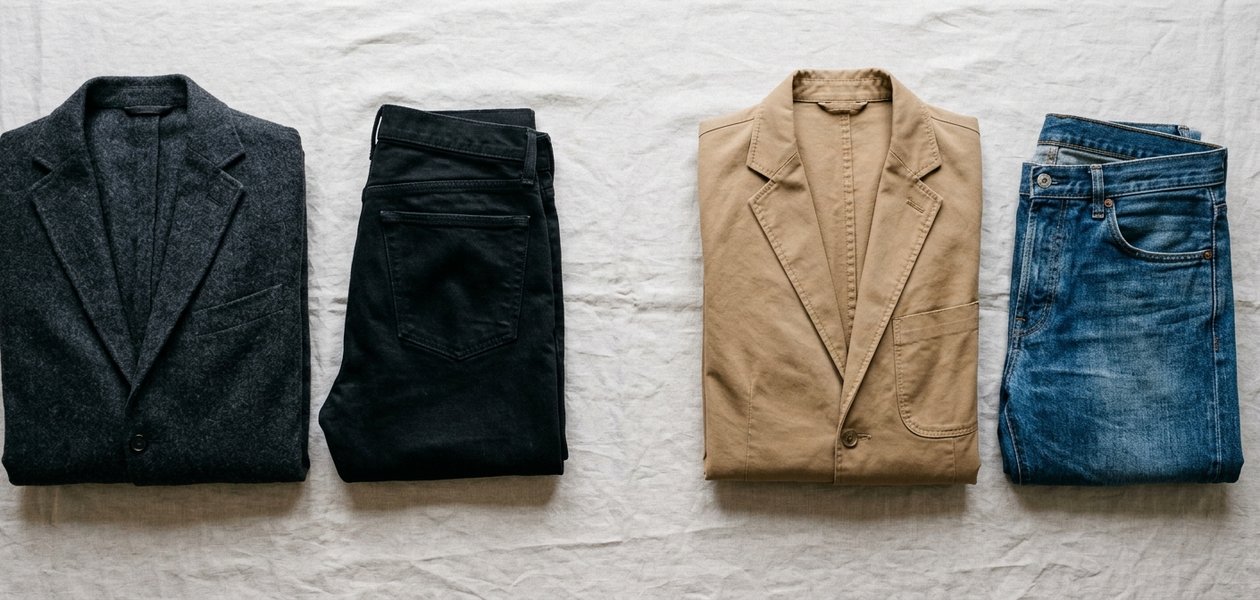
Contrast keeps a blazer and jeans from looking like a mismatched suit. A navy blazer over jeans of nearly the same navy reads as an accident, while the same blazer over clearly lighter or clearly darker jeans looks intentional. Earth tones are the easiest blazer colors for blue jeans, and grey family blazers sit well on black jeans.
| Jeans | Blazer colors that pair well | Where it works |
|---|---|---|
| Dark indigo, rinsed | Navy with clear contrast, charcoal, grey, brown, tan, olive | Office, dinner, date |
| Black | Grey, charcoal, camel, burgundy | Evening plans, smart casual events |
| Mid wash blue | Brown or grey tweed, olive, tan | Weekends, casual gatherings |
| Light wash or white | Cream, stone, light grey, pale linen | Summer, outdoor and resort settings |
Three combinations cover most of a man’s calendar. For the office: a navy blazer, dark indigo jeans, a white oxford shirt and brown leather loafers.
For a date or a dinner: a charcoal or brown textured blazer, black or dark jeans, a fine knit and suede Chelsea boots. For the weekend: an unstructured cotton or linen blazer, mid or light wash jeans, a plain T-shirt and white leather sneakers.
Lighter jeans follow the same contrast logic with softer colors, and pairings for pale and white wash denim go further into that summer palette. Keep bold pattern to one piece at a time: a checked sport coat wants a plain shirt, and a striped shirt wants a solid blazer.
Shirts and Shoes to Wear With a Blazer and Jeans
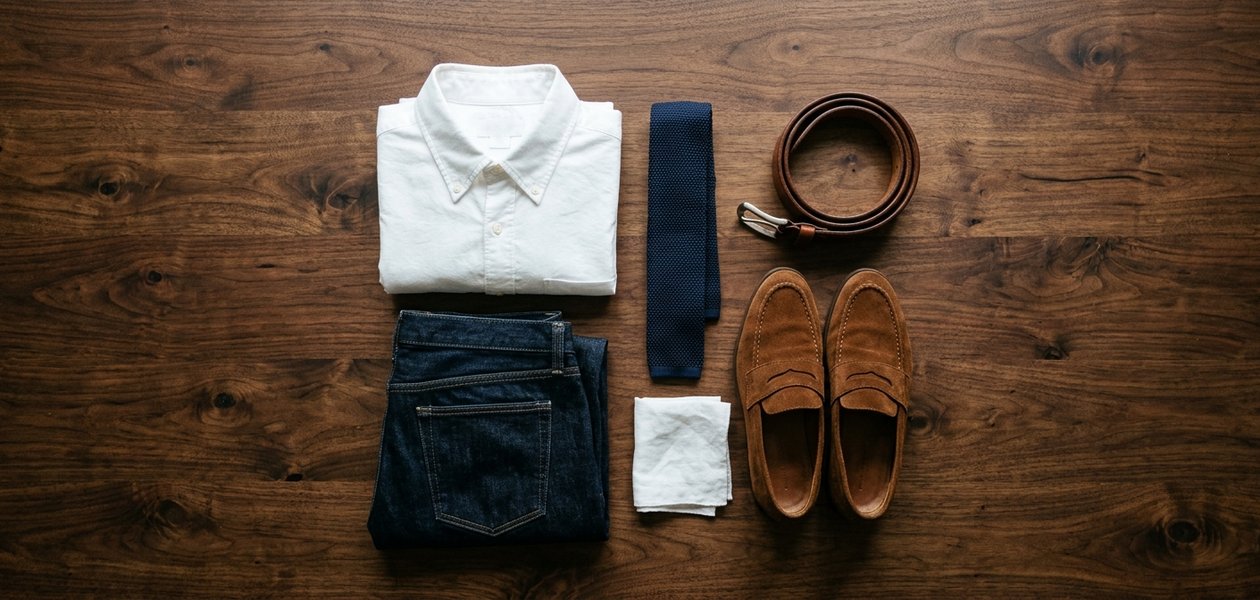
With the blazer and jeans settled, the shirt and shoes decide how dressed up the whole look reads. Changing only those two pieces can move one blazer and one pair of jeans from a client lunch to a Saturday afternoon.
Shirts to Wear Under the Blazer
- Oxford or dress shirt: the most polished option under a blazer, tucked in, worn with the collar open or with a tie for dressier evenings.
- Polo or fine knit: a knitted polo, a merino crew neck or a thin roll neck keeps the blazer smart while losing the stiffness of a collar.
- Plain T-shirt: the most relaxed choice with jeans, in white, grey, navy or black, well fitted and free of slogans or large logos.
Collared shirts look best tucked in under a blazer, since a tail hanging below the hem breaks the line. A short T-shirt can stay untucked as long as it ends above the blazer’s hem.
Shoes and a Matching Belt
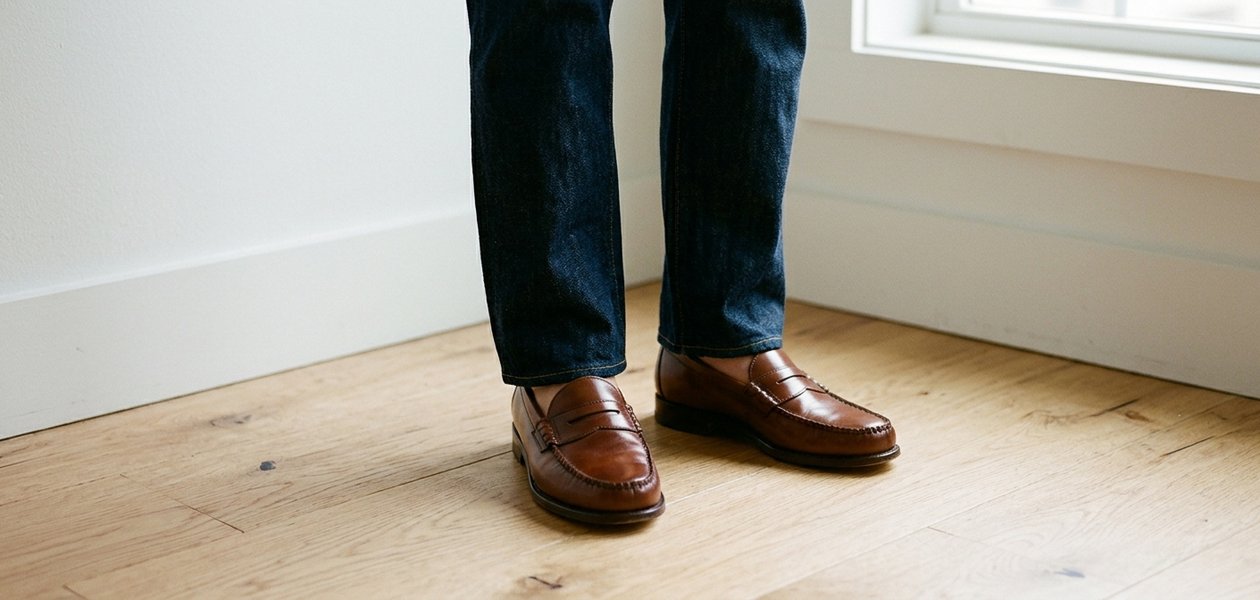
Leather and suede are the safe materials for shoes with a blazer and jeans. Loafers, derbies and brogues suit the dressier versions, while Chelsea and chukka boots cover most of the range and look especially right in autumn and winter. Clean, minimal white leather sneakers can finish a casual version, but running shoes and bulky trainers clash with tailoring.
With a blazer and jeans, the belt should match the shoes in color and finish: brown with brown, black with black. Metals follow the same idea, so a silver buckle sits better beside a steel watch than beside a gold one.
Ties and Pocket Squares With a Blazer
A tie is optional with a blazer and jeans. When one goes on, a knit or wool tie matches the texture of the blazer and the jeans better than a shiny silk one. A cotton or linen pocket square, folded flat or tucked in loosely, adds color without formality.
Put together, the formula for men is short: a textured blazer or sport coat cut as a separate, dark jeans in a slim or straight leg, a tucked shirt or a fine knit, and leather shoes with a belt to match. Every variation on a blazer and jeans starts from those four pieces.
