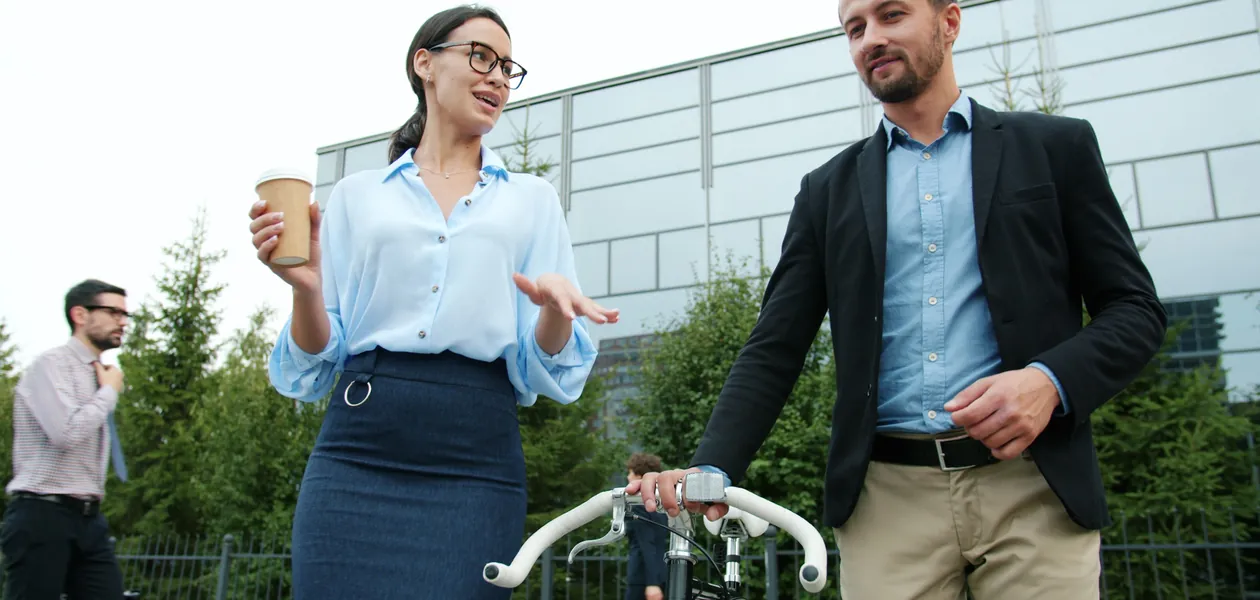
Business casual attire for men means a collared shirt, tailored trousers or chinos and leather shoes, with a blazer or sweater when the day calls for a more polished look. It sits between a full suit and weekend clothes: no matched suit and usually no tie, but nothing from the gym or the beach.
The trouble is that the phrase means different things in different rooms. A bank, a design studio and a startup all say business casual and expect three different outfits. Shorts, hoodies and gym sneakers are out almost everywhere, while dark denim is welcome in some offices and frowned on in others.
This guide gives you the core outfit piece by piece, straight answers on the gray areas (jeans, polos, sneakers and ties), how the code shifts by workplace, interview and season, what to leave at home, and what to buy first if you are building a work wardrobe from scratch.
TL;DR
- Business casual attire for men is a collared shirt, tailored trousers or chinos and leather shoes, with an optional blazer, sport coat or sweater and a tie only when the room calls for one.
- Fit matters more than brand or price, and neutral tones like navy, gray, khaki, olive and brown let a few pieces cover a full week.
- Dark, clean jeans and minimal leather sneakers pass in relaxed offices, but not at interviews, client meetings or in conservative industries, and you never need a suit or a tie.
- Dress for your workplace: blazers and wool trousers in finance or law, denim and knits in creative and tech offices, the top of the code for interviews, and linen in summer or flannel and wool in winter.
- Leave gym wear, worn-out clothes and beach pieces at home, and build the wardrobe around oxford shirts, chinos, gray wool trousers, a navy blazer and brown leather shoes.
What Is Business Casual Attire for Men?
Business casual is a professional dress code without the full suit. In practice it borrows pieces from a suit wardrobe, such as a dress shirt and dress pants or slacks, and wears them without the matching jacket. The tie is optional, and comfort counts as much as formality.
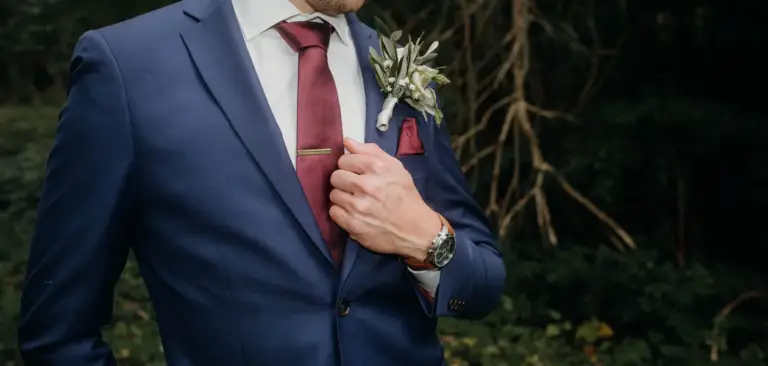
A sport coat, blazer or sweater can go on top, and none of it has to match. Think of the outfit as separates you pick to work together, rather than a set bought together. That is the key difference from a suit, and it gives you far more options.
Creighton University’s career center sets a useful bar: the outfit should be crisp and neat, and it should look appropriate even for a chance meeting with the CEO. It is classic and refined rather than trendy, and it never looks like party or picnic clothing.
That standard matters more than any list of rules. A pressed oxford shirt and chinos pass it, while the same chinos with a wrinkled tee do not. When you want to test a piece you are unsure about, picture that unplanned meeting and you will know the answer.
Where Business Casual Sits on the Dress Code Scale
Dress codes run on a ladder, and business casual sits near the middle. Below it is smart casual, which allows dark jeans, clean sneakers and looser layers for social plans. Above it is business professional, the matched suits, dress shirts, ties and dress shoes that banks, law firms and corporate boardrooms still expect.
One rung higher is cocktail attire, a dark suit and tie for evening events. Knowing the neighbors makes the middle easier to read: business casual keeps the structure of business wear (the collar, the tailored trousers, the leather shoes) and drops the formality of a full suit.
Where the Dress Code Came From
Relaxed office dress has deep roots in the United States. Business Insider’s history of business casual traces it to Hewlett-Packard’s early casual Fridays and to the Hawaiian Fashion Guild’s 1966 Aloha Friday campaign, which encouraged workers to wear Hawaiian shirts to the office.
The look itself took shape in 1992, when Levi Strauss mailed an illustrated pamphlet, A Guide to Casual Businesswear, to 25,000 HR departments. The pamphlet put Dockers khakis front and center, and chinos have anchored the look ever since.
Its tips still hold up more than three decades later: casual does not mean sloppy, wrinkled or stained clothes stay out of the office, ripped jeans and loud printed tees stay home, and athletic wear waits until after work. Most modern office dress codes say the same thing in longer words.
The Core Business Casual Outfit, Piece by Piece
Every business casual look is built from the same four parts, and knowing them makes every morning choice easier. Get these right and you can dress for most work environments without thinking twice:
- A collared shirt: an oxford button-down, a poplin dress shirt or a structured knit polo, tucked in.
- Tailored trousers in neutral tones: chinos or wool trousers in navy, gray, khaki, olive or brown.
- Leather shoes and a matching belt: loafers, derbies, oxfords or chelsea boots, worn with dark socks.
- A layer, and a tie when it helps: a blazer, sport coat or sweater on cooler or more formal days, and a tie only if the room calls for one.
Fit matters more than brand or price. Well-fitted mid-priced pieces will always look sharper than expensive ones bought a size off, and poor fit shows across a meeting table even when nobody could say exactly what is wrong. Fitted does not mean tight: the goal is clothes that skim the body without clinging.
Check three points. The shirt collar closes without pinching and the body does not balloon when tucked. Trousers sit at your waist without a belt doing the work and end with a slight break at the shoe. A jacket’s shoulder seam ends at your shoulder, with a little shirt cuff showing past the sleeve.
Put together, the four parts make a range of outfits rather than one uniform. Here are three business casual examples, from dressiest to most relaxed, all built from the same short list of clothes in neutral colors:
The client-day version: charcoal wool trousers, a light blue dress shirt, a navy blazer and dark brown derbies with a matching belt. Add a tie if the people you are meeting will wear one.
The everyday version: navy chinos, a white oxford button-down, a gray merino crewneck and brown leather loafers. No jacket needed, and it still looks finished.
The Friday version: dark, clean jeans, a light blue oxford, an unstructured blazer and brown suede chukka boots, in an office where denim is already normal.
Shirts: Button-Ups, Oxfords and Knit Polos
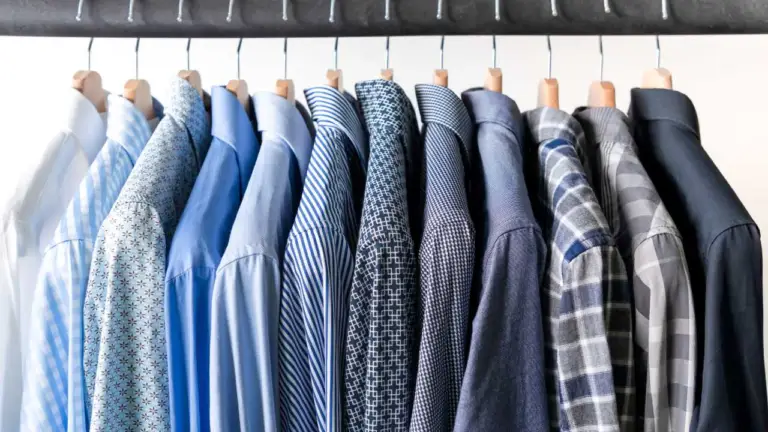
The shirt is the most important piece, because people see it all day, including on video calls. Oxford cloth button-downs are the backbone of the code: slightly textured, easy to care for and right with or without a jacket. Poplin and twill dress shirts read a notch dressier.

Long sleeves are dressier than short sleeves and work even in summer, so roll them rather than switching. White and light blue solids are the safest picks, followed by subtle stripes and small checks. Keep patterns muted and avoid loud prints and big logos, which belong to the weekend.
Button-ups now come in more fits than ever, so try a few before you stock up. Our guide to dress shirt brands, fits and fabrics covers what to look for in collars and cloth.
Tuck the shirt in. Business casual button-ups are cut long enough to stay tucked through a full workday of sitting and standing, and a tucked shirt with a leather belt is half of what makes chinos look like work clothes. Untucked shirts with a short, straight hem only work in the most relaxed offices.
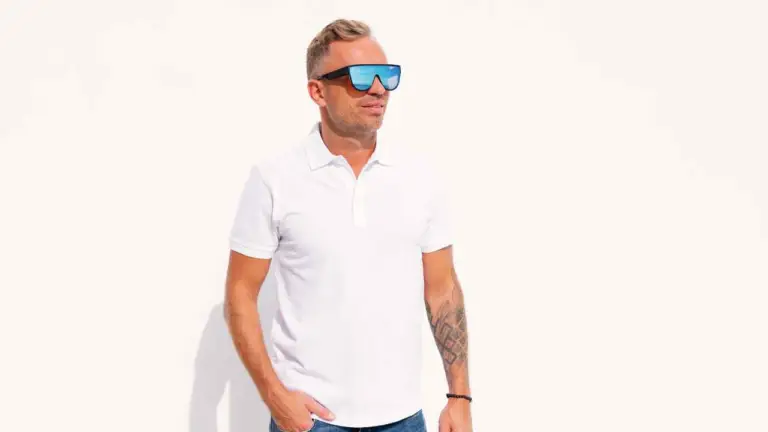
Polos are the gray zone. In an office that already leans relaxed, a solid knit polo with a collar that holds its shape is appropriate when tucked in and worn with chinos and leather shoes. It is a laid-back option, so make sure the rest of the outfit is sharp.
Skip the polo in finance, at interviews and in client meetings, where it reads closer to the golf course than the office. For more ways to wear one, see how to style a polo.
Trousers and Chinos
Chinos are the default business casual trousers: cotton twill, flat front, slim, tapered or straight, finished with a slight break or none at all. Start with khaki, navy and gray, then add olive or a darker brown. These neutral tones pair with every shirt color above, which is what makes a small wardrobe go far.
Wool trousers are the step up. A pair in mid gray or charcoal makes a navy blazer look deliberate and carries you through client days. Flannel adds texture in winter, while cotton and linen blends breathe in summer. Keep everything pressed, because a crease reads as effort and wrinkles read as the opposite.
Avoid cargo pockets, drawstring waists, joggers dressed up as trousers and anything too tight or too baggy. If the waist needs a belt cinched hard to stay up, the trousers do not fit, and a tailor can often fix that.
Shoes, Belts and Socks
Leather shoes finish the outfit, and Creighton’s guide is blunt about it: wear leather, and skip sandals, athletic shoes and hiking boots. These styles all qualify: penny or tassel loafers, derbies, oxfords and brogues, plus chelsea boots and chukkas in leather or suede when the weather turns.
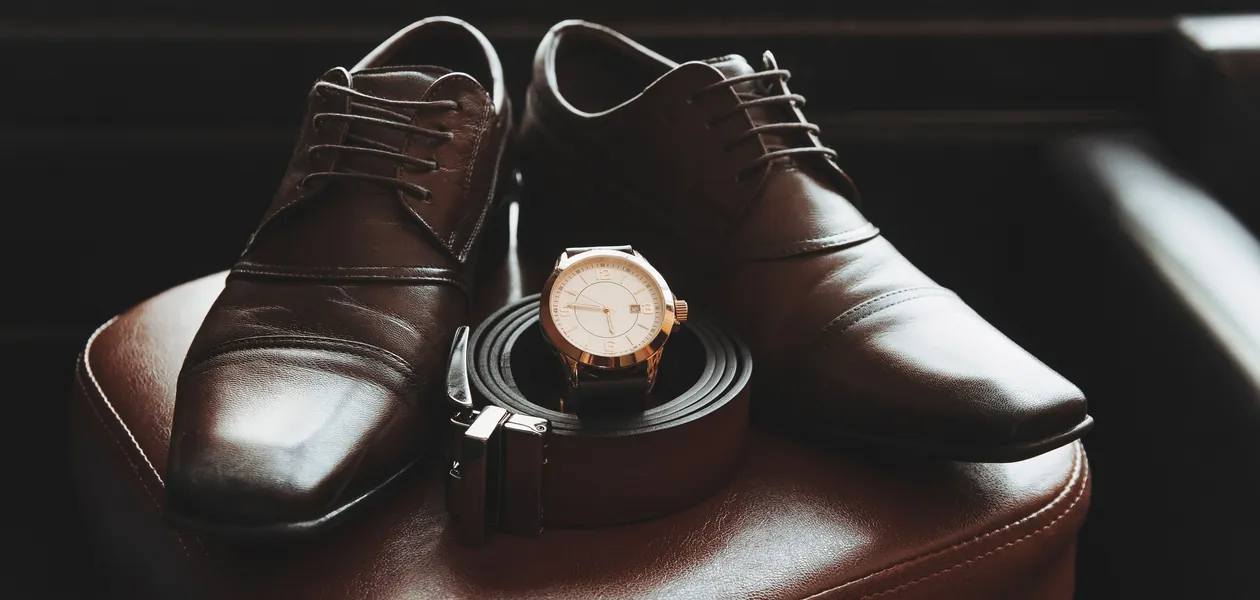
Brown shoes are the better first pick, because they pair with navy, gray, khaki and olive alike. Black looks sharper with charcoal and in conservative offices. The old rule holds: match the belt to the shoes in tone, keep the buckle simple, and choose dark socks long enough that no skin shows when you sit.
Keep shoes polished and get them resoled when the heels wear down. Scuffed leather undoes a sharp outfit faster than anything else on this list, and a good pair that is cared for will usually outlast several cheap ones.
Blazers, Sport Coats and Sweaters
You do not need a jacket to meet the code, but it is the fastest way to look pulled together. The jackets that work best read as separates rather than suit jackets: an unstructured navy blazer, a tweed or corduroy sport coat, or a cotton jacket with soft shoulders.
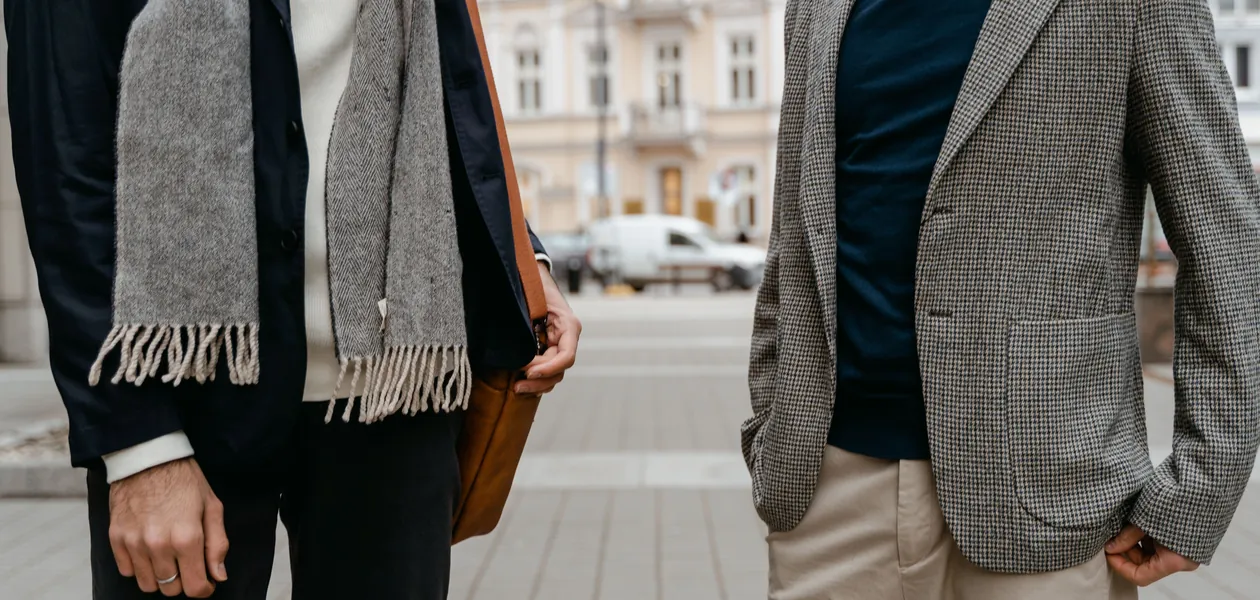
A navy blazer is the single most useful piece you can own here. It adds polish to an oxford and chinos and works over a knit on a Friday. If I could keep only one jacket for the office, that is the one I would keep.
Knitwear does a similar job without the structured shoulders of a jacket. A merino crewneck or V-neck over a collared shirt, a quarter-zip or a cardigan all fit the code, as long as the knit is fine rather than chunky and the shirt collar sits neatly. Save hoodies and zip sweatshirts for the weekend.
Jeans, Sneakers, Ties and Suits: The Gray Areas
Most confusion about business casual attire for men comes down to four questions. The honest answer to each is that it depends on the workplace, but every one of them has a clear default you can fall back on.
Can You Wear Jeans as Business Casual?
Yes, in many offices, but not every pair and not every day. As GQ notes in its guide to business casual attire, “all jeans are casual, but not all jeans are business casual.”
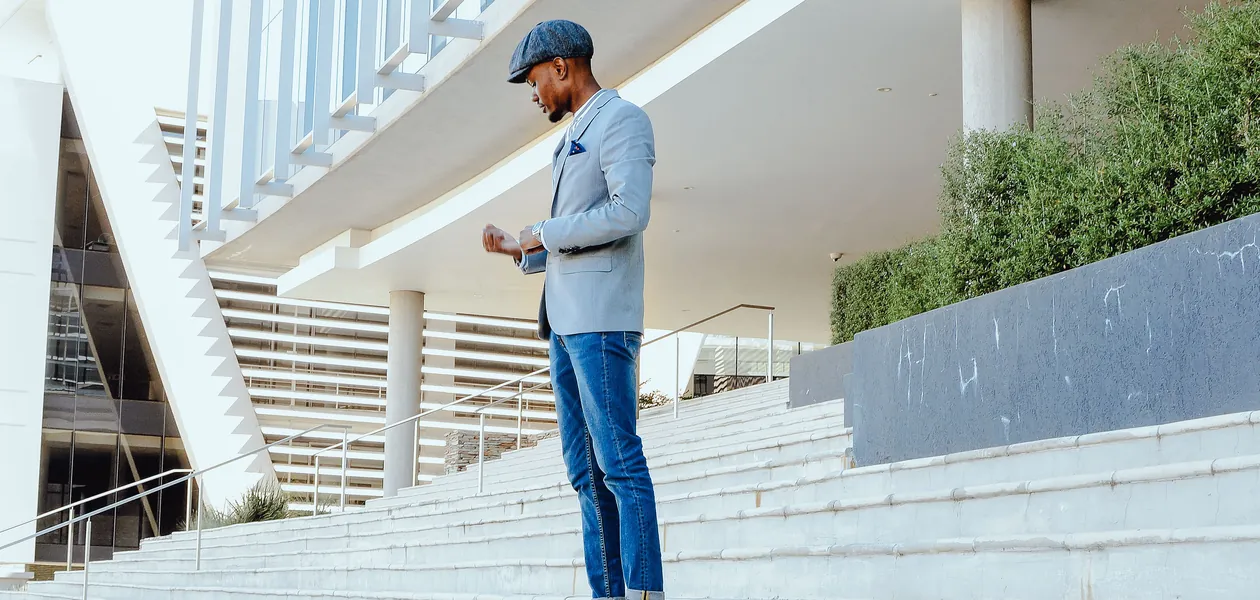
The pair that works is dark, clean and free of rips, in a slim or straight cut that does not pool at the ankle. Bright colors, heavy fading and baggy cuts push it back into weekend territory, however good the shirt is.
If you want to wear them, dress them up on purpose with a crisp oxford or a fine knit, a blazer and leather shoes. Leave jeans out for interviews, client meetings and events whose invitation says business casual, and in banking, law or any office where you have never seen a colleague in denim.
Are Sneakers Business Casual?
Sometimes. Minimalist leather sneakers in white, black or brown, with no big logos and clean soles, pass in many creative and tech offices. Running shoes, chunky trainers and anything you would wear to the gym are not appropriate. When the office is conservative or you are meeting clients, wear leather shoes instead.
A simple rule works great here. If the sneaker would look right with a blazer and wool trousers, it can come to work. If it only makes sense with joggers, it stays home.
Do You Need a Tie or a Suit?
No to both. Business casual is defined by skipping the matched suit, and the tie is optional. Creighton’s advice for uncertain events is sensible: if in doubt, wear a tie, since dressing slightly up never hurts, and take it off discreetly if nobody else has one on.
A tie also lifts a business casual outfit on days that need it, such as a presentation or a visit from senior clients. Our guide to choosing a tie that matches helps when you do wear one.

Suit trousers on their own work well with a knit or an oxford. Wearing the suit jacket as a blazer is harder, because smooth suit cloth tends to look like it lost its trousers, and a textured sport coat does that job better.
A full suit with a tie is business professional, a step more formal than most business casual rooms expect. It is rarely wrong for an interview, but on an ordinary office day it can make you look like the only person who missed the memo.
Business Casual by Workplace, Occasion and Season
The same dress code stretches a long way. A BBC report on business casual around the world found that in the US it shifts from coast to coast.
On the East Coast it means a preppy look, with a dark blazer and pressed slacks. It turns more outdoorsy in Denver or Seattle, and looser again in California, where it varies a lot by industry. The lesson: dress for the setting you are actually in, not for a definition.
Conservative vs. Creative Offices
In finance, law, consulting and government, aim for the top of the range: a sport coat or blazer, wool trousers, a pressed dress shirt and leather dress shoes, with a tie in your drawer for client days. Jeans and polos rarely belong in these traditional, corporate settings.
In creative agencies, design studios and tech companies, the code relaxes. Dark denim, knitwear, unstructured jackets and minimal sneakers are common. If you do not know the culture yet, the safest read on any new workplace is to watch what people a level or two above you wear during your first week, then match it.
Modern hybrid work has loosened things further, but the collar still matters on camera. A structured collar looks better on a video call than a tee, even when nobody can see your trousers.
Business Casual for an Interview
When a job interview is billed as business casual, stick to the top of the code. A navy or gray blazer, a white or light blue shirt, wool trousers or pressed chinos and polished leather shoes make the safe combination. Bring a tie if the company is conservative.
Skip jeans, polos and sneakers, even if the people who work there wear them every day. You are showing judgment, not testing the rules, and nobody marks a candidate down for one extra layer of polish.
The same logic applies to events. When a conference, networking dinner or work party invitation says business casual, pick the dressier option: a blazer, a collared shirt, wool trousers or chinos and leather shoes. For evening events, darker colors look more at home than khaki.
Summer and Winter Business Casual
Summer business casual swaps fabrics, not the formula. Choose fabric that breathes: linen and cotton shirts, lightweight chinos, unlined lightweight jackets and suede loafers. Roll the long sleeves, keep the shoes closed and leave shorts at home, however hot it gets.
Winter goes the other way: flannel trousers, merino and lambswool knits, tweed or corduroy jackets and leather boots. Layering a knit between shirt and blazer is both warm and sharp. For cold weather dressing beyond the office, see our guide to dressing for autumn and winter.
What Not to Wear for Business Casual
The quickest way to get business casual right is to know what fails it. Three groups of clothing are out in almost every office:
- Gym and lounge wear: hoodies, sweatpants, joggers, athletic shorts, running shoes and team jerseys.
- Anything worn out: ripped or heavily faded jeans, stained or wrinkled shirts, frayed collars and scuffed shoes.
- Beach and party pieces: flip-flops, sandals, tank tops, loud graphic tees and novelty prints.
Watch the small details too. Creighton’s guide flags missing buttons, lint, tags or tacking stitches left on new clothes, dirty fingernails and heavy cologne. None of these show in a product photo, but all of them show across a desk.
Accessories should stay quiet. A subtle watch with a simple dial on a leather or metal strap is all most men need, and other jewelry should stay conservative in traditional offices. Hair should be clean and neat, and facial hair kept trimmed.
How to Build a Business Casual Wardrobe
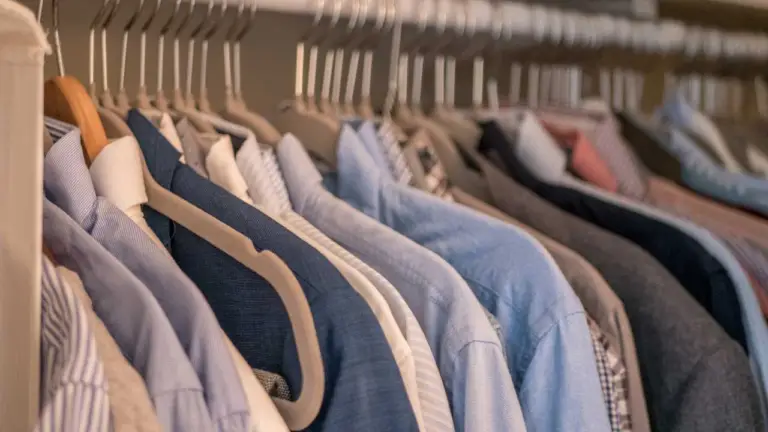
You do not need a new closet to dress business casual, just a short list of versatile items, the staples that all work together. Buy in this order and each piece multiplies what you already own.
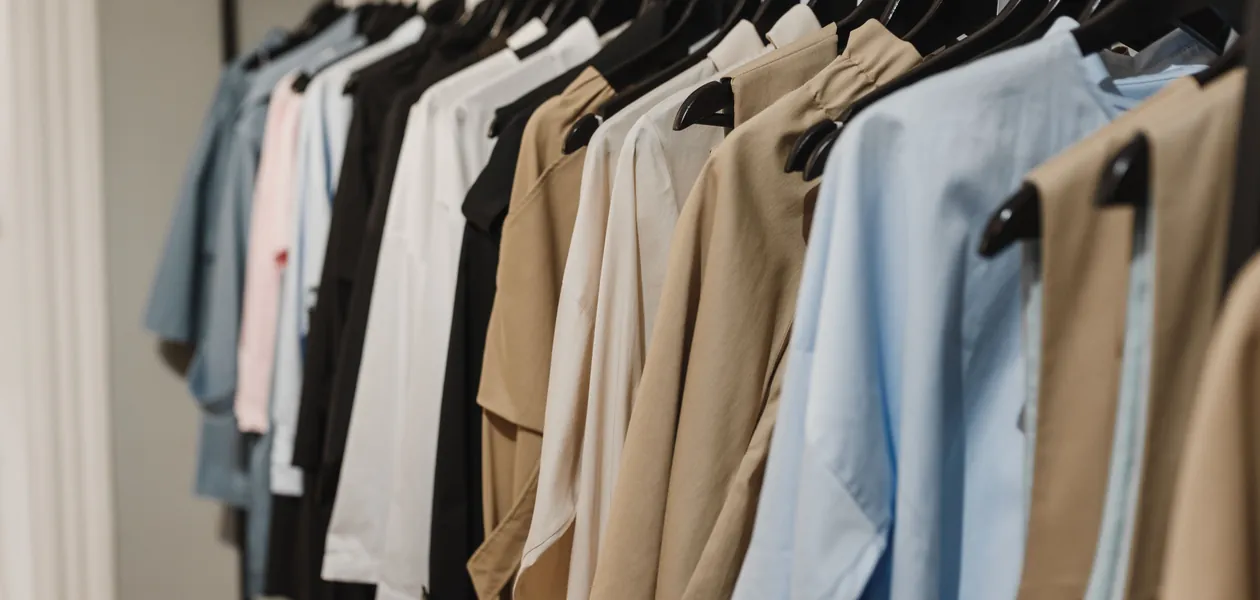
Start with three or four shirts: two oxfords in white and light blue, one fine stripe and one poplin dress shirt. Add khaki and navy chinos plus one pair of gray wool trousers. That alone covers a full working week without repeating an outfit.
Next comes the navy blazer, then a fine-gauge sweater in gray or navy. For shoes, brown leather loafers or derbies cover most days, and a darker pair in deep brown or black handles client meetings. Finish with brown and black leather belts to match.
Choose quality where it shows: the shoes and the jacket, because they take the most wear and frame everything else. Shirts and chinos can be mid-priced as long as they fit and stay pressed.
A great tailor matters more than a great label, since a shortened hem or sleeve makes a modest piece look made for you. Care counts too: hang blazers on wide hangers, rest leather shoes on cedar shoe trees between wears, and steam or iron shirts each time before they go on.
Keep the color palette tight while the wardrobe is small. Navy, gray, white, light blue and brown form a base of neutral colors where nearly everything can be paired with everything else, so you can dress in the dark and still get it right.
Once the core is in place, add personal touches slowly. Accessories are the easiest start: a patterned pocket square, a knit tie, a watch on a new strap. Then try an olive or burgundy knit, a textured sport coat or suede shoes. Each one adds a touch of personal style to a modern business casual look.
Get the four core pieces right, read the room you work in, and lean one notch dressier when you are unsure. That approach to business casual attire lets you walk into almost any office with confidence.
FAQ
What is business casual attire for men?
A collared shirt, tailored trousers or chinos and leather shoes, with a blazer, sport coat or sweater when you want more polish. It is a professional dress code without the matched suit, and the tie is optional. The outfit should look crisp enough for an unplanned meeting with the CEO.
Can you wear jeans as business casual?
Yes, in many offices, if the jeans are dark, clean and free of rips, in a slim or straight cut. Dress them up with an oxford or a fine knit, a blazer and leather shoes. Skip jeans for interviews, client meetings, conservative industries and invitations that say business casual.
What should men not wear for business casual?
Gym wear, worn-out clothes and beach or party pieces. That means hoodies, sweatpants, athletic shorts, running shoes, ripped or faded jeans, wrinkled or stained shirts, flip-flops, sandals, tank tops and loud graphic tees. Small details count too: missing buttons, lint, scuffed shoes and heavy cologne all work against you.
Do I need to wear a suit for business casual?
No. Business casual is defined by skipping the matched suit, and a tie is optional. A blazer or sport coat over a collared shirt with chinos or wool trousers is the dressiest version most offices expect. A full suit with a tie is business professional, a step more formal.
What should a man wear to a business casual interview?
Dress at the top of the code: a navy or gray blazer, a white or light blue shirt, wool trousers or pressed chinos and polished leather shoes. Leave jeans, polos and sneakers at home even if employees wear them, and bring a tie if the company is conservative.