
Unconditional love is the kind of love you give freely, without a scorecard. People often call it agape love, a love that asks for nothing back. I used to think it was just a pretty phrase until I lived through both sides of it. Receiving it changed how safe I felt, and learning to give it changed who I am. Most of us want to be loved this way, and we secretly want to know whether we are even capable of loving someone like that ourselves.
So let me be honest about what I have learned, because the textbook definition does not really tell you how it feels in real life.
What does unconditional love actually mean?
Unconditional love means your love does not depend on what the other person does, owns, or achieves. You do not love your spouse more on the days they impress you and less on the days they let you down. The love stays steady because it is not payment for good behavior.
Conditional love, by contrast, is closer to control than to real love. It whispers I will love you if you keep meeting my conditions. The moment the conditions slip, the love is withdrawn like a returned gift. When someone is constantly auditing you, you cannot relax into them. I have been in that dynamic, and it teaches you to perform instead of connect.
Real unconditional love is the opposite. It is the quiet certainty that you will still be cared for after you fail, after you change, and after the years take some of your shine, flaws and all.
Where we first learn it
Most of us meet unconditional love first as kids. A parent’s love for a child does not hinge on the report card, and that is the template we carry into adulthood. But it does not stop with family. When you find your life partner or soulmate, you can choose to love them the way good parents love their children, without invoices and without conditions.
That word, choose, matters. People assume this love is a feeling that either strikes you or it does not. In my experience it is a daily decision. Some mornings I do not feel loving, and I act with love anyway. The feeling tends to follow the choice, not the other way around.

What unconditional love is not
This is the part I wish someone had told me earlier, because the phrase gets twisted into something unhealthy. Loving without conditions does not mean loving without boundaries. It is mature love, not self-erasing love. Here is my line:
- It is not tolerating abuse. Putting up with cruelty or abusive language is not deep love. It is a sign your self-respect has gone quiet.
- It is not ignoring your own needs. You cannot pour from an empty cup, and neglecting yourself only lets the love curdle into resentment.
- It is not giving people whatever they want. Saying no to a partner who is hurting themselves is often the most loving thing you can do.
- It is not staying silent. You can love someone unconditionally and still tell them a hard truth they need to hear.
- It is not keeping score. The moment you track who gave more, you have slipped back into conditional love.
So the rule I follow is simple: keep your boundaries up and keep your heart open. Those two things are not in conflict. Treating each other with respect is what lets you keep loving for the long haul.
How to love someone unconditionally

People want a method, so here is the honest version of mine. None of it is complicated, but all of it takes practice and a little compassion on the days you do not feel like it. These are the habits that hold my own relationships together.
- Practice open communication. Say what you need plainly and ask what your partner needs. Most conflicts grow out of guessing instead of asking.
- Do not let small things win. The dishes, the tone, the late text. Let the little stuff go before it hardens into anger.
- Protect the relationship from outside noise. Keep distance from people who are jealous of what you have or who enjoy stirring up trouble.
- Share the power. No one in a healthy partnership gets everything they want. You trade, you compromise, you take turns being right.
- Lead with acceptance. Accept the flaws that will not change and keep loving anyway. That is the whole game.
- Forgive faster than you want to. Holding a grudge is the surest way to drain the love out of a good relationship.
For a fuller playbook on the day-to-day habits, I wrote a companion piece on how to maintain a healthy relationship that goes deeper into the routines that keep love steady.
How to recognize unconditional love
When you are in it, certain signs show up again and again. These are the ones I trust:
- It is altruistic. You are not quietly tallying benefits. You care about the other person’s support and wellbeing for its own sake, not for what it earns you.
- It feels safe. You can be unguarded. The first thing on your mind is whether your partner feels secure with you, not whether you are getting a fair deal.
- It survives mistakes. Forgiveness and acceptance are baked in. You confront the failure, you say the hard thing, and you keep loving the person underneath it.
- It makes you feel better. Receiving steady love genuinely helps your emotional wellbeing. I noticed I worried less and trusted more once I felt it consistently.
- It does not erase you. Real unconditional love still respects your limits. If yours requires you to disappear, it is not the healthy version.
There is a useful idea from psychology that mirrors all of this. The psychologist Carl Rogers called it unconditional positive regard: accepting and valuing a person exactly as they are, without judgment or criticism. Rogers argued that this acceptance is one of the necessary conditions for a person to feel free enough to grow and change (Person-Centered Therapy, NCBI Bookshelf). I have watched that play out at home. People do not change when they feel judged. They change when they feel safe, and the empathy behind unconditional love is what makes them feel safe.
Is unconditional love really possible?
Honestly? It depends on you, not on whether the perfect partner exists. If you have the capacity for forgiveness and acceptance, then yes, it is possible. It is a mature love, though it is probably too much to expect another person to love you flawlessly without conditions every single day.
What works better is to aim for it as a direction rather than a finished state. You will have a petty week, a cold week, a selfish week. The question is whether you keep choosing your way back to it. That return trip, over and over, is what unconditional love really looks like.
Is unconditional love a choice?
I believe it is a choice, even when it does not feel like one. Sometimes it arrives intentionally, when you decide to love someone through a hard season. Sometimes it grows almost on its own, the way it does with your kids, your parents, or your closest friend. Either way, it starts the moment you love your partner and accept their flaws without sitting in judgment.
One caution, though. If you are emotionally dependent on someone, struggling to feel whole without them, it is hard to love freely. Need is not the same as love. You have to be steady on your own to give love that asks for nothing back.
Love versus unconditional love: what is the difference?
Ordinary love can be predictable and conditional. It rises and falls with how well your expectations are met. When the expectations fail, that kind of love tends to fade right along with them.
Unconditional love does not run on expectations. It means accepting your partner’s flaws without judgment, knowing full well that they have them, just as you do. It is not blind. You see the whole person clearly, and you choose them anyway. A few things separate the two in everyday life:
- Conditional love asks what have you done for me lately; unconditional love asks how you are doing and listens to hear the answer.
- Conditional love is loudest when you are impressive; unconditional love shows up most when you are struggling and need help.
- Conditional love negotiates and keeps score; unconditional love forgives and stays.
What it means in a relationship
Inside real relationships, unconditional love shows up in plain, unglamorous ways:
- Your love does not ride on their job, their income, or their possessions.
- You do not punish them for an honest mistake.
- When your partner accepts your flaws in return, that is them loving you the same way.
It runs both directions or it does not last. If you are still building that kind of foundation, it helps to ask better questions of yourself and each other, like the ones in this guide on building a good relationship.
Can unconditional love exist in marriage?
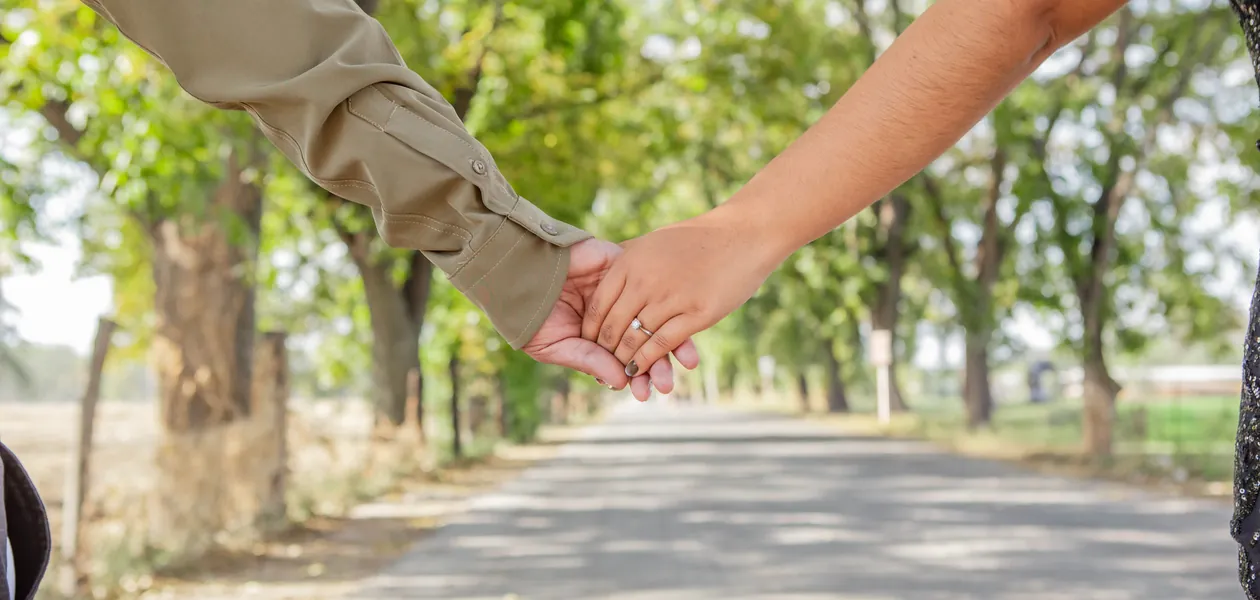
It can, and it is what makes a marriage last. This love is long-lasting and it tends to live inside healthy relationships rather than chaotic ones, beyond the usual boundaries of give-and-take.
Here is the part people skip: to love someone unconditionally, you have to love yourself first. If you can meet your own needs and forgive your own failures, you have the surplus to do it for your spouse. If you cannot, you will keep reaching to your partner to fill a hole only you can fill.
The clearest picture of unconditional love I know is the bond between a person and a dog. The dog does not hold your mistakes against you. You know it will make a mess now and then, and you love it anyway. No conditions, no scorecard, no grudges.
Unconditional love is not a fairy tale, but it is not effortless either. It is a mature, deliberate love that makes you more attentive to what your relationship needs. Receiving it taught me what safety feels like, and giving it taught me who I want to be. A life built around compassion and unconditional love, as Elisabeth Kubler-Ross put it, can turn the world into a garden where every kind of flower gets room to bloom (Elisabeth Kubler-Ross Foundation).


