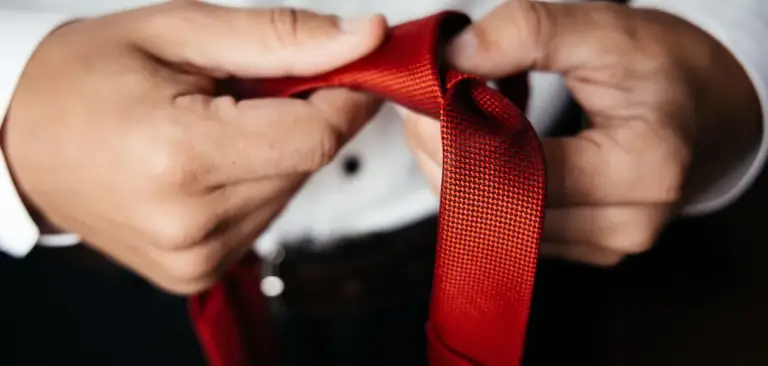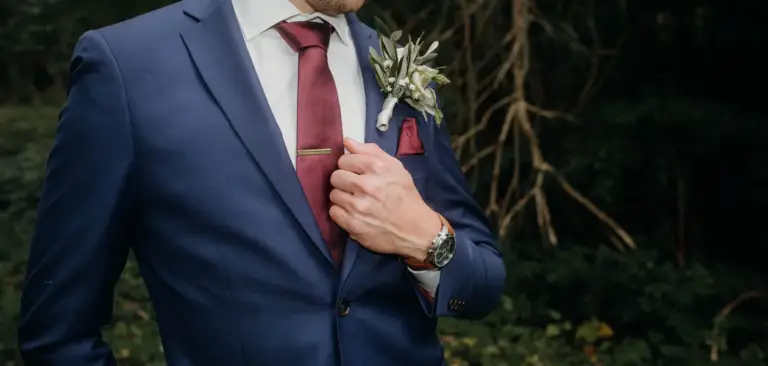
Business professional attire for men means a matching dark suit, a long-sleeved white or light blue dress shirt, a conservative silk tie, a leather belt and polished leather dress shoes. It is the most formal dress code most offices use day to day, and the standard in law, finance, banking, accounting and government.
It is also the easiest code to get right. Business casual leaves you guessing about polos, chinos and sneakers, while business professional follows rules that have barely moved in decades. Learn them once, own a few well-fitted pieces, and you can walk into any boardroom without a second thought.
TL;DR
- Business professional attire for men is a matching dark suit, a long-sleeved white or light blue dress shirt, a silk tie, a leather belt and polished leather dress shoes.
- The matched suit and the tie are not optional, and when a dress code is vague, wear the full suit for your first week and watch senior colleagues.
- Start with navy and charcoal suits in worsted wool, and fit them so the shoulders end at yours and a quarter to half an inch of shirt cuff shows.
- Keep the tie silk and sized to your lapels, match the belt to black or dark brown leather shoes, match socks to trousers and keep accessories quiet.
- Business casual drops the suit and makes the tie optional, business formal is a step up for evening events, and an interview calls for the most conservative version.
What Is Business Professional Attire for Men?
Business professional is a formal workplace dress code built around the matched suit. Jacket and trousers come from the same cloth, the shirt has a collar and long sleeves, and a tie stays on all day. Colors stay dark and neutral, patterns stay quiet, and every piece is pressed and fitted.
On the ladder of dress codes, it sits one step above business casual and one step below business formal. Indeed’s career guide names banking, accounting, law, government and finance as the industries that typically require it, along with job fairs and networking events known to be formal.

Relaxed offices bring the code back for certain moments: a pitch to a conservative client, a board meeting, a court date or a conference talk. If your office runs on business casual, keep one business professional outfit ready for those days.
Do You Need a Suit for Business Professional?
Yes. The matched suit is the one piece the code does not bend on. A navy blazer with gray trousers, however sharp, is a sport coat outfit and reads as business casual. So does a suit worn without a tie, because the tie is the clearest line between the two codes.
Some workplaces use the term loosely. When a written dress code is vague, wear the full suit for your first week and watch what senior colleagues wear before you dress down. Asking your new manager about the dress code before day one is completely normal.
Why Dressing the Part Still Matters
The suit can change how you act, not only how others see you. In a study in the Journal of Experimental Psychology: General, men who wore a business suit during a negotiation task earned higher profits and offered fewer concessions than men who wore sweatpants.
In a separate set of five experiments, reported by the Association for Psychological Science, people in formal clothing leaned toward abstract, big-picture thinking. The researchers called for larger studies, so treat it as a nudge rather than a promise.
The Business Professional Suit
The suit is the foundation, so it deserves most of your budget and attention. Three choices decide whether it works: the color, the cloth and the fit.
Suit Colors and Patterns
Navy and charcoal are the two colors to own first. Both suit most complexions, both work in every season, and both pair with white and light blue shirts and almost any tie. Medium gray is the natural third suit, especially for warmer months.

Black is appropriate, but it reads more like evening wear, so charcoal usually looks sharper in daylight. Patterns should be quiet: a solid, a subtle pinstripe or a faint chalk stripe. Bold checks, bright blues and light colors like tan or cream belong to business casual days and summer weddings.
Fabric for Every Season
Worsted wool is the standard business suit cloth. It is smooth, it breathes, it holds a crease and it recovers its shape after a long day of sitting. A medium-weight worsted covers most of the year in a climate-controlled office.
For summer, look for lightweight or tropical wool, which keeps the formal look while letting air through. Linen and seersucker wrinkle fast and read as casual, so save them for business casual days. In winter, flannel or a heavier worsted adds warmth, as long as the color stays dark.
How a Suit Should Fit
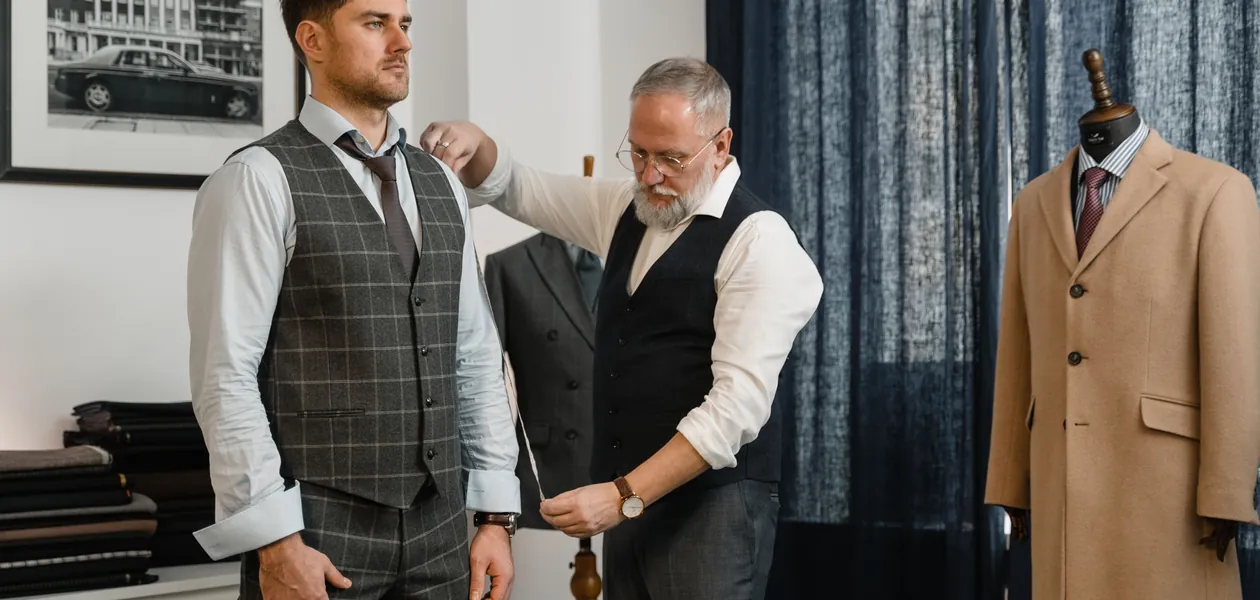
A well-fitted suit from a mid-priced brand beats an expensive one that hangs badly. Start at the shoulders, because they are the hardest part to alter. The seam should end where your shoulder ends, with no dent below it and no padding hanging past it.
Buttoned, the jacket should close without the fabric pulling into an X, and it should cover the seat of your trousers. Sleeves should stop at the wrist bone so that a quarter to half an inch of shirt cuff shows.
Trousers should touch the top of the shoe with a slight break or none at all. On a two-button jacket, fasten the top button, never the bottom, and unbutton it when you sit. My own rule: no new suit gets worn before a tailor has checked the sleeves and the hem.
Dress Shirts, Ties and Accessories
Once the suit fits, the shirt, tie and accessories decide whether the outfit looks considered or merely correct. Their job is to support the suit, not compete with it.
The Dress Shirt
White and light blue are the business professional shirts. They work under every suit color and with every tie, and five of each cover a working week with spares. Fine stripes or a subtle check are acceptable in many offices, but solids are the safer start.
Choose long sleeves every time, even in August. A point or spread collar with collar stays looks sharper under a tie than a button-down collar, which reads more casual. French cuffs with cufflinks add a formal note, while barrel cuffs are standard and perfectly correct.

You should be able to slide one finger between the buttoned collar and your neck. Press every shirt, because a wrinkled one undoes a good suit. Our guide to the best dress shirts for men covers fabrics and fits in more depth.
The Tie
The tie is mandatory, and it is where most of your personality lives in this dress code. Silk is the standard fabric; knit, linen and cotton ties look too relaxed. Navy, burgundy, deep green and gray are safe colors, in solids, repp stripes, small dots or subtle geometric patterns.
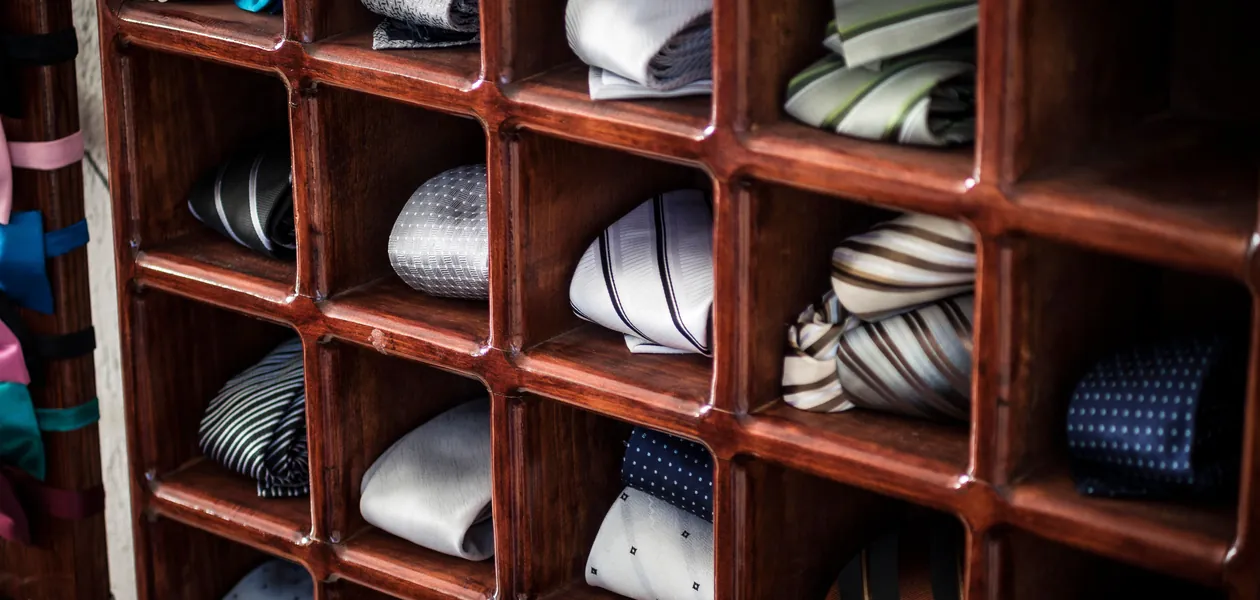
Match the tie’s width to the lapels: slim ties of about 2 to 2.5 inches suit narrow modern lapels, and standard ties of about 3 to 3.25 inches suit classic ones. Tie it so the tip reaches your belt buckle.
Our guide to how to tie a tie walks through the four-in-hand, half Windsor and Windsor knots, and our tips on choosing a matching tie for your suit help with color pairings.
Belt, Socks and Accessories
Accessories finish the outfit, but in this code they stay quiet. Three of them do the heavy lifting:
- Belt: a slim leather belt with a plain buckle, matching your shoes, black with black and brown with brown. Suspenders are the alternative, never both at once.
- Socks: dark dress socks that match your trousers, long enough that no bare leg shows when you sit and cross your legs.
- Watch and metals: a simple dress watch on leather or a metal bracelet, with your watch, buckle, cufflinks and tie bar in the same metal color.
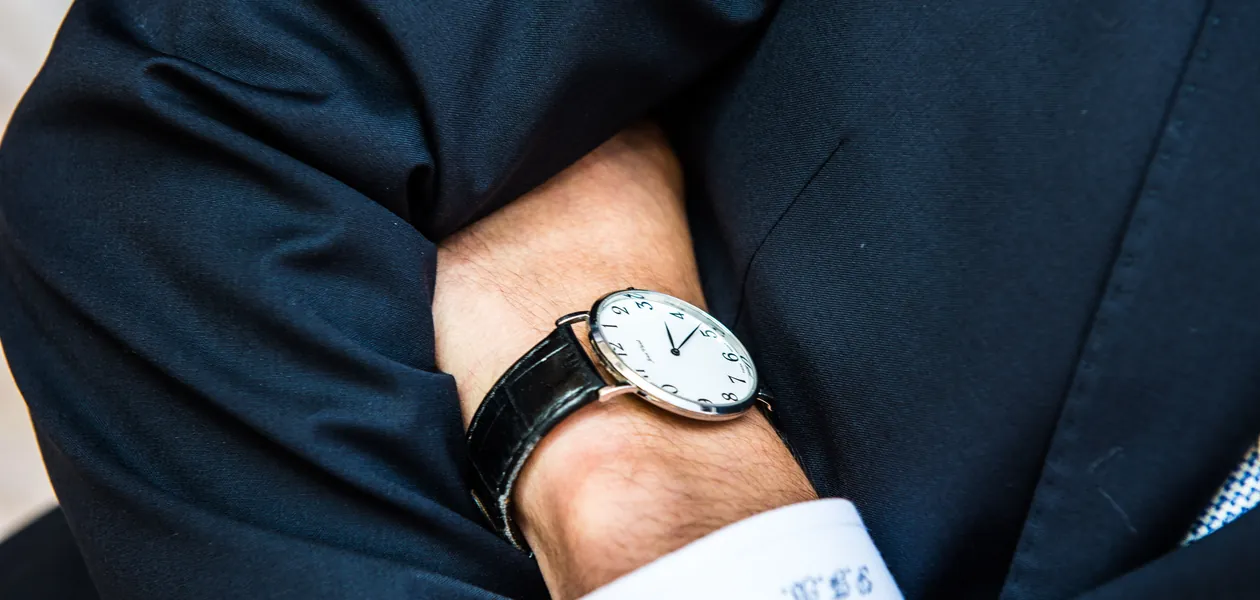
A pocket square is optional: a plain white square folded flat adds polish without drawing attention. Leave out chunky rings, bracelets and anything that jingles, and go easy on cologne, since a meeting room is a small space.
Dress Shoes for Business Professional
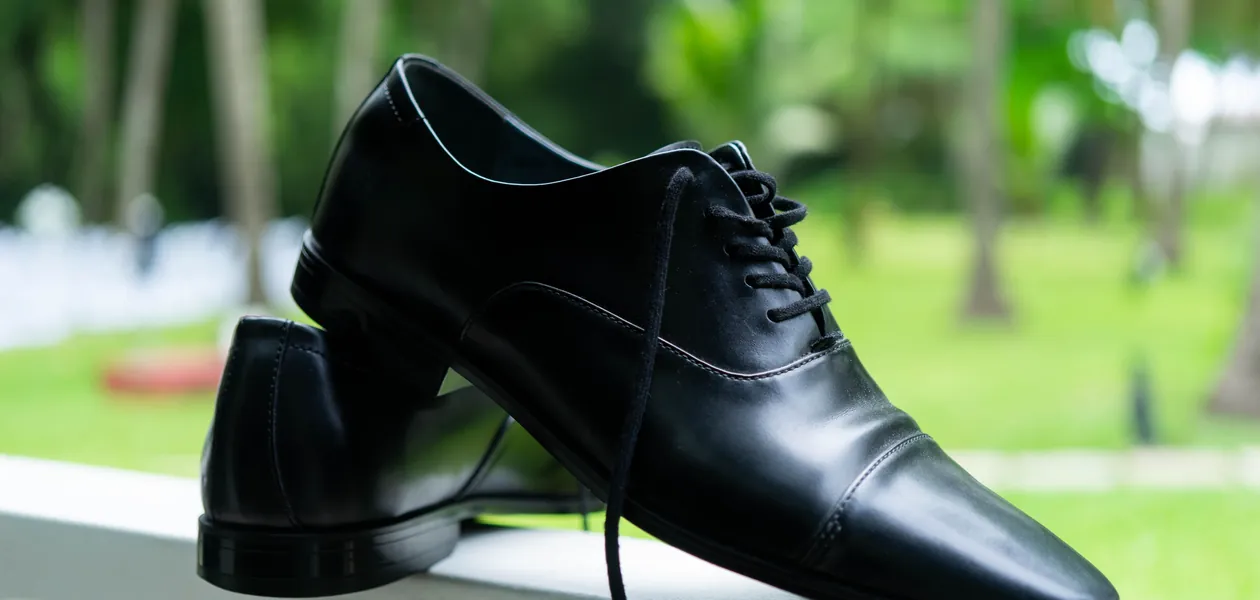
Leather dress shoes in black or dark brown complete the look, and the more formal the setting, the closer you want to stay to black. Three styles cover almost every office:
- Cap-toe oxfords: the most formal everyday choice, with closed lacing that sits flush. Black cap-toes go with every suit color and are right for interviews and the boardroom.
- Derbies: open lacing makes them slightly less formal, but in smooth, polished leather they still pair well with any business suit.
- Monk straps: a buckle in place of laces adds a little character while keeping the formality of a leather dress shoe.
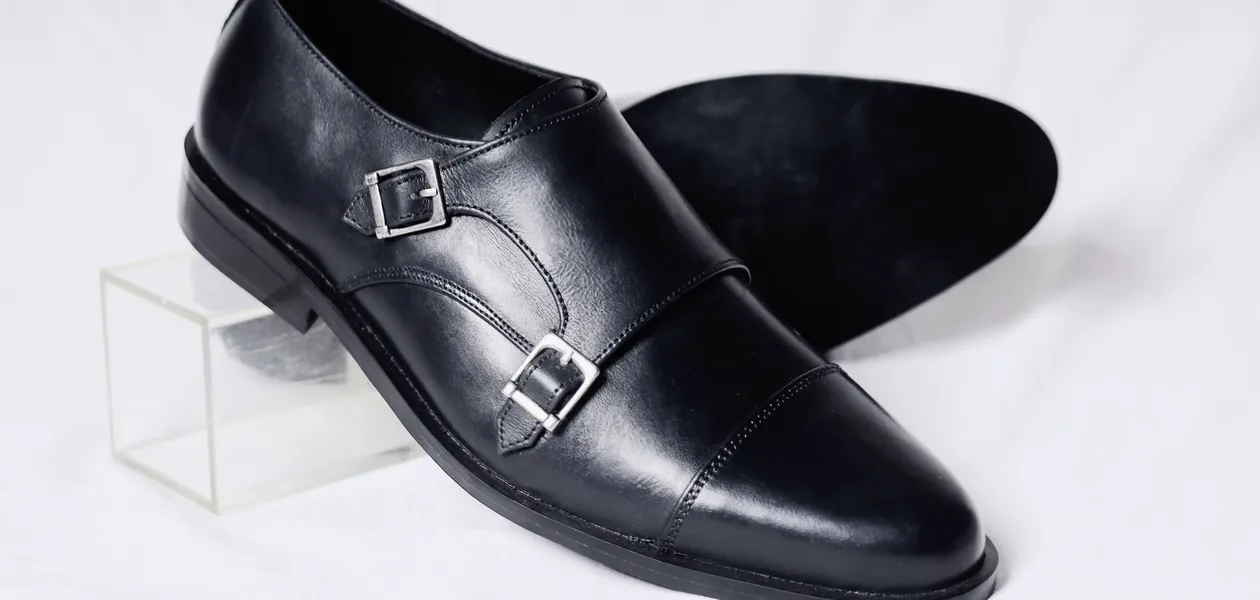
Black works with charcoal, navy and black suits. Dark brown pairs well with navy and gray, though some conservative firms still expect black. Leather loafers pass in some offices but lean business casual. Whatever you choose, keep the shoes polished, because scuffed shoes cancel out a perfect suit.
Business Professional vs Business Casual vs Business Formal
Handbooks and invitations use these three terms constantly, and they overlap enough to confuse anyone. The difference comes down to the suit, the tie and the occasion.
Business Professional vs Business Casual
Business casual drops the matched suit and makes the tie optional. Think a navy blazer with gray trousers or chinos, a dress shirt or knit polo, and loafers. Business professional keeps the full suit and the tie every day, in dark, quiet colors where business casual allows brighter shades and bolder patterns.

The University of North Georgia’s career services puts it simply: business casual is typically one step below business professional, so where professional means a suit, casual may mean dress pants without the jacket or tie.
If your office runs on the relaxed code, our guide to business casual attire for men covers that wardrobe, and smart casual for men goes one step looser for social settings.
Business Professional vs Business Formal
Business formal is a step up, usually kept for evening work events such as awards dinners, galas and fundraisers. The darkest suits come out, with a crisp white shirt, French cuffs and cufflinks, a silk tie and black oxfords. An invitation that says black tie means a tuxedo.
The labels are not used consistently, and some handbooks say “business formal” when they mean the everyday suit and tie. A daily office code is almost always business professional, while an evening event called formal wants your sharpest dark suit. For parties in between, see our guide to cocktail attire for men.
Business Professional Outfits for Men

With a navy suit, a charcoal suit, a few shirts and a handful of ties, you can build a different outfit for every day of the week. These three combinations are reliable starting points:
- The classic navy: navy suit, white dress shirt, burgundy silk tie, dark brown cap-toe oxfords and a matching brown belt.
- The boardroom charcoal: charcoal suit, light blue shirt, navy tie with small white dots, black oxfords, a black belt and a white pocket square.
- The summer gray: medium gray suit in tropical wool, white shirt, deep green or navy tie, and dark brown derbies or monk straps.
Rotate your suits rather than wearing one two days running. Wool recovers its shape when it rests on a proper hanger, and alternating spreads the wear.
What to Wear to a Business Professional Interview

Wear the most conservative version of the code: a navy or charcoal suit, a white shirt, a solid or quietly patterned silk tie, black oxfords and a matching belt. Being overdressed is always safer than being underdressed, because you are the one being compared against other candidates.
Keep it simple, so the interviewer remembers what you said rather than what you wore. Have the suit pressed and the shoes polished the day before, and get your haircut a few days ahead so it has time to settle.
Business Professional Mistakes to Avoid
Most men who get this code wrong own the right clothes. The problems hide in fit, care and small details.
The first is fit. Shoulders hanging past the arm, sleeves that swallow the shirt cuff and trousers that pool over the shoe make an expensive suit look borrowed. A tailor can shorten sleeves and hems cheaply, but shoulders can’t be fixed, so get those right when you buy.
The second is mixing codes. A suit with sneakers, a knit tie, a short-sleeved shirt or a button-down collar sends a business casual signal inside a business professional office. So does a blazer with odd trousers on a day that calls for a suit.
The third is neglect: a shirt collar gone gray, a stained tie, scuffed shoes or socks that slide down to show your shin. None of these cost much to fix, and every one gets noticed across a meeting table.
Grooming Counts Too
Indeed’s guide describes business professional as neutral tones, clean grooming and attention to detail, and grooming is the part men forget. A recent haircut, a clean shave or a neatly trimmed beard, clean nails and a light hand with cologne complete the look.

If your routine needs work, our list of common men’s grooming pitfalls covers the habits that undo a sharp outfit.
FAQ
What does business professional attire mean for men?
A matching suit worn with a tie. The full outfit is a navy, charcoal or gray suit, a long-sleeved white or light blue dress shirt, a conservative silk tie, a leather belt and polished leather dress shoes. It is the standard daily dress code in law, finance, banking, accounting and government.
Do you need a suit for business professional attire?
Yes. The matched suit is the one piece the code does not bend on. A blazer with odd trousers, or a suit worn without a tie, reads as business casual. If a written dress code is vague, wear the full suit for your first week and watch what senior colleagues wear.
What is business professional attire for an interview for a man?
The most conservative version of the code. Wear a navy or charcoal suit, a white dress shirt, a solid or quietly patterned silk tie, black oxfords and a matching belt. Being overdressed is always safer than being underdressed, because you are the one being compared against other candidates.
What should men wear for business professional in summer?
The same suit and tie in lighter cloth. Choose a medium gray or navy suit in lightweight or tropical wool, a long-sleeved white or light blue shirt and leather dress shoes. Linen and seersucker wrinkle fast and read as casual, so keep them for business casual days.
What is the difference between business professional and business casual for men?
The suit and the tie. Business professional requires a matched suit and a tie every day, in dark, quiet colors. Business casual swaps the suit for a blazer or sport coat with trousers or chinos, makes the tie optional, and allows brighter shades, bolder patterns and loafers.
Sources
- Business Professional Attire: Tips on How To Dress for It, Indeed
- Business Professional vs Business Casual, University of North Georgia Career Services
- Sartorial symbols of social class elicit class-consistent behavioral and physiological responses: A dyadic approach, Journal of Experimental Psychology: General, APA PsycNet
- When Clothing Style Influences Cognitive Style, Association for Psychological Science